
Article
Against the Wall
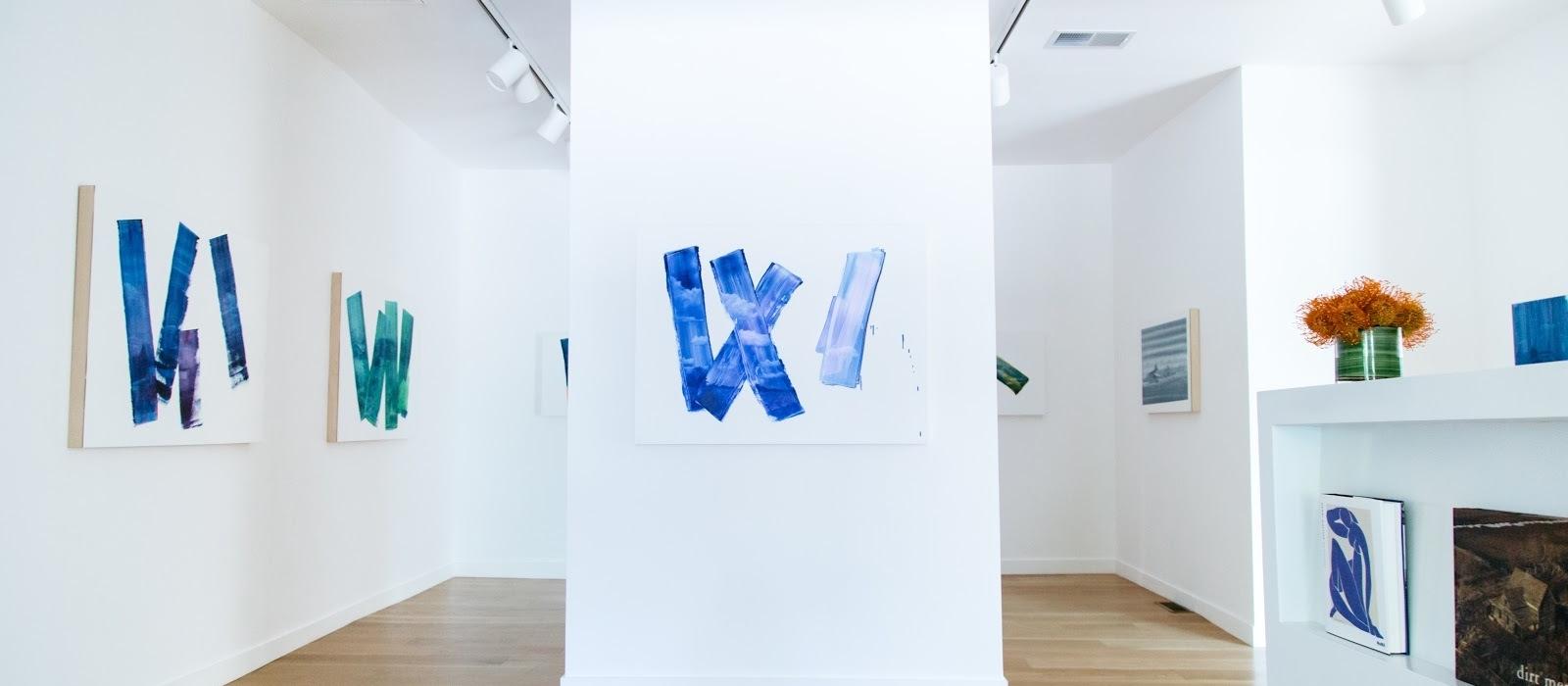
As the daughter of an artist, Mary Celeste Beall’s appreciation for art and the artistic process developed from a young age. While Chandra Johnson didn’t grow up exploring art, she found and embraced her passion for it as an adult, creating conversation and space for contemporary art in Charlotte, North Carolina, with the opening of SOCO Gallery. From how to pick it to how to understand it, art is a conversation that is all about interpretation and appreciation.
Questions: Mary Celeste Beall
Answers: Chandra Johnson, Owner at SOCO Gallery in Charlotte, North Carolina
1. What is your philosophy of collecting?
It is to always buy what you love. I usually pick an artist that my husband and I love and want to support, and we will hunt for something that works with our collection. We do buy one offs, but generally it is about supporting artists. We are mainly focused on emerging contemporary artists.
I look at a lot of art – at fairs, in auctions, online, and at gallery and museum exhibitions. I know what I like immediately, but then I do deep research on the artist, their career, their technique(s), etc.
My advice is: Be brave and just go for it; be curious, ask questions; don’t be afraid to invest more than you think you can.
2. There are a lot of people in my community who are inspired by art and would love to consider it as they are designing their homes. My mother is an artist and has always struggled when someone brings their sofa fabric in to select a painting. How do you navigate the tension between the interior designer or client who wants the sofa and rug to “match” the art and representing an artist who has poured their heart and soul of a work of art?
The sofa will get worn, redone or thrown out in years. Artwork lasts a lifetime. I am interested only in these lasting works. I never advise people to buy artworks to fit their current interiors.
Collecting art and designing your home are two different things. There are some visionary interior designers that focus on designing homes around art collections – I love when I see designers who understand that. Art is so personal and should be acquired without putting parameters on yourself and the art you choose.
3. Talk about tense – how do you approach an artist who has either taken a turn in their style that you don’t feel works for SOCO or worse, has gone into soulless “reproduction” mode where they seem to have lost their inspiration and are basically reproducing the same works over and over?
I am so lucky – all the artists we work with are constantly challenging themselves and their work. I have really great relationships and communication with our artists. We collectively discuss the direction of their work regularly so new styles are never a surprise!
4. You can approach art from different angles—people like pieces for different reasons. It could be a photo that reminds you of something you love. It could be the scene of a place where you have a special memory. It could simply look good on a wall. How do you encourage young clients to approach collecting?
Collecting is a reflection of you! And it should be something that brings you joy. Collecting should be done over a lifetime, no matter when you start, but it is always great to start young. Young collectors should be collecting from their peers, artists they know.
They can wet their appetite with books, prints, photography or works on paper.
5. Someone comes in, they love a piece, then they see the price and it’s not what they expected. How do you guide them through understanding the value of a piece?
It is important to understand the value of an artwork and where the artist is in their career. For collectors, it is important for them to understand why a piece is valued at a certain price point. It is our job as a gallery to help to educate our audience.
6. On mediums: Do people often find that paintings are easier to approach? Or sculptures?
Price point is more a conversation to approachability vs. medium, especially in this region (North Carolina).
7. On subject matter: how do you avoid tension if you show a piece that might have subject matter not everyone would like? (Like a controversial subject, nude, etc.) Do you feel like by showing their work at SOCO you are promoting or agreeing with their stance or position on an issue? Do you think you have to share their beliefs?
Art is meant to open up conversation and push boundaries. We provide a platform for artists to do this and support their voices. The beauty of art is its ability for people to come together to experience, sometimes challenge, and discuss potentially more difficult subject matter. At SOCO Gallery, we strive to be a place where people can do this in Charlotte.
8. What happens when you find out the meaning of a piece of art, and it doesn’t align with what you thought it was? You fall in love with the imagery only to discover the meaning behind it is not what you thought?
This always happens! I might have a visual perception of what I think the work is about initially and, more often than not, it differs from the artist’s, or other people’s, views. Artwork should be open to interpretation.
9. In my life as a widow I quickly realized that I was thrust into territory I had no idea how to navigate. I decided that I had to “get comfortable being uncomfortable” in my new roles – how do you feel art plays a role in getting people out of their comfort zones?
Great question! Art is a visual, mental and spiritual experience – it opens up a dialogue, and it is the one area, at least I feel, where you can get out of your comfort zone. In my experience the work that has taken me out of my comfort zone has been the work I love the most.
Image by Lydia Bittner-Baird, courtesy of the artist and SOCO Gallery, of Damian Stamer's just down the road.