
Article
A Farmer's Philosophy
photos by William Hereford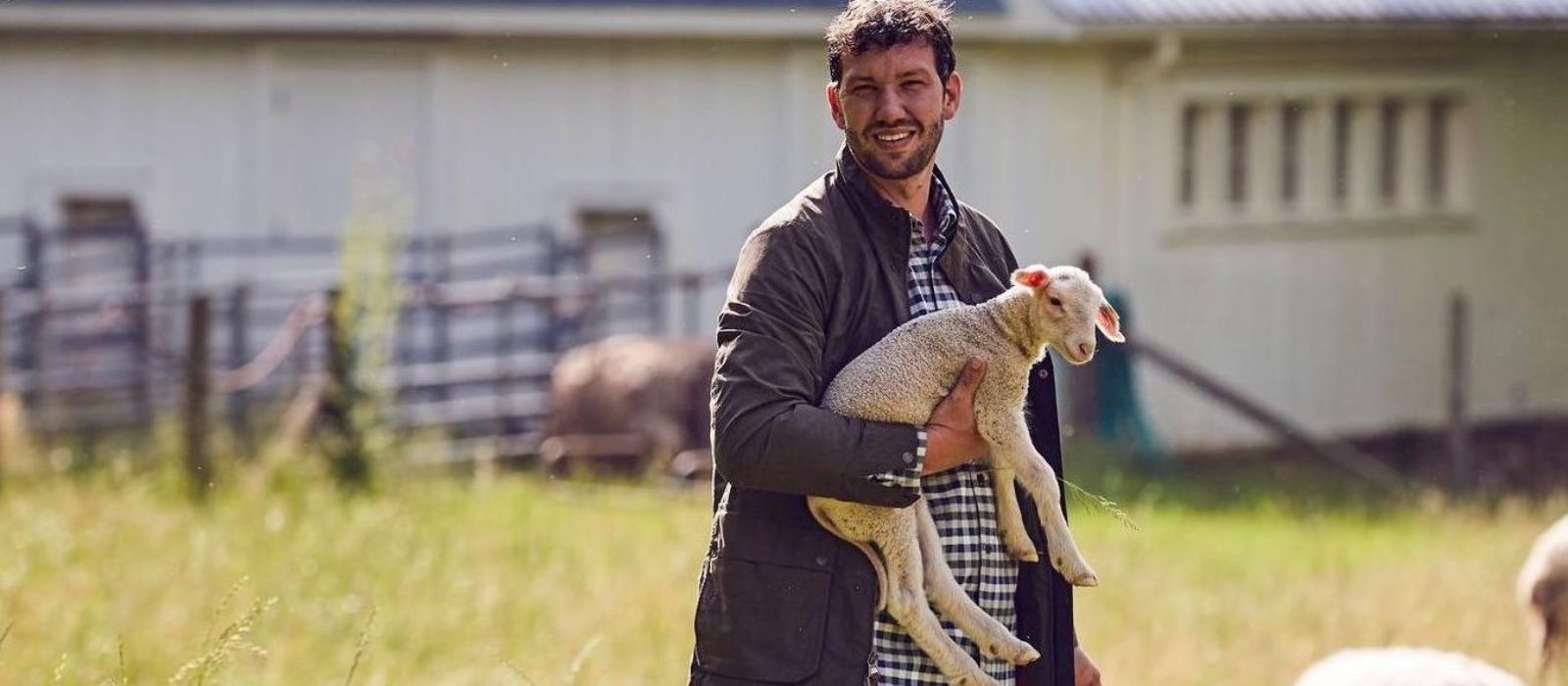
Growing up outside of Charleston, South Carolina, Dustin Busby gravitated toward three things: punk rock, his BMX bike and his grandfather’s vegetable farm on Johns Island. “It had this dark, rich, black sandy dirt,” Dustin recalls, and he used to marvel at the bounty of eggplants, watermelons and tomatoes that turned up summer after summer. But by the time he turned 14, tooling around Johns Island on his BMX had gotten old. It occurred to him that he ought to start thinking about an upgrade. “My dad told me that if I wanted a car, I needed to get a job,” Dustin says, so he ended up washing dishes at a local restaurant where a bunch of his punk rock friends also worked. He found that he enjoyed the rhythms of the kitchen as much as those of the songs blaring through his headphones, and thus began a career in cuisine that took him from the kitchens of Walt Disney World to the halls of Le Cordon Bleu to apprenticeships at vaunted fine dining restaurants around the world, including The French Laundry and The Fat Duck.
By the time he arrived at Blackberry Farm with his own daughter in 2008, Busby was ready to reacquaint himself with at least one of his childhood pursuits.
“They were making cheese and milking sheep, and I just fell in love with the Farm,” he says.
While he joined Blackberry to help open the restaurant, The Barn at Blackberry Farm®, he quickly transitioned to other roles: He started Blackberry’s cooking demonstration program, served as the preservationist of the larder, and became the in-house cheesemaker before accepting a stint off property so he could bone up on his farming skills. “I wanted to explore what happens on an intensive farm,” Dustin says, one 45 minutes down the road from Blackberry, where he spent two years learning about animal slaughter, “what to do and what not to do.” “The farmer I was working under was very passionate about animal welfare, about giving back to the land,” he adds. In 2015, he felt the time was right to return to the place that had elucidated to him the concept of farm to table in its most pure form.
These days, Dustin serves as Blackberry’s farmstead manager, overseeing a team that includes 36 human employees and as many as 500 animals (the latter number fluctuates frequently – on the afternoon Dustin and I spoke, he counted 52 ewes, 35 of which were pregnant). He knows them all, many by name. There’s Gurdy and Swimmer, 500-pound pigs with an uncanny habit of leaning against him, yearning to have their backs scratched (he’s happy to oblige). There are sheep named Bailey, Cocoa and Coffee and a guardian donkey named Sally. Willard? He’s the big horse, another guardian for the pastures. There are 200 chickens, and everyone has a name, though Dustin (understandably) can’t keep track of them all. “Some of the animals are named by me, others by my team,” he says. “Sometimes we’ll put up a photo of a new little one on social media, and we’ll ask our followers to name them, which is always fun.”
Not all of the animals will be slaughtered – some of the chickens are used only for eggs – and Blackberry does not do any slaughtering on-site. This doesn’t change their fate, their eventual destiny as food. But naming the animals, knowing them, is how Dustin reconciles himself with this tension.
“I’ve had this conversation with a lot of guests,” he says. “Their initial response, after seeing the animals, knowing where they’re going, is often, ‘It’s great as long as you don’t name them.’ The more I heard it, the more it gave me this weird feeling.”
Over the years, he distilled that weird feeling into a philosophy “of naming animals, knowing animals, interacting with them, being a part of their everyday lives,” he says. “I believe in making sure that their life every day is the best that we can give them. The philosophy of pretending that what they’re there for isn’t going to happen is detrimental. Some of us are so afraid of eating liver or heart or tongue or brain, but if you really valued the animal, you would almost feel a moral duty to ensure that it didn’t go to waste, or to find another use for what you don’t want to eat.” Dustin believes that this kind of philosophy can help eliminate food waste and can even be applied off property: He cites the virtues of buying and using a whole chicken, versus a package of shrink-wrapped breasts. (“Don’t get me wrong,” he admits, “my family buys shrink-wrapped chicken breasts from time to time.”) He and his team personally oversee the transition of animals from Blackberry Farm to slaughter, loading them into trailers that they line with straw, to minimize stress-inducing jostling, and driving the trailers themselves. “I try to make sure our animals are cared for in the best way they can be,” he says. “I’m sure it’s not that cut and dry for everyone. I’m sure other people would still struggle with it.”
More than a decade after Michael Pollan published the book that bred a movement, the phrase “the omnivore’s dilemma” continues to resonate. For many, it’s become all but impossible to consume meat without questioning some part of the practice – where it came from, how it was raised, whether it was responsibly sourced. For Dustin, the dilemma is something of a gift. “I enjoy being present for what the animals have to give, knowing their personalities, receiving their affection, which is usually centered around hoping that I have a bucket of food scraps,” he says, laughing. “I do believe that when you treat animals with respect, that comes through in the quality of the food product as well. There’s a certain life force.” His philosophy posits that treating creatures as best as you can will only make them better. It’s a philosophy that could be applied to humanity as well.