Story
Winter Tinctures
Warmth. It’s something we feel physically, emotionally and energetically—the way sunshine feels on a crisp fall day, the warmth of a smile, the soothing and radiating quality of a cup of coffee or tea.
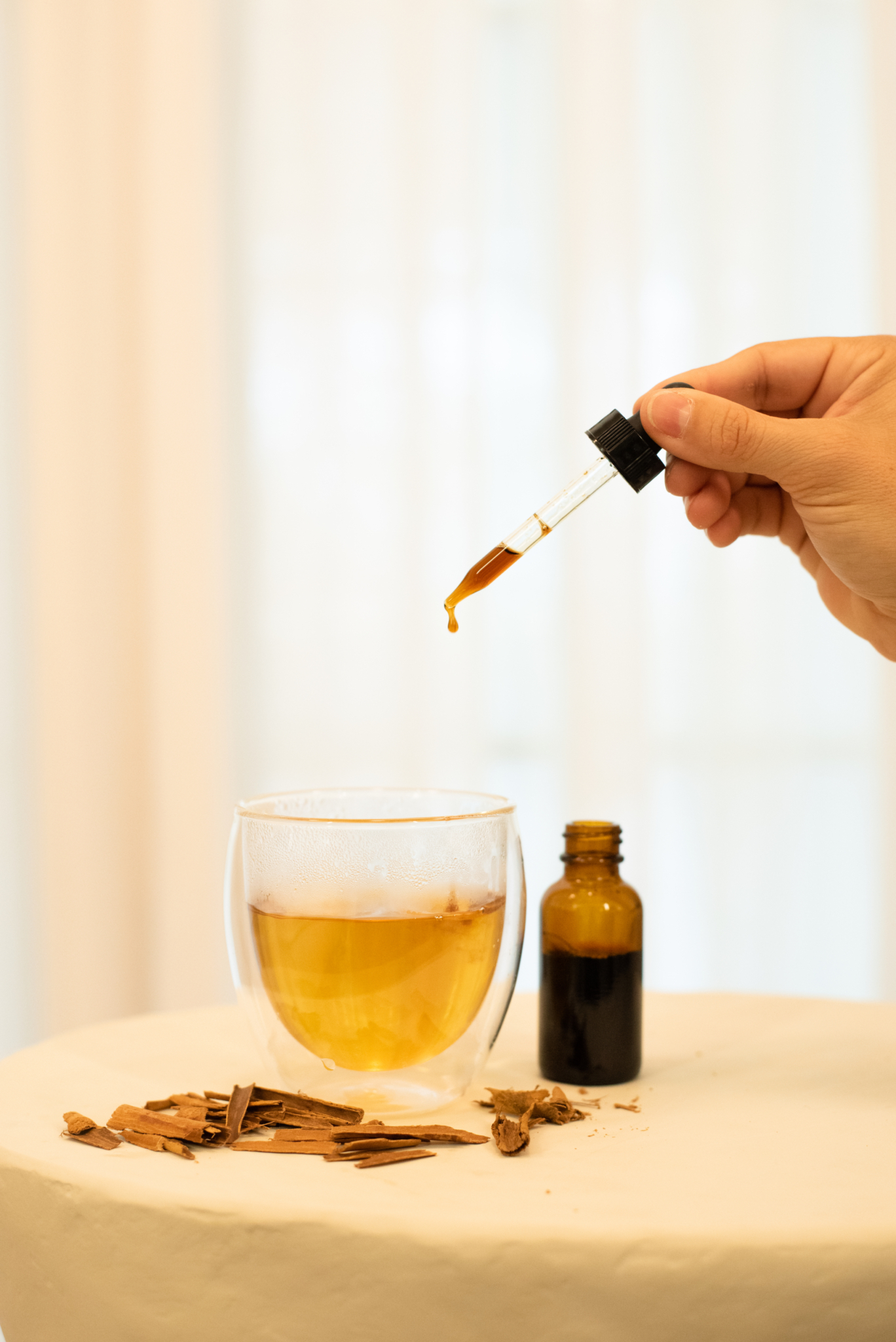
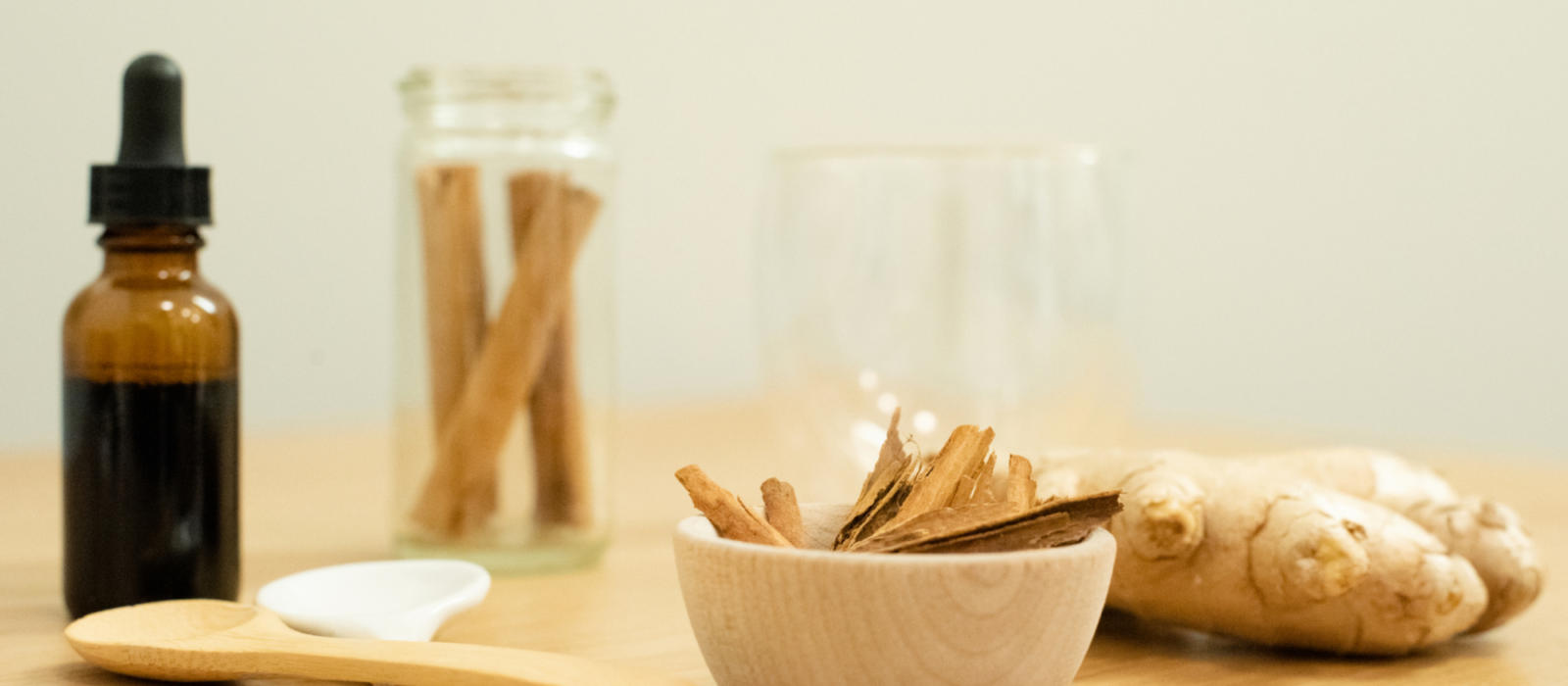
As we settle into Winter, there’s a notion of protecting one’s warmth. Herbs and spices have been used across all cultures to create the feeling of warmth to combat physical or emotional cold. Cinnamon and ginger are two such herbs with a long history of medicinal use. They are often consumed as tea or used culinarily, but both can also be prepared as tinctures or alcohol extracts. Tinctures concentrate the active constituents of plants, resulting in a potent and medicinal herbal elixir. Tinctures can be taken by mouth, added to a small amount of water or added to tea. A drop or two of cinnamon or ginger tincture goes a long way, and both imbue the body with warmth.
CINNAMON (Cinnamomum spp.)
Healing properties: Astringent (tightens and tones), anti-inflammatory, antioxidant and antimicrobial. Cinnamon may help heal gut damage, regulate blood sugar and cholesterol, and improve heart health.
Energetics: Warms the body, supports circulation and tonifies yang to support yin.
GINGER (Zingiber officinalis)
Healing properties: Anti-inflammatory, diaphoretic (makes you sweat), improves digestion, relieves intestinal pain, warms the body and prevents and treats nausea
Consider ginger for indications of cold, like slow digestion, cold hands and feet, and fixed arthritic pain.
Interested in incorporating cinnamon and ginger tinctures into your routine? Try these:
Vanilla rooibos tea with one drop of cinnamon tincture.
Peppermint and licorice root tea with one drop of ginger tincture.
— Dr. Jill Beasley, Blackberry Mountain Holistic Health Specialist