
Story
Spring in the Garden
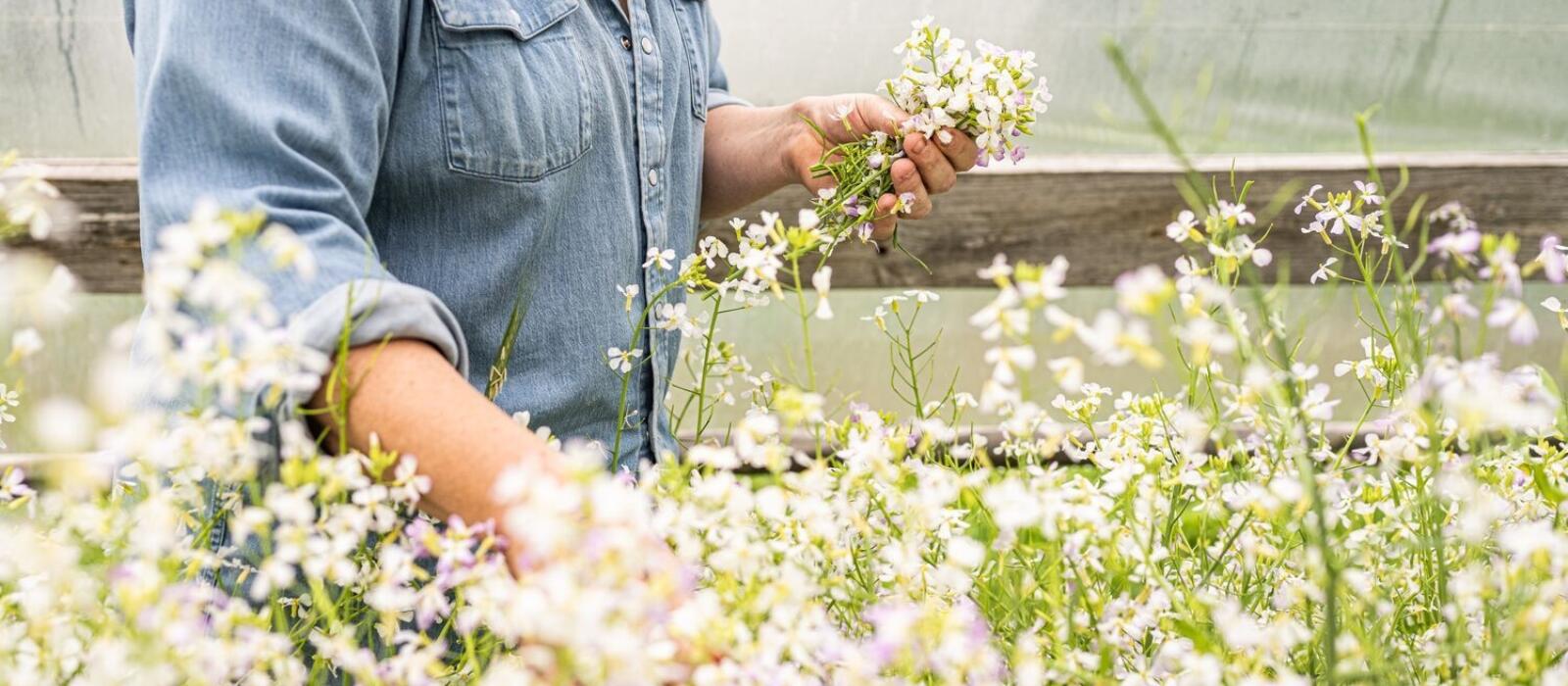
Here in East Tennessee, we experience four full seasons, and it is not uncommon that guests ask which time of year is the best time to visit. While every season offers unique scenery and experiences, an answer often told would be Spring. This season starts slow but progresses rapidly; and with a month of Spring behind us, here are some observations from the Garden.
During Spring, East Tennessee is known to have “little Winters,” a term used to describe various cold snaps that occur. Each of these “little Winters” will carry the namesake of the most prominent plant blooming at the time and help us determine when to move forward with different actions in the Garden.
For instance, the Redbud Winter shows the unique, pea-like, magenta flowers and tells us that it’s a good time to start seeds indoors, allowing the Summer crops to get a head start on the growing season. By the time the Dogwood and the Blackberry Winters have passed and we enter the Whippoorwill Winter, we are ready to start planting.
Throughout these “little Winters” there are plenty early Spring blooms that are a crucial food source for pollinators. What some folks call weeds — like wild violets, dead nettle and henbit — create purple carpets in the Garden that vibrate with hungry insects. Many other colors appear early from our crimson clover, and pink flowering quince and yellow forsythia and native plants start to bloom soon after, including yellow and purple false indigo, white yarrow and deep purple irises attracting a variety of necessary insects.
As more and more insects emerge from their underground Winter homes, migratory insect-eating birds, like the metallic, blue-green Tree Swallows, begin to appear. Native flowers like red columbines or coral honeysuckle with their high nectar content and tubular flowers draw in the buzzing, iridescent Ruby-throated hummingbirds. Last year’s seed stalks and pods are purposely left in the Garden through Winter and Spring to provide a vital food for birds like the American Goldfinch who raise their young primarily on seeds.
As the days grow longer and the sunlight becomes more direct, dormant wildflower seeds sprout, perennial bushes shoot up and deciduous trees begin to break their leaf buds, creating shady spots around trees like oaks, maples and the Tennessee state tree, tulip poplars.
All of life around us is beginning to reawaken, serving as sign to tell us that it is our time to get moving as well. Leading up to this moment, we have carefully laid the plans and prepped the beds so that the work can begin again. As our Master Gardener John Coykendall likes to say, “Now is the time to go out and do something, even if it’s wrong.”
Weeding, watering and harvesting have become daily tasks. The dull green Winter cover crops are being terminated by either crimping or mowing, allowing the organic material to begin decomposition into a natural fertilizer. The cover crop is either turned into the soil or left in the beds for the remainder of the season. We measure out the planting rows and walk paths and visualize with anticipation how the Garden will transform over the next few months.
Every year, we rotate the crops to different areas of the Garden to reduce the build-up of pests or blights and lessen the nutritional demand on the soil. As the new planting rows are established, we lay down extra sheep wool to act as a mulch, inhibiting the weeds that might grow after the ground is cleared. These efforts help to prevent excessive weed pressure so that our crops and gardeners have a better chance of staying ahead of maintaining the beds during the overwhelming growth of Spring and Summer.
Entering the first week of May, we eagerly fill up the beds with Summer crops like tomatoes, peppers, cucumber, squash, eggplants, beans, peas, corn, herbs and flowers. As ready as we are to see the fruits of our labor, we will have to patiently tend to the crops for another few months before Summer’s harvest.
While we do have a sufficiently long growing season beginning in Spring, cool-season crops are the main focus for the transition into Summer. Crops being harvested include leafy greens like arugula, mizuna and lettuce. Even though it doesn’t feel so warm to us, the cold-hearty kale grown through Winter starts to bolt and bloom yellow flowers that are harvested as well as the leaves.
Root vegetables are being sown in succession, one week after another, including carrots for our Pickled Baby Carrots, and radishes which will be mixed with the garden cabbage in a new Appalachian Kimchi. Buds from the pine trees are harvested and made into syrup for our Strawberry and Pine Bud Shrub. Edible flowers like Love-in-a-Mist and Bachelor Buttons are harvested frequently to serve as a colorful garnish adding various shades of blue, white, pink or maroon to dishes.
It seems impossible to keep track of all the changes occurring in Spring, but every year is another opportunity to take note and observe as much as we can to help better understand our role as gardeners. The only constant is change, which seems more drastic every week in a Spring garden, but we do our best to take advantage of all the seasonal flavors that come and go so quickly.
– Dakota Eddy, Blackberry Farmstead Ambassador