
Story
It’s Persimmon Season!
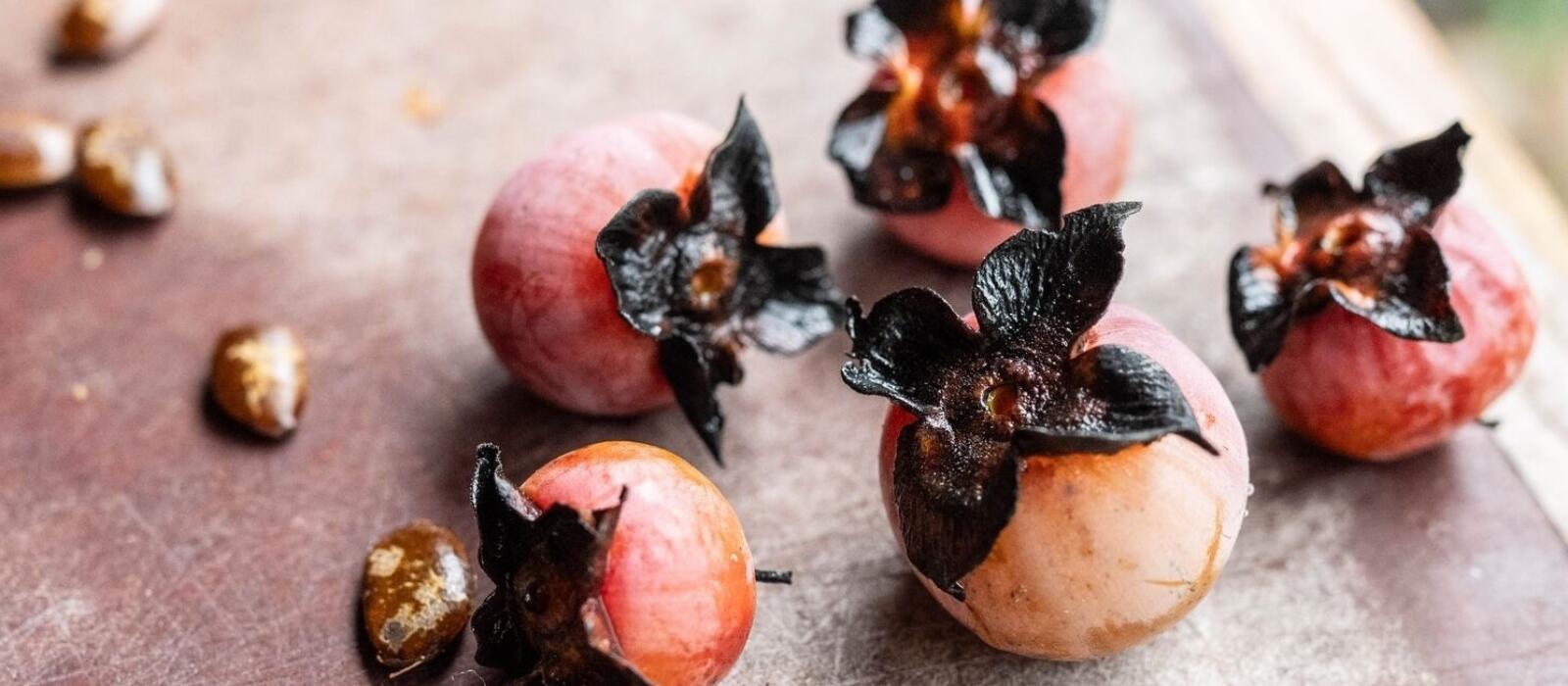
This time of year is the peak season for harvesting persimmons, which means it’s also time for one of our favorite traditions on the Farm! According to weather folklore, persimmon seeds can tell us what forecast to expect in the Winter.
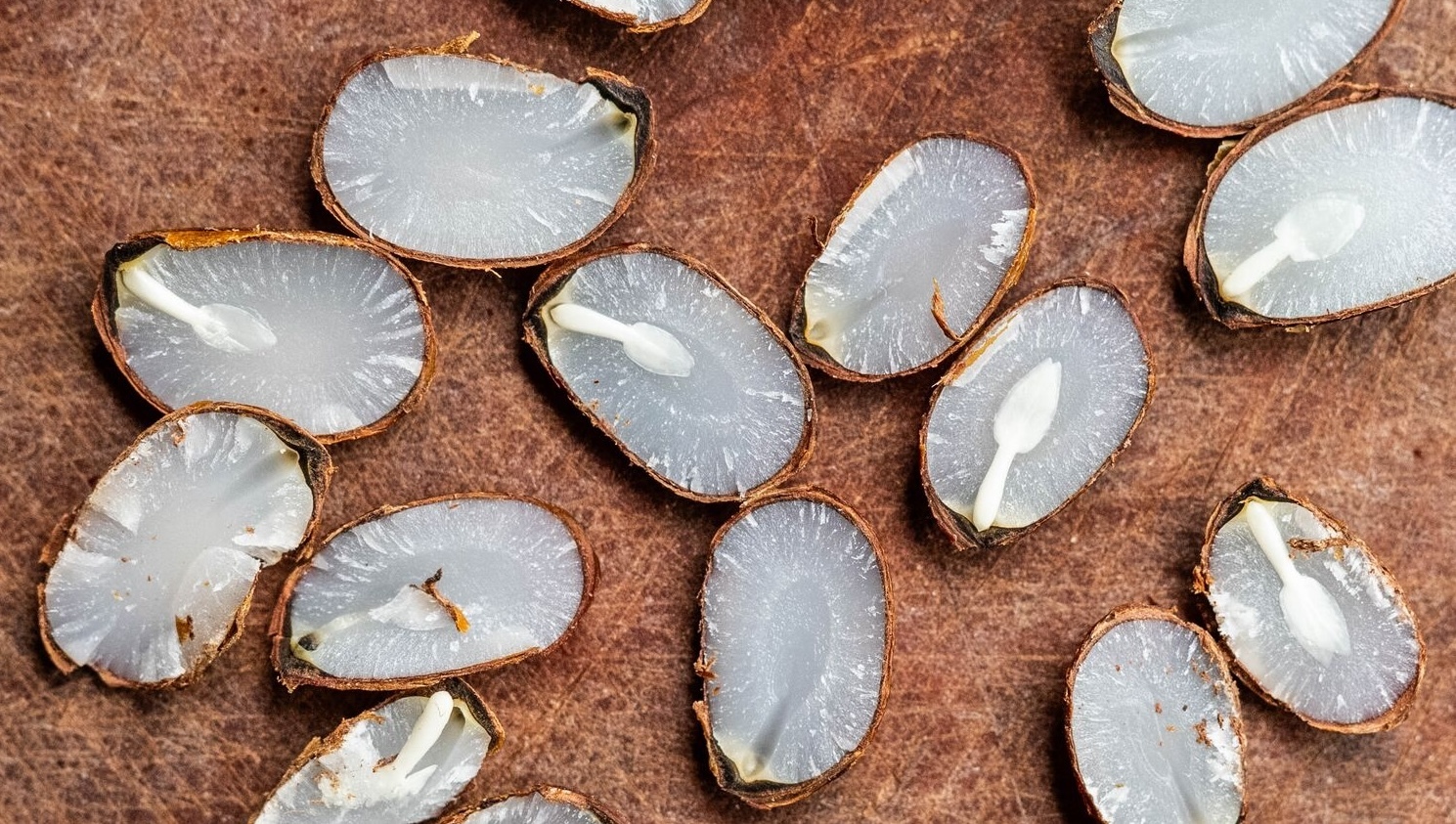
Each year, we gather a few persimmons from the Garden and cut into their seeds to learn their weather prediction. Upon slicing the seeds in half, the white kernel inside reveals one of three shapes: a spoon, fork or knife. If the seed yields a spoon shape, legend says we can anticipate a season full of snow. A fork shape means we can expect a mostly mild Winter with some light snow, and a knife shape suggests a frigid Winter with icy winds.
Out of the eight persimmon seeds we cut open this year, we discovered four spoons, three knives and one fork. If the legend holds true, this means we’re in for an icy Winter with lots of snow!
In addition to honoring this beloved tradition of the season, we also want to ensure we make the most of the persimmons’ short window of flavor – whether that’s by enjoying them fresh from the tree, incorporating them into dishes in the restaurants or preserving them to use beyond the season.
During the first week of September, the Garden team places tarps beneath persimmon trees to catch the fruit as it naturally falls. Three of the Garden’s trees drop fruit all through September and most of October, and a fourth continues to drop fruit all the way through November.
“When persimmons fall from the tree, they are typically ready to eat immediately, and for that reason, the wildlife in the area often come to consume them daily,” says Veronica Krebs, manager of the Larder. “The ones the gardeners snag before the animals end up in the preservation kitchen and in the kitchens.”
There are two main types of persimmon varieties: the domesticated Asian persimmon and the native American persimmon. The American persimmon is what we find on the Farm, and because it’s still in its natural form, it generates a lot more variety in size, color, texture and flavor than the Asian persimmon.
“The richer, softer American persimmons are great for jams, butters, syrups, vinegars, savory sauces, candies and other products where the fruit isn't kept whole,” says Farmstead Manager Christen Waddell.
This year, the Preservation Kitchen is making persimmon apple butter using a recipe that was developed by Veronica herself. To begin making the persimmon apple butter, the Preservation Kitchen cleans the persimmons and removes their top hats, then runs them through a food mill to remove the skin and seeds. Because the timeframe to enjoy a persimmon is quite short, the apple butter gets made within a very short window after they have been processed.
The Garden team also makes a point to never pick persimmons from the tree, but rather to wait until they fall onto the tarp. This is because if a persimmon is picked too soon, its texture is hard and its tannins high, which results in a very bitter taste that sucks the moisture out of your mouth.
“The persimmons themselves are, at their best, past ripe and should be eaten within a few days,” Veronica says, “but you can also freeze the pulp and use it at a later date – ideally within a few months.”
Guests can purchase the persimmon apple butter at our retail shops, and Veronica believes it will be a long-standing product.
“We plan to keep experimenting with persimmons and hope to come up with some fun, unique offerings in the future,” she says.
In the past, the Preservation Kitchen has made persimmon vinegar and experimented with persimmon syrup, but there are many more ways to enjoy the fruit.
“I personally love mixing a spoonful of the persimmon apple butter in my pancake batter, cooking them off, and then topping the pancakes with the persimmon apple butter, a dollop of crème fraîche and a sprinkle of cinnamon,” says Veronica. “They also pair beautifully as-is with our aged Singing Brook or Mountain Moo cheeses from our creamery.”
“My favorite way to use them is to make a spiced persimmon bread,” says Christen. “I've also had a really good chocolate bar made by one of our chefs here with persimmon syrup instead of sugar.”
The timeframe to enjoy a persimmon at its best may be short compared to most commercial fruits, but its sweet flavor is worth it. Next time you’re strolling through the Garden during persimmon season, try one for yourself and see what the hype is all about!