
Story
Hornswoggling Spooky Mountain Trout
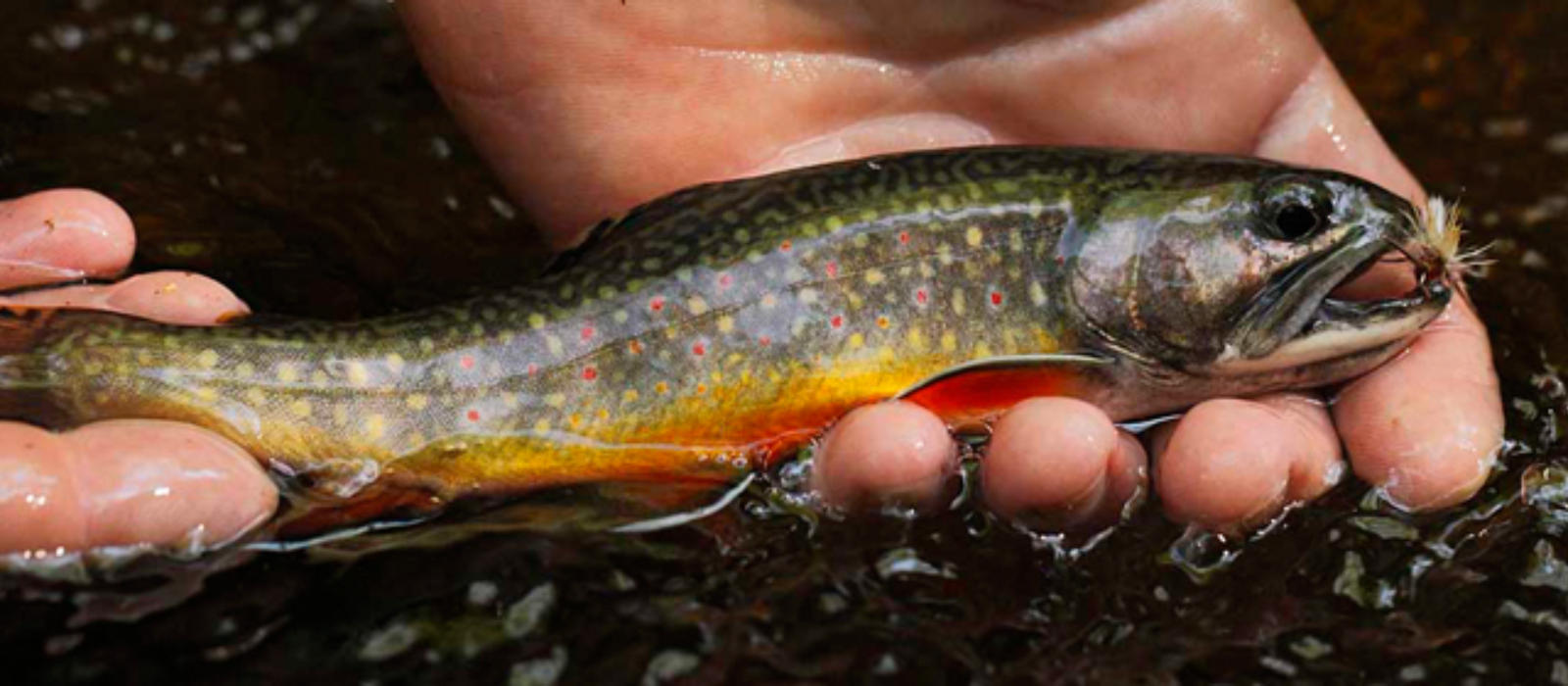
It was a make or break necessity that made for the success of the day. When our toes first touched the water one of the first things I mentioned to my guest was the need to be stealthy today. Perhaps he thought I was over stating the need to hide behind every rock we could find or stay low while moving from rock to rock as to not cast a silhouette over the hole in which we intended to lay the fly. The water was low, as the early spring has led to early summer like conditions and low water levels in East Tennessee, and with low water comes overly spooky fish. The first few plunge pools that we laid a fly on drew no attention from a trout, rather only a few small shiners pecked at the fly, another low water annoyance. We promptly sat on a moss covered rock and cracked a bottle of water to evaluate what was happening. Should we change flies or possibly add a dropper to the dry fly? My gut said no, the fish should be looking up and keyed in fairly well on terrestrial insects or really anything that can make an opportunistic meal. I again mentioned the need to be stealthy and although we had been careful, maybe not quite as sneaky as we could be. Much like a hunter moving through the brush, the next hole we approached with bent knees and backs. Behind a large gray mid stream boulder we crouched and examined the seams of the long quickly moving hole ahead. Starting at the back of the run we made cast strategically along the seams all while staying somewhat hidden behind the rock. Every third or fourth cast drew a willing fish to the top as well as a smile to the anglers face. Stealth was the key, not so much the fly.
With summer very much upon us here in Southern Appalachia, trout fishing in the small streams of the Smoky Mountain National Park can become quite tricky. The story of the small wild trout of the Smokies plays out in a world of mostly small streams loaded with bugs in the spring and few to be seen in the summer. Their diet consists mostly of terrestrial insects in the summer months. Ants and beetles falling from the surrounding vegetation typically make for easy meals and these targets of opportunities keep the trout looking up. However, the low water of the summer months keeps these wild fish in a seemingly constant state of paranoia. They often seek deeper runs with swift moving current to conceal themselves when water becomes scarce. You will still find these little fish sitting in tail outs or riffles in water barely deep enough to cover their backs, but again they are quite spooky while sitting in these feeding lanes.
These conditions govern how we fish. Again stealth being the key, I find fly pattern not nearly as important as presentation, especially in the dog days of summer. A well placed fly to a fish who is looking for targets of opportunity will often draw at least a look, provided the fish is not spooked by the anglers approach. Using the terrain or features of the stream to conceal your movement is a big key to summer time success in the mountains. Staying low and hiding behind rocks can make or break the day. Also attire is fairly important. The bright white and pastel casting shirts that we wear on the deck of a flats boat have no place in a mountain stream. Instead more natural tones that will not alert the fish to your approach may be in order. As for fly selection, ants and beetles are always consistent producers. Although sometimes hard to see on the water, there is nothing like matching what the fish is seeing naturally. A lot of the all time favorites also draw attention in the summer months. Attractor patterns like the Royal or Tennessee Wulff are some of my summertime go to flies. For a go to color in the warmer months it is hard to beat yellow as yellow sally stoneflies and sulfur mayflies are out and about most of the summer. I also like patterns with rubber legs in summer months. A parachute madam X is a great fly as it imitates a terrestrial insect or a stone fly in the summer.
Lower water also brings warmer water temperatures. So to beat the warm water and sluggish fish we often head for higher elevations streams to find willing fish in summer months. This gives us a great opportunity to explore less pressured water or to go on an adventure to a stream we may have never fished. This summer the guides and I have been trying to pick blue lines on a map that we have never been on before and go exploring.Small fish and big memories…..
Alex Quick
It was a make or break necessity that made for the success of the day. When our toes first touched the water one of the first things I mentioned to my guest was the need to be stealthy today. Perhaps he thought I was over stating the need to hide behind every rock we could find or stay low while moving from rock to rock as to not cast a silhouette over the hole in which we intended to lay the fly. The water was low, as the early spring has led to early summer like conditions and low water levels in East Tennessee, and with low water comes overly spooky fish. The first few plunge pools that we laid a fly on drew no attention from a trout, rather only a few small shiners pecked at the fly, another low water annoyance. We promptly sat on a moss covered rock and cracked a bottle of water to evaluate what was happening. Should we change flies or possibly add a dropper to the dry fly? My gut said no, the fish should be looking up and keyed in fairly well on terrestrial insects or really anything that can make an opportunistic meal. I again mentioned the need to be stealthy and although we had been careful, maybe not quite as sneaky as we could be. Much like a hunter moving through the brush, the next hole we approached with bent knees and backs. Behind a large gray mid stream boulder we crouched and examined the seams of the long quickly moving hole ahead. Starting at the back of the run we made cast strategically along the seams all while staying somewhat hidden behind the rock. Every third or fourth cast drew a willing fish to the top as well as a smile to the anglers face. Stealth was the key, not so much the fly.
With summer very much upon us here in Southern Appalachia, trout fishing in the small streams of the Smoky Mountain National Park can become quite tricky. The story of the small wild trout of the Smokies plays out in a world of mostly small streams loaded with bugs in the spring and few to be seen in the summer. Their diet consists mostly of terrestrial insects in the summer months. Ants and beetles falling from the surrounding vegetation typically make for easy meals and these targets of opportunities keep the trout looking up. However, the low water of the summer months keeps these wild fish in a seemingly constant state of paranoia. They often seek deeper runs with swift moving current to conceal themselves when water becomes scarce. You will still find these little fish sitting in tail outs or riffles in water barely deep enough to cover their backs, but again they are quite spooky while sitting in these feeding lanes.
These conditions govern how we fish. Again stealth being the key, I find fly pattern not nearly as important as presentation, especially in the dog days of summer. A well placed fly to a fish who is looking for targets of opportunity will often draw at least a look, provided the fish is not spooked by the anglers approach. Using the terrain or features of the stream to conceal your movement is a big key to summer time success in the mountains. Staying low and hiding behind rocks can make or break the day. Also attire is fairly important. The bright white and pastel casting shirts that we wear on the deck of a flats boat have no place in a mountain stream. Instead more natural tones that will not alert the fish to your approach may be in order. As for fly selection, ants and beetles are always consistent producers. Although sometimes hard to see on the water, there is nothing like matching what the fish is seeing naturally. A lot of the all time favorites also draw attention in the summer months. Attractor patterns like the Royal or Tennessee Wulff are some of my summertime go to flies. For a go to color in the warmer months it is hard to beat yellow as yellow sally stoneflies and sulfur mayflies are out and about most of the summer. I also like patterns with rubber legs in summer months. A parachute madam X is a great fly as it imitates a terrestrial insect or a stone fly in the summer.
Lower water also brings warmer water temperatures. So to beat the warm water and sluggish fish we often head for higher elevations streams to find willing fish in summer months. This gives us a great opportunity to explore less pressured water or to go on an adventure to a stream we may have never fished. This summer the guides and I have been trying to pick blue lines on a map that we have never been on before and go exploring.Small fish and big memories…..
Alex Quick