
Article
On Butterfly Wings
photo created and taken by Greer Miceli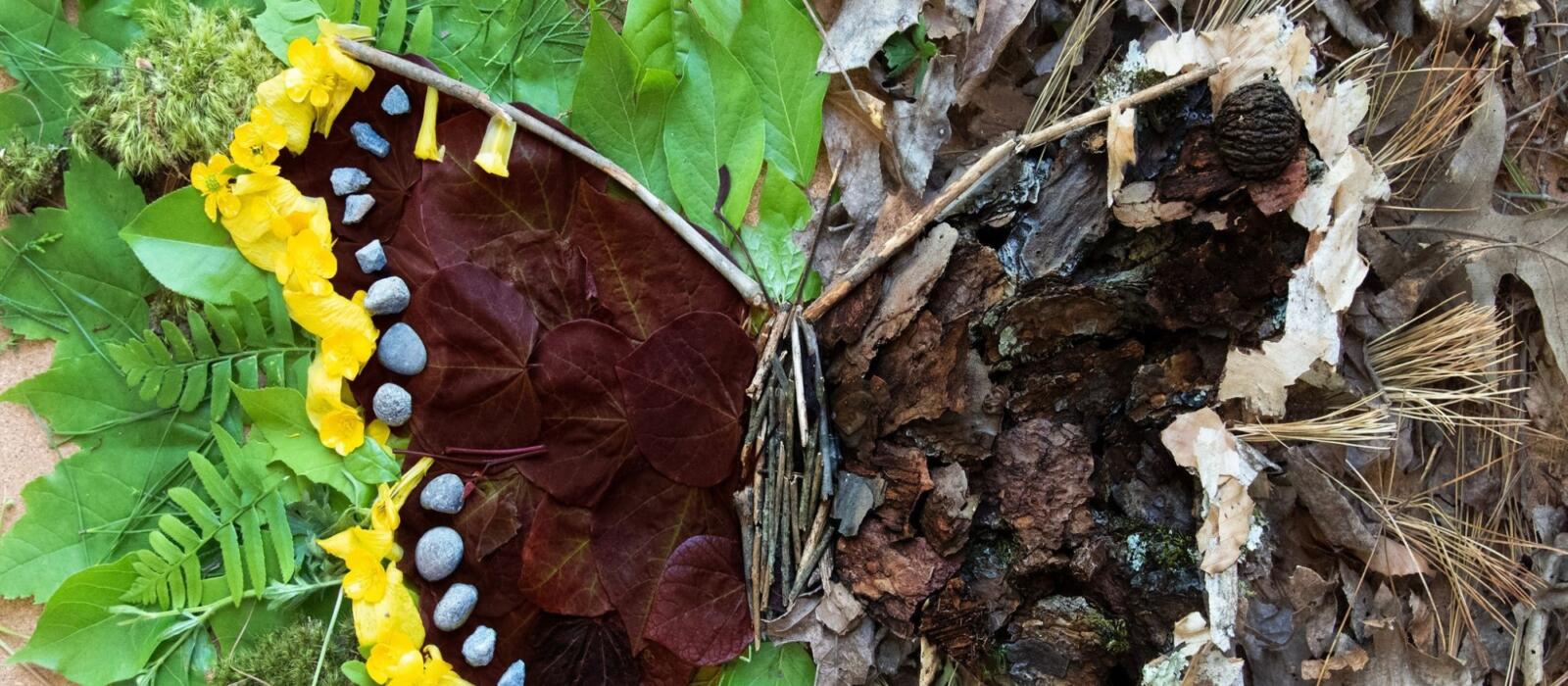
On the first day of March, I was enjoying the afternoon sunlight, picking a path down the flanks of the Middle Prong of the Little River in Tennessee. It was a warm day, the first real warm day, it felt like, and I wanted – rather, I hoped – to see a certain sign of the coming spring.
And I found it, perched just so on top of a mound of river otter scat. An inauspicious location for a remarkable insect – a mourning cloak butterfly.
I crouch down beside it, startling it into flight, but I hold still as it swings around in fluttery little circles. As it flaps, it catches the afternoon light beautifully, and I get the full view of this miracle of life. From above, I see the rich brown color that sometimes veers into purple, with splashes of blue along the trailing edge of the wing.
A fringe of gold, just to top it all off. Then the butterfly lands in front of me, folds its wings and momentarily disappears. A second later, my brain picks it out again. The pattern of its underwings is a stunning display of camouflage – the kind where if you look away, you’re going to lose it all over again. Its dark colors and angled margin of the wing suggest a piece of silverbell bark or an old hickory leaflet.
It crawls back around to a pile of crushed crawdad shells. I watch, fascinated. Mourning cloaks are among the first butterflies of the Great Smoky Mountains to fly each year. But that fact belies something else; the butterfly I was looking at was born last year. It spent all winter in hibernation as an adult. I sit, thinking, meditating on this fact. Picturing a butterfly, this butterfly, enduring all the harsh conditions that the Great Smoky Mountains can throw at a little insect.
I can see it hatching, last spring, out of a tiny yellow egg. It would have found itself in the midst of a large raft of brethren, all circling a large twig of the host plant. A voracious orange and gray caterpillar, devouring leaves all spring as it grows its way to adulthood, kept safe from the threat of songbirds by its spikes and the safety of its nursery web.
After crawling far off to find a quiet spot to form its pupa, this adult butterfly would have emerged in early summer. It would feed for a bit, but not on what we typically think of as butterfly food. It would ignore blooming flowers and instead look for things like rotting fruit, tree sap, animal carcasses or even scat. Summer’s heat would build, brought on by the monotonous thrumming of cicadas in the canopy. In response, this mourning cloak would have found a sheltered spot, like a wood pile, tree hollow or even the overhanging roof of a building and into stasis.
Technically, this is called “aestivation.” In principle, it’s the same thing as hibernation, except the animal is escaping the heat of summer instead of the cold of winter. Mourning cloaks spend most of the summer in this state of torpor. I picture this mourning cloak holding still, secure in its camouflage, while all around it, summer swirls in a miasma of heat – sunflowers blooming, cicadas thrumming and the migrant songbirds departing the mountains like a cloud scattering.
Fall arrives, with cooler temperatures and an increased urgency as winter looms. Mourning
cloaks awake from their sleep, and just like so many other Great Smoky Mountain animals, find themselves in a race to bank calories before the onset of winter. I picture this mourning cloak flitting through the hardwood forest, finding an oak tree oozing sap, while around it black bears vacuum up acorns from the forest floor. Butterfly and bear, bent to the same task.
With winter approaching, the butterflies find a sheltered, protected spot for hibernation. Ideally, it is protected from the worst of the winter weather, but a spot with direct sunlight will allow its dark wings to soak up what warmth can be found. To combat the cold, the mourning cloak changes its internal body chemistry, introducing sugar-like compounds that mitigate cell damage caused by freezing and lower the overall temperature at which its body would freeze. Bolstered by a sheltered spot, with chemical antifreeze on board, the butterfly settles in for its long winter sleep.
In the here and now, the mourning cloak is still feeding, gently opening and closing its wings. It is now joined by other early-season butterflies – an eastern comma, a question mark. These butterflies are all attracted to the bonanza of proteins, minerals and amino acids that can be found in the larder of animal droppings. Male butterflies use these for reproduction. Sitting by this flurry of life in the process of reproducing itself, I contrast that with the memory of a Great Smoky Mountain winter.
How frost heaves the pebbles and soil to and fro. How the bitter cold draws everything down to absolute stillness. Ice storms that can glaze the whole forest, and the winter storms that bring the bitterest arctic air. And then, on one of the first warm days of the year, I see the rays of sun reach into a mountain hollow. The angled sunlight of winter alights upon the trunk of a tall shagbark hickory, warming it just enough to set it into motion a dark piece of bark. The dark spot soaks up this sun, and it suddenly splits open. The butterfly opens and closes its wings a few times, working flight muscles and raising its body temperature further. Then, it launches into the sunlight.
All this imagined life history flashes through my mind. And then I recall the words of Albert Einstein, writing about what he calls the “optical delusion of consciousness” – how we experience ourselves as something apart from the rest of the universe. The delusion being that what happens in our inner lives is a part of this material reality like everything else. I think of this butterfly, about its inner life and consciousness. Somewhere inside its body, there is something that felt the doldrums of summer and the cutting cold of winter. It’s a part of this world, as real as scales on a wing or the camera I hold in my hands. And then, the mourning cloak climbs into the air, off in search of a sunny meadow to bring about this circle of life all over again.
I stand up and start to hike back, flushed with excitement of a new season beginning. Let the cardinals know it is time to sing, stir the sugars in the trout lily bulbs. Spring has sprung, and it flies on butterfly wings.