
Story
Winter in the Blackberry Farm Garden
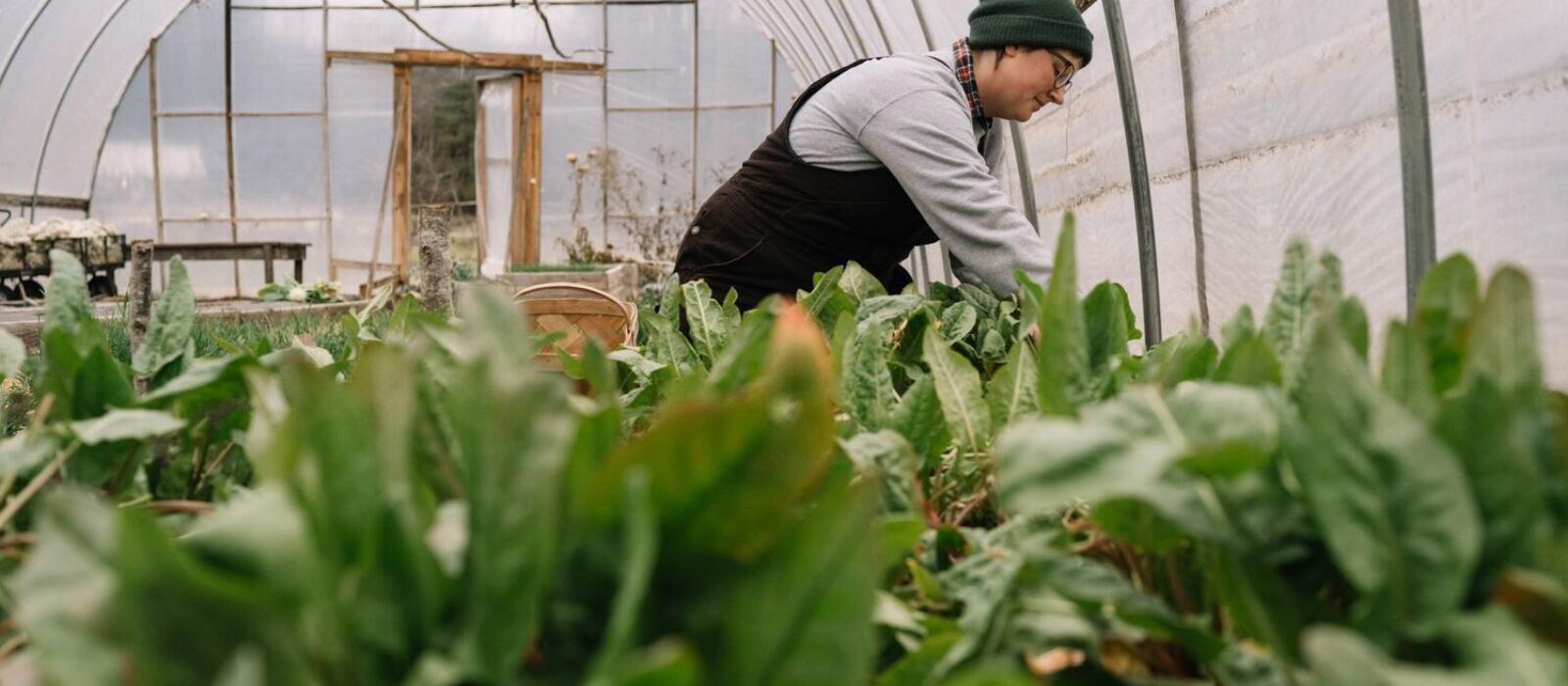
During the Winter months, the Blackberry Farm Garden team takes advantage of the slower season to harvest the surviving crops from Fall and get ahead of the next growing season. Below, Farmstead Ambassador Dakota Eddy shares a glimpse of what the team is working on this Winter in the Garden.
As a culinary garden, it is our priority to provide fresh ingredients for the kitchens to utilize on property. However, this is limited by the fact that we have four full seasons at Blackberry Farm, and our Garden is mostly outdoors.
As we enter the Winter season, the root vegetables and leafy greens of Fall have been harvested, and what remains outdoors are a few rows of frost hardy kale. Still thriving under the safety of the hoop house includes the steady supply of perennial herbs like rosemary, lavender, sage, thyme, oregano and kitchen favorite, sorrel. The milling corn that we grew in Summer has been shelled and is being reserved for a special 50th year anniversary package; however, there is plenty for the kitchens, and we will grind the corn fresh to be used for cornbread or grits.
The various Winter squash and pumpkins grown during Summer are still in safe storage and being used on property. The longer the Winter squashes age indoors, the more the flavor develops. With the help of the Larder, we created a brand-new recipe with the Garden pumpkins: Pumpkin Butter. This new product is being served exclusively in the kitchens on property. The Pumpkin Butter boasts a smooth, pumpkin-forward, sweet spread with classic pumpkin spice seasonings and a lemony finish that would be perfect on a warm biscuit in the morning.
Because the Winter season is not very busy, our team focuses on prepping the Garden for next year. An integral part to our heritage garden methods is to replenish the nutrients in the soil by sowing cover crops and keeping roots in the ground. We plant various cover crops like Winter wheat, barley, oats and Austrian Winter peas. Legumes, like peas, are considered “nitrogen fixing” because they harbor specialized, symbiotic bacteria that establish colonies in the roots and transform atmospheric nitrogen gas into ammonia, which can be absorbed by plants. When it comes time to plant within the beds, we will leave the roots in the ground by either crimping down the cover crop or scraping the top of the soil with a chop hoe.
Wintertime also includes maintaining the beds in other ways. A lot of the garden beds are bordered with downed logs sourced from the dense forest on property, so Winter provides an ideal time for finding and replacing any borders that are decomposed. We love using natural resources, like logs, in the Garden because it provides nutrients to the soil as it decomposes.
As the weather gets harsher, the gardeners tend to stay inside the shed by the warm, wood-burning stove and talk amongst themselves or listen to John tell stories (mostly about beans). The time spent inside offers moments of reflection about the previous growing seasons and how the team can improve in the coming seasons.
A lesser-known part of the Garden that we prepare for in Winter is the outdoor mushroom cultivation. We have grown shiitake mushrooms out of logs above ground for about five years, but this year, we have plans to add more varieties of mushrooms to the Garden. The shiitake mushrooms are cultivated by taking segments of a freshly downed hardwood trees and drilling holes to plug with substrate colonized by the shiitake fungus. These logs are stacked above ground in the forested area of the Garden to fruit for several years. Last year was the first year that we started the maitake cultivation by inoculating fresh chunks of oak logs and burying them in the ground of the forest. Finally, the newest addition to the mushroom cultivation of the Garden will be wine caps. These mushrooms will be cultivated on layers of cardboard and woodchips in a bed next to the forested area. All of these types of mushrooms fruit seasonally in the cooler seasons of Spring and Fall.
With the removal of the blighted hazelnut trees (the initial attempt to cultivate black truffles) in the back of the Garden, we are planting more perennial fruit crops, including blueberries, elderberries and a crowd favorite, black raspberries. These crops will take a few years to become well established and produce a sizable amount of fruit to harvest, but we look forward to using them in the kitchens and making jams in the Larder. Most of the hazelnut trees were wood chipped to use in the wine cap mushroom bed, but we salvaged much of the larger, longer pieces to construct a gourd tunnel in the middle of the front of the Garden.
As of now, it seems Winter couldn’t move any slower, but before we know it, the days will begin warming, and we will start to experience the many false Springs here. As we order new seeds and dream of the lush beauty or bountiful harvest that will come later in the year, our urge to work outside becomes greater and greater.
– Dakota Eddy, Blackberry Farmstead Ambassador