
Story
previously on farm stories
Which Beans to Plant
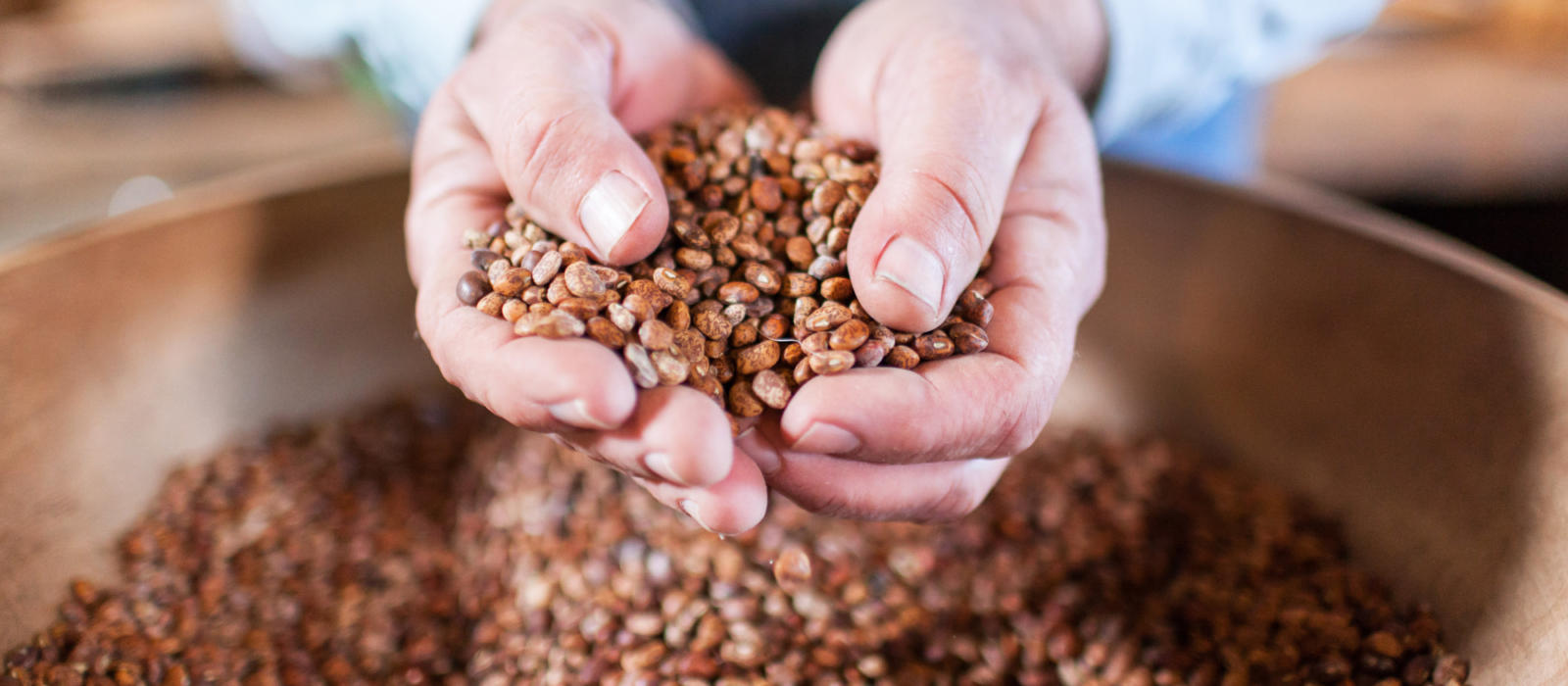
Heirloom Beans for 2018
It’s never too early to start planning for the upcoming farming season. If you wait, you may be too late! Much of my farming season is spent growing out heirloom seed varieties for seed production. Some of the seeds that are produced will go into deep freeze storage for long term preservation, and to be offered to Seed Savers Exchange members whowrite to me requesting a seed start on various seeds in my collection. The old varieties that we grow at Blackberry Farm are also used by our chefs. The heritage varieties produced here on the Farm are among our guests’ favorites.
I have been considering which beans I will grow out this coming Summer. I have 335 bean varieties in my collection, and every year there is always the question of which ones will I choose to plant? With so many to choose from, it becomes quite a challenge to figure out which varieties are in the greatest need of being grown out.
Available space is a big factor in determining the number of varieties that I will grow in any given year, and this is due to isolation requirements for beans. If two or more varieties are grown side by side, there is the risk that the varieties will become cross-pollinated and the pure varieties contaminated.
Here are a few of the bean varieties that I am considering for the 2018 growing season:
- The Mountain City White Hull Bean. This variety has off-white hulls and large white seeds. I have never seen a bean like this one.
- Minnie Shetterly Cornfield Bean. This one came from Campbell County, Tenn. There are several colors and seed coat patterns with these beans.
- The “Corky” Bean. This is a very rare variety which is known in only one hollow in Kentucky. The pods of this variety are eight inches long and are yellowish-white in color. The large elongated seeds are a red-tan color, and overall, it is a most unusual variety.
- October Soup Bean from Pamhagen Burqenland, Austria. This bean produces short, fat pods with large red beans, streaked with white.
The list goes on. It would take a long time to go through all of the possible choices, but you get the idea. I just hope that I live long enough to grow all of my 335 varieties. With that said, there’s not a moment to waste!
Master Gardener, John Coykendall