
Story
Walking on Water
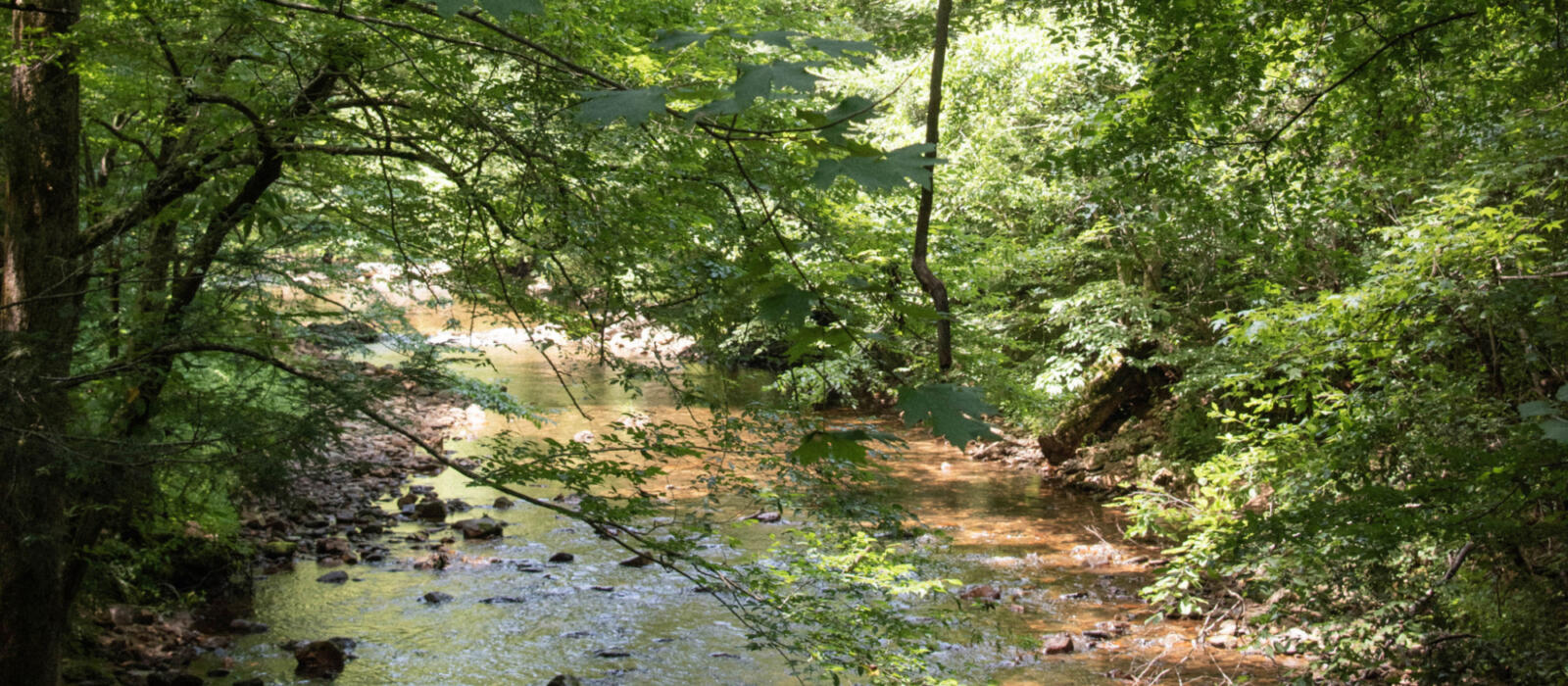
I stare at the colorful gravel on the bottom of Trunk Branch, mesmerized. Dozens of six pointed stars are dancing across the stone-studded streambed. Each one is a mysterious hybrid mixture of deep shadow accented by pinpricks of prismatic light. How very odd and tantalizing!
I search the depths for an answer. What fish or creature in the water is responsible for these spiraling phantoms? I come up empty. The occasional minnow cruises by, its elongated shade trailing along behind as if it were stitched to it like the mischievous shadow of Peter Pan.
Suddenly, I realize that what I am looking for is not in the water at all, but rather onthe water! Walking about with confidence are dozens of six-legged creatures of the order Hemiptera, the water striders. They dwell in a dimension where few others can. I had looked right past them because, by all rights, they shouldn't have been there in that tenuous invisible plane, looking so at home, and yet there they are.
This is largely made possible by the health of this stream. You see, water molecules are attracted to one another. It is this attraction that creates a phenomenon called "water tension.” By distributing their weight evenly over a large surface area on long outstretched legs covered by thousands of fine hairs, these fascinating insects literally spend their adult lives walking on water. Even the smallest amount of pollution in this stream, particularly in the form of oils or detergents, and the striders would be lost. As it turns out, such pollutants break the bond between water molecules, destroying the delicate balance of tension on the water's surface and the striders can no longer remain aloft.
Their dazzling, dancing shadows on the bottom of Trunk Branch would be replaced by their motionless forms. Therefore, they cause me to smile today. I smile because they make the world a more enchanting place just by being here. I smile because they tell us that, for now at least, we are doing something right.
– Boyd Hopkins, Blackberry Mountain Head Naturalist