
Story
previously on farm stories
The Pudding Tree
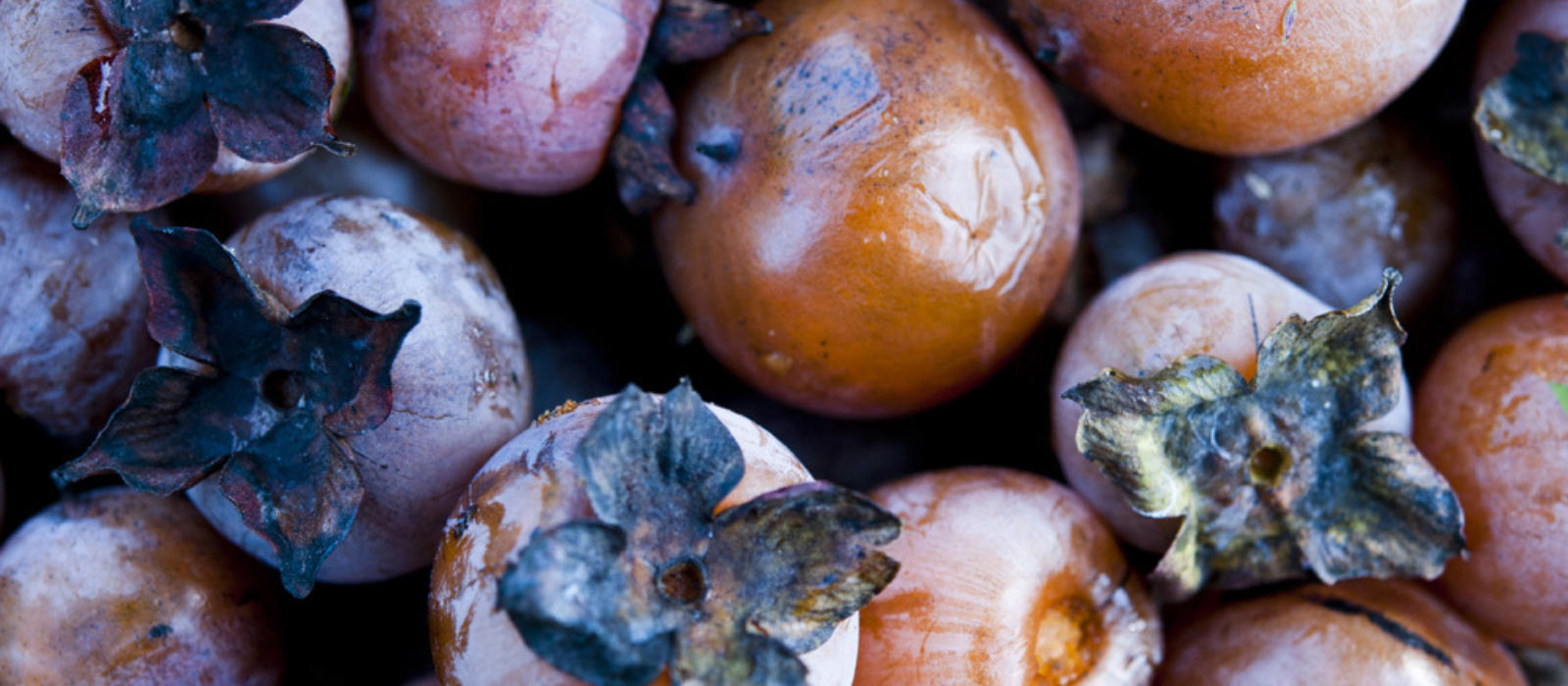
One might wonder about the assemblage of stark white sheets laid out at the feet of several trees near the Garden. Napping gardeners? A laundry experiment gone mad? Really, they are there to catch the gooey, gooshy goodness that is one of our favorite native fruits; to wit, the American persimmon or Diospyros virginiana.
October heralds the time when the copper-colored fruits detach from their boughs and fall to the ground, seemingly ripening on the way down. Cooler weather causes the fruits to blet – to sweeten and lose the powerful astringency packed inside unripe ones. (An age-old mountain prank is to convince a non-native person, or “come-here,” to pluck a green ‘simmon from the tree to eat. The pucker factor of an unripe fruit guarantees a lifelong fear of persimmons!)
Unlike the (now) more well-known Asian persimmon that is common in groceries and produce stands, our native type travels very poorly and needs to be used immediately after gathering. Persimmon puddings, candies, fruit leathers and baked goods are often made from the pureed pulp. The pulp can also be combined with cornmeal and to make a beer, which can then be distilled into a Winter-warming brandy.
Historically, the unique seeds that resemble a tiger’s eye jewel were roasted and ground. Like chicory in the Deep South, the roasted seeds were added to valuable coffee to augment one’s supply. The dense grain of the trees’ wood for decades was used in the manufacture of golf club heads, but fortunately, with the advent of metal golf clubs, many trees are now spared.
We have a standing bet in the Garden to see how many folks will pick a half-splattered persimmon up from the ground and eat it. Rarely has one refused. The singular flavor (like ginger pudding) is compelling enough to brush away a stray ant or speck of grass in order to sloppily consume a perfectly ripened fruit. Or ten.
This season, the sweetness and flavor of these arboreal confections, by many accounts, is the best in the last several years. Is it nature, or the thread count of the linen catchments that takes the credit? Come to the Garden and judge for yourself.
– Jeff Ross, Garden Manager