
Story
The Harmony of Contrast Therapy
At Blackberry Mountain, we love to encourage activity and exploration. With 5,200 acres of incredible landscape, guests can embrace the opportunity to connect with the wonders of nature, try something new and find time to move their bodies — whether in a meditative yoga flow under the morning sun or on a hike through miles of private trails.
As important and beneficial as it is to move the body, it’s equally important to prioritize recovery. The newest addition to Nest, Blackberry Mountain’s spa, is a Contrast Therapy Suite, and it is designed specifically for supporting recovery.
Contrast therapy is the thoughtful alternating of hot and cold. Switching between the two temperatures causes blood vessels to dilate (in the heat) and then constrict (in the cold). This creates a vascular pump effect that boosts circulation, supporting the natural recovery process.
This powerful ritual can help reduce muscle soreness, support healing after injury, improve joint mobility, reduce inflammation, enhance mental clarity, stimulate the metabolism and contribute to better sleep.
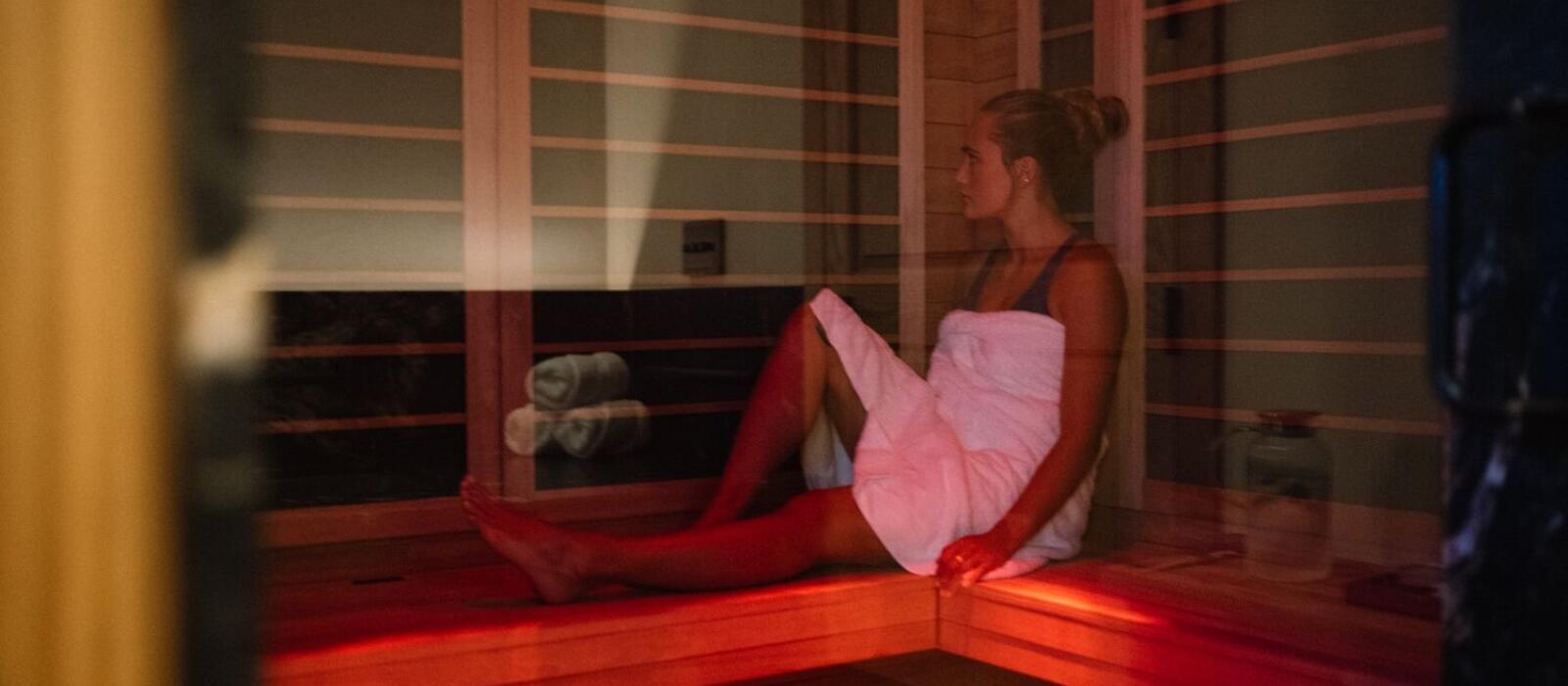
The Contrast Therapy Suite features an infrared sauna, cold plunge tub and vitamin C shower. The order you experience them depends on your goals. If you’re looking to encourage relaxation, begin in the sauna. If you’re seeking a boost of energy, your ritual begins with the cold plunge.
The infrared sauna offers a full spectrum of heat therapy. Mid infrared targets the soft tissue, tendons and ligaments. Near infrared improves skin health and collagen production. The infrared technology penetrates deeper into the skin, allowing the body to get the benefits of the heat without having to sit in the higher temperature environment of a dry sauna.
After the sauna comes a quick rinse in the vitamin C shower. This added step is a bonus for the skin and hair and acts as a small transition between the sauna and the cold plunge.
Mastering the cold plunge begins with your breath. While this experience is not a guided breathwork session, the Nest team offers breathwork guidance that can be particularly helpful for the transition into the water. Taking a few deep, calming breaths gets you into a relaxed breathing rhythm before the shock of the temperature. You want to lower into the water on an exhale and maintain your intentional breath to support your nervous system as your body absorbs the cold. The cold plunge is not calming in the moment, but it plays an important role in the recovery process and the sense of euphoria that you can experience after completing the contrast ritual.