
Story
previously on farm stories
Spring Gleaning
The native Cherokee of the southern Appalachians were hunter-gatherers for centuries before they adopted agriculture. They foraged for each meal, and gathered medicinal plants and herbs necessary to survive a harsh climate. They observed wildlife to determine which plants were edible, and understood the “signatures” — the correlation between the shape of a leaf or root, and its resemblance to a part of the human body. European settlers later learned much from the Cherokee, and developed a hybrid cultivation/forage system of procuring food and medicine. Many descendants of both Cherokee and early settlers still maintain the food wisdom and methodology of their forebears. We take great pride in treading the same paths and gaining sustenance from the same flora our ancestors did. Here are a few treasures of the Spring that we spend all Winter looking forward to:
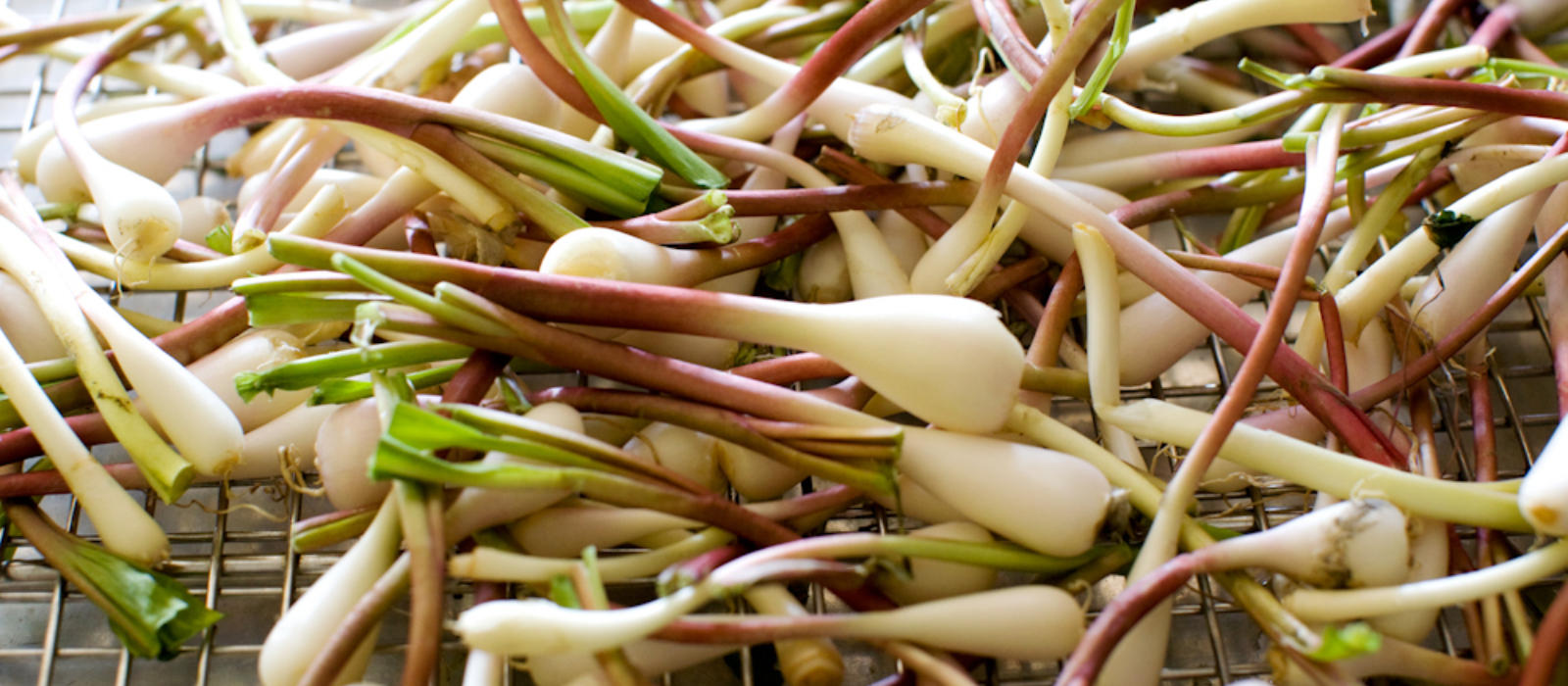
Ramps, also known as wild leeks, are a foraged food beloved by residents of our area. They are found early in the Spring on shady, moist hillsides in deciduous Appalachian forests. Known as a Spring “blood tonic” (all members of the Allium family, including onions and garlic, actually reduce cholesterol and blood pressure), ramps were a welcome green vegetable after a long Winter diet of dried beans and salty cured meats. The flavor of ramps is mild and pleasant, but can leave a lasting odor — so much so that a common punishment for arriving at the schoolhouse after having eaten the bulbs was being seated in the corner wearing a sign that read “Ramp Eater.”
There are more than 25 species of mint, and many hundreds of cultivated varieties. Over the centuries, mint has naturalized in our area, either from long-forgotten homesteads or errant plants escaping a garden. Mint, especially peppermint, was commonly brewed into tea to combat various stomach ailments, including indigestion — which certainly explains the ubiquitous Starlite mints in many restaurants!
Early in April, when the tulip poplar leaves just begin to appear, locals begin scouring the woods for the finicky morel mushroom. Everyone knew a special spot that belonged only to themselves and their kin, which were kept secret, much like an angler ambiguous about the location of his favorite fishin’ hole. Known in the region as “dry land fish,” owing to the common method of battering and deep-frying, morels are more related to a yeast than a true mushroom. Lacking the complex structure of a more typical capped mushroom, it is as if its evolution is millions of years behind the other forest fungi.
Sassafras is a wild tree that had many uses in our region’s past. The distinctive leaves (in its three different shapes) were dried and used to thicken soups. Its roots were also ground to season food or brewed into a medicinal tea that was a Spring tonic to ward off the common cold. Along with sweet birch and spicebush twigs, sassafras root was a key ingredient in the old SSS tonic.
The red berries of staghorn sumac, which shine like crimson candles at the tips of the trees’ branches, were used by the native Cherokee for seasoning foods. The berries contain malic acid, the same compound in apples that makes them tart, and when ground into a powder, add a lemony flavor to trout and wild game.
– Jeff Ross, Garden Manager