
Story
Shoepeg Milling Corn and Kentucky Field Pumpkins
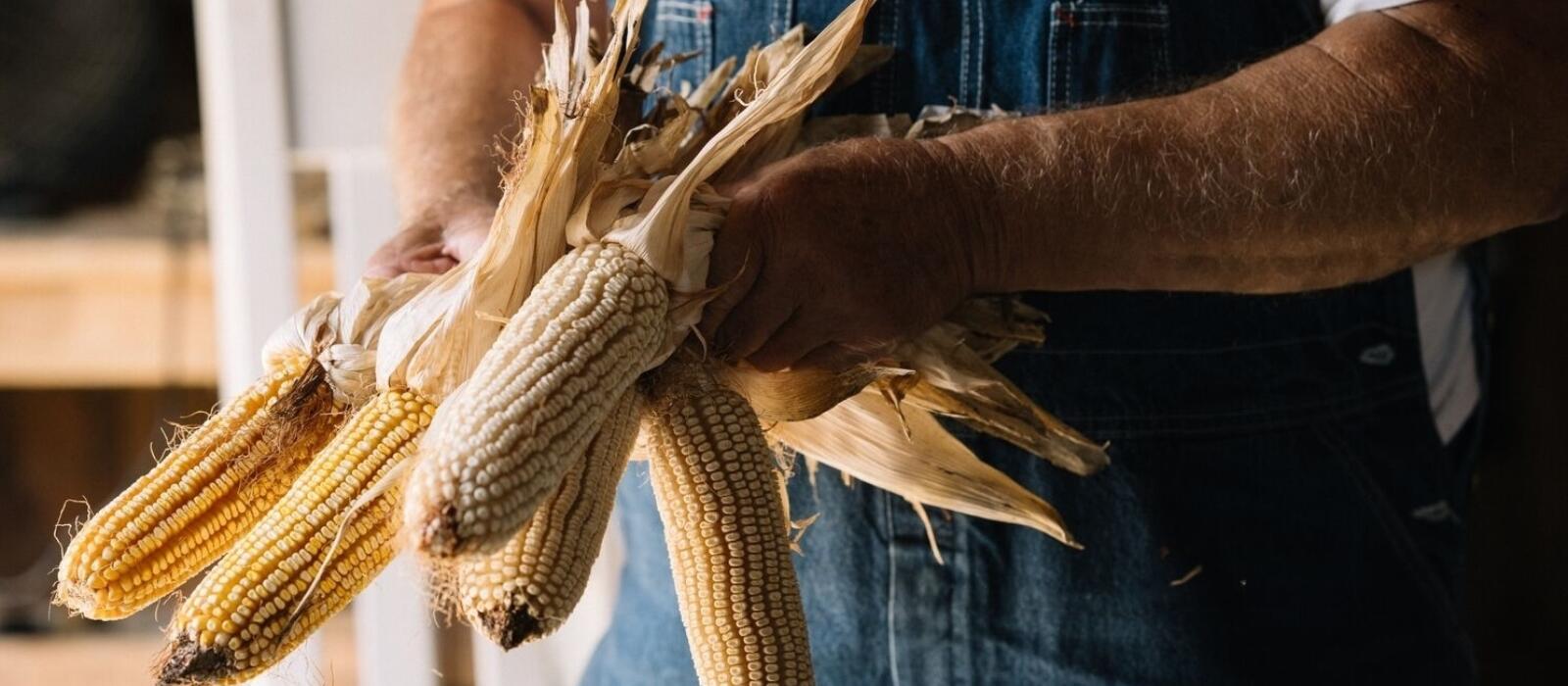
One of my favorite seasons of the year is fast approaching, and that is from early to late Fall. From an artistic standpoint, and one who loves painting landscapes, the Fall season reminds one of the completion of a painting, or the addition of final details.
Today is the perfect example of an early Fall day. The sky is of a deep cobalt blue, and the diffused afternoon lighting illuminates the drying cornstalks and corn blades which are stirred by a soft breeze.
Scattered along the edges of the cornfields are Kentucky field pumpkins that have ripened to varying shades of light orange/tan. They have only become evident with the dying back of the large pumpkin vine leaves, which shaded the developing pumpkins from being seen.
These pumpkins and the milling corn growing beside them have a long history dating back well over a century. The Kentucky field pumpkin variety dates back to the 1700s, and shoepeg corn varieties were being grown in the 1890s. All of the heritage varieties of crops that we grow here at the Farm were once important staples that were grown for the survival of our ancestors. Many of the crops that were grown served as food sources for the entire year in some form.
Kentucky field pumpkins were used for livestock fodder as well as for one of the family’s food sources. The smaller pumpkins were sometimes scraped out, removing the seeds and stringy material and then filled with corn, potatoes, carrots, cubed meat (pork or beef, or game of some type) and anything else that was available during the late season months.
Pumpkin pies were a great favorite, and there was also pumpkin soup, stewed pumpkin, fried pumpkin, and perhaps other methods and recipes which have been lost to time. Another old pumpkin preservation method that I recall from decades ago was a method for preserving dried pumpkins.
The pumpkin’s interior was scraped out and then cut in a spiraling shape so that you finished with one cut for the entire pumpkin. The outer shell was then cut off and the pumpkins were put on tobacco sticks, which were placed on the rafter poles to dry. When fresh pumpkins were no longer available, the dried pumpkin would last until the following season when a new crop of pumpkins were available.
Shoepeg corn, along with many other old varieties of corn, were once considered to be the most important crop that was grown on the Farm. Corn played a large role in a family’s survival as well as that for their stock’s survival. Mules were fed 12 ears of corn each along with hay. For the family’s use, corn provided cornmeal, corn flour, grits, hominy and as the main ingredient for the distilling of moonshine.
Whenever I am working with our heritage crops, I remember those who came before my time and of the history and heritage that they left for us to be rediscovered.
– John Coykendall, Blackberry Farm Master Gardener