
Story
Riding Safely on the Trail
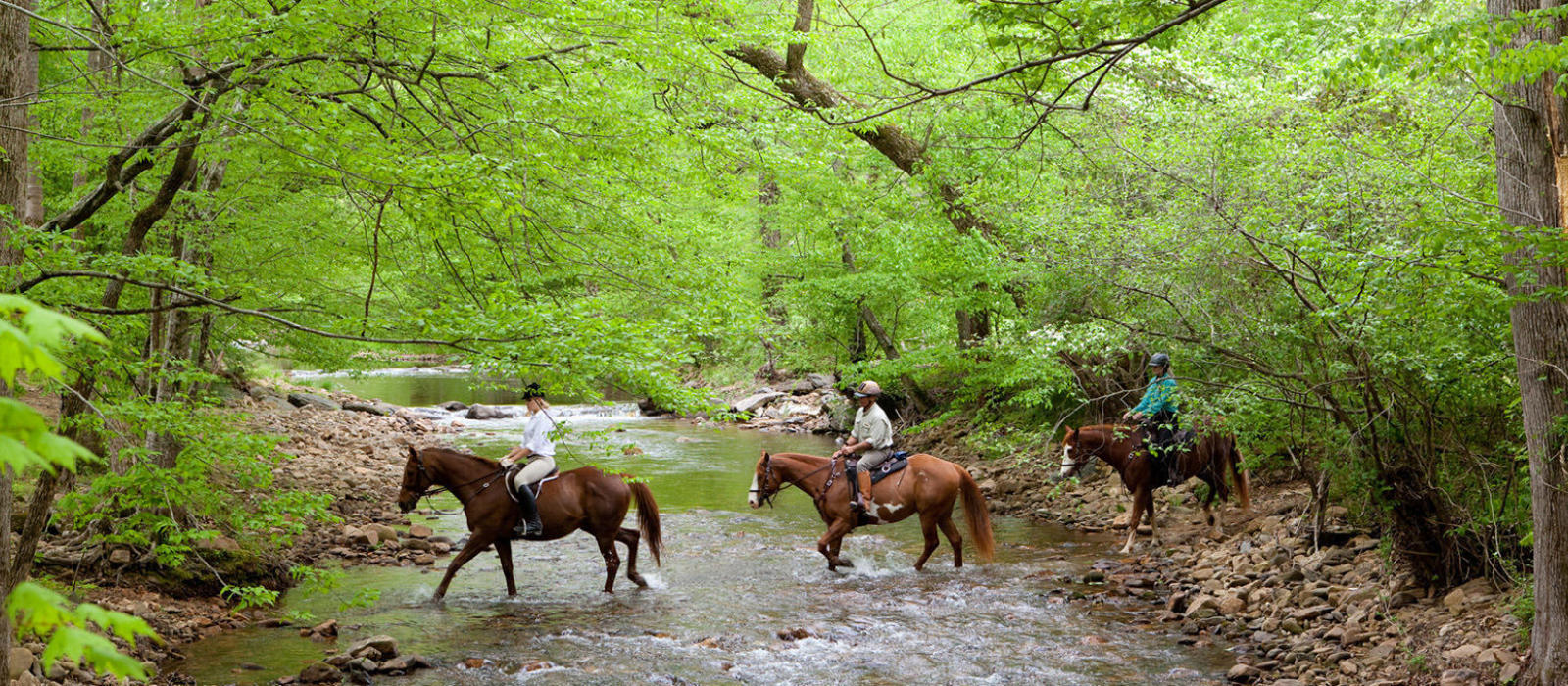
The pleasures of the trail, on horseback, are many—the rich scent of woodlands, meandering streams, striking views, glimpses of native species. Trail riding provides the opportunity to enjoy, in a relaxing setting, the company like-minded people and a good horse. I’ve logged thousands of hours on horseback in the Smoky Mountains and foothills. There is no better way to see the world than from the back of a well-trained horse. Over the years, my best teachers were horses. They taught me a great deal about the good life and a few things about keeping it safe.
The following are suggestions for safe riding and “happy trails”.
Wear the gear. Consider the sport and dress for riding success. Though many riders wear tennis shoes, boots are best. Choose a pair with good ankle support and a solid heel. The arch should not be too high. A textured sole will grip the stirrup. Flipflops, sandals, and open-toed shoes are unsafe in the saddle and on the ground around equines. Think about 1000 pounds standing firmly on your little toe. Ouch!
You will be most comfortable (and better able to mount the horse!) in jeans or breeches with a bit of stretch in them.
Select a helmet that feels snug, but not too tight. Almost everyone skis, bikes, rides in helmets these days. The reasons are obvious!Know thyself. Let’s be straight up here. When describing your riding ability—this is no time to “fluff your resume.” There is no shame in being a novice. Most people have little time to become accomplished riders in our busy world. Besides, you can’t fool the horse! Experienced riders visiting a new stable know it’s always best to under rate their riding ability. Better to be given “Steady Eddie” than to sign up for a horse whose advanced training and sensitivity might produce an unhappy ride for you. Pushing the wrong button on “Turbo” will confuse him, and likely he’ll take you someplace you don’t want to go! Most stables have many treasured “Steady Eddies.” They are worth their weight in gold, and consistently provide safe and pleasurable trail experiences ride after ride.
Know thy beast. Horses are intuitive, sentient creatures and generally desire to be people pleasers. Take some time on the ground to get to know your horse. Rub his neck. Ask him to back up, to move over, to walk and whoa. Find your inner horse whisperer and you will be rewarded. Horses, being herd animals, seek leadership. A few simple exercises on the ground establish the proper relationship with the horse and set you up as “herd leader.” No doubt, the relationship transfers from the ground to the saddle.
Heels down, shoulders back. Sit up tall! Keeping your heels pressed firmly down, places your seat securely in the saddle. Ride with authority and your horse will trust you!
You are the pilot. Just as you are constantly steering your car, even when driving a straight roadway—you must always keep in touch with and steer your horse. Resist the temptation to “go on autopilot” and allow your horse to simply follow the others. The horse cannot imagine where your head is and has no way of knowing that the low branch you allowed him to go under will wipe out your contact lenses, or worse! For every rider who exclaims “That horse took me under a tree branch!” the obvious reply is “Who was steering?”.
Look ahead. Watch the terrain and stay aware of your surroundings. These are the things you came to see! It is best to leave your camera/phone in your pocket or at the stables. Soak up the visual memories and store them in your mind’s eye. Or dismount to take photos. Save that phone call for after the ride. The same actions considered unsafe while driving a car, are not safe when riding a four legged creature. Your horse deserves your full attention and you will enjoy your ride most if not distracted by electronics.
Stay safe! It’s easy. Embrace nature. Breathe in the mountain air. Enjoy the rushing stream and hug your horse when you return! Life is good from the back of a horse!
Carla Hawkinson, Equestrian Program Manager 865-273-8545 chawkinson@blackberryfarm.com
The pleasures of the trail, on horseback, are many—the rich scent of woodlands, meandering streams, striking views, glimpses of native species. Trail riding provides the opportunity to enjoy, in a relaxing setting, the company like-minded people and a good horse. I’ve logged thousands of hours on horseback in the Smoky Mountains and foothills. There is no better way to see the world than from the back of a well-trained horse. Over the years, my best teachers were horses. They taught me a great deal about the good life and a few things about keeping it safe.
The following are suggestions for safe riding and “happy trails”.
Wear the gear. Consider the sport and dress for riding success. Though many riders wear tennis shoes, boots are best. Choose a pair with good ankle support and a solid heel. The arch should not be too high. A textured sole will grip the stirrup. Flipflops, sandals, and open-toed shoes are unsafe in the saddle and on the ground around equines. Think about 1000 pounds standing firmly on your little toe. Ouch!
You will be most comfortable (and better able to mount the horse!) in jeans or breeches with a bit of stretch in them.
Select a helmet that feels snug, but not too tight. Almost everyone skis, bikes, rides in helmets these days. The reasons are obvious!Know thyself. Let’s be straight up here. When describing your riding ability—this is no time to “fluff your resume.” There is no shame in being a novice. Most people have little time to become accomplished riders in our busy world. Besides, you can’t fool the horse! Experienced riders visiting a new stable know it’s always best to under rate their riding ability. Better to be given “Steady Eddie” than to sign up for a horse whose advanced training and sensitivity might produce an unhappy ride for you. Pushing the wrong button on “Turbo” will confuse him, and likely he’ll take you someplace you don’t want to go! Most stables have many treasured “Steady Eddies.” They are worth their weight in gold, and consistently provide safe and pleasurable trail experiences ride after ride.
Know thy beast. Horses are intuitive, sentient creatures and generally desire to be people pleasers. Take some time on the ground to get to know your horse. Rub his neck. Ask him to back up, to move over, to walk and whoa. Find your inner horse whisperer and you will be rewarded. Horses, being herd animals, seek leadership. A few simple exercises on the ground establish the proper relationship with the horse and set you up as “herd leader.” No doubt, the relationship transfers from the ground to the saddle.
Heels down, shoulders back. Sit up tall! Keeping your heels pressed firmly down, places your seat securely in the saddle. Ride with authority and your horse will trust you!
You are the pilot. Just as you are constantly steering your car, even when driving a straight roadway—you must always keep in touch with and steer your horse. Resist the temptation to “go on autopilot” and allow your horse to simply follow the others. The horse cannot imagine where your head is and has no way of knowing that the low branch you allowed him to go under will wipe out your contact lenses, or worse! For every rider who exclaims “That horse took me under a tree branch!” the obvious reply is “Who was steering?”.
Look ahead. Watch the terrain and stay aware of your surroundings. These are the things you came to see! It is best to leave your camera/phone in your pocket or at the stables. Soak up the visual memories and store them in your mind’s eye. Or dismount to take photos. Save that phone call for after the ride. The same actions considered unsafe while driving a car, are not safe when riding a four legged creature. Your horse deserves your full attention and you will enjoy your ride most if not distracted by electronics.
Stay safe! It’s easy. Embrace nature. Breathe in the mountain air. Enjoy the rushing stream and hug your horse when you return! Life is good from the back of a horse!
Carla Hawkinson, Equestrian Program Manager 865-273-8545 chawkinson@blackberryfarm.com