
Story
previously on farm stories
Of Early Spring and Dry Flies
It has been a complete surprise, but one that is fully welcomed. The incredibly mild Winter has provided better than average fishing thus far. The early Spring-like conditions have even brought about the early emergence of some of our favorite fly hatches of the year: the Quill Gordon and Blue Quill mayfly. These bugs typically arrive in mid-March and always draw fish to the top with frenzied excitement. The Quill Gordon emerges on the stream floor and swims to the top where it dries its wings on the streams surface while hopping along trying to break free and into flight. However, this frantic dance on the water surface is often what brings its demise.
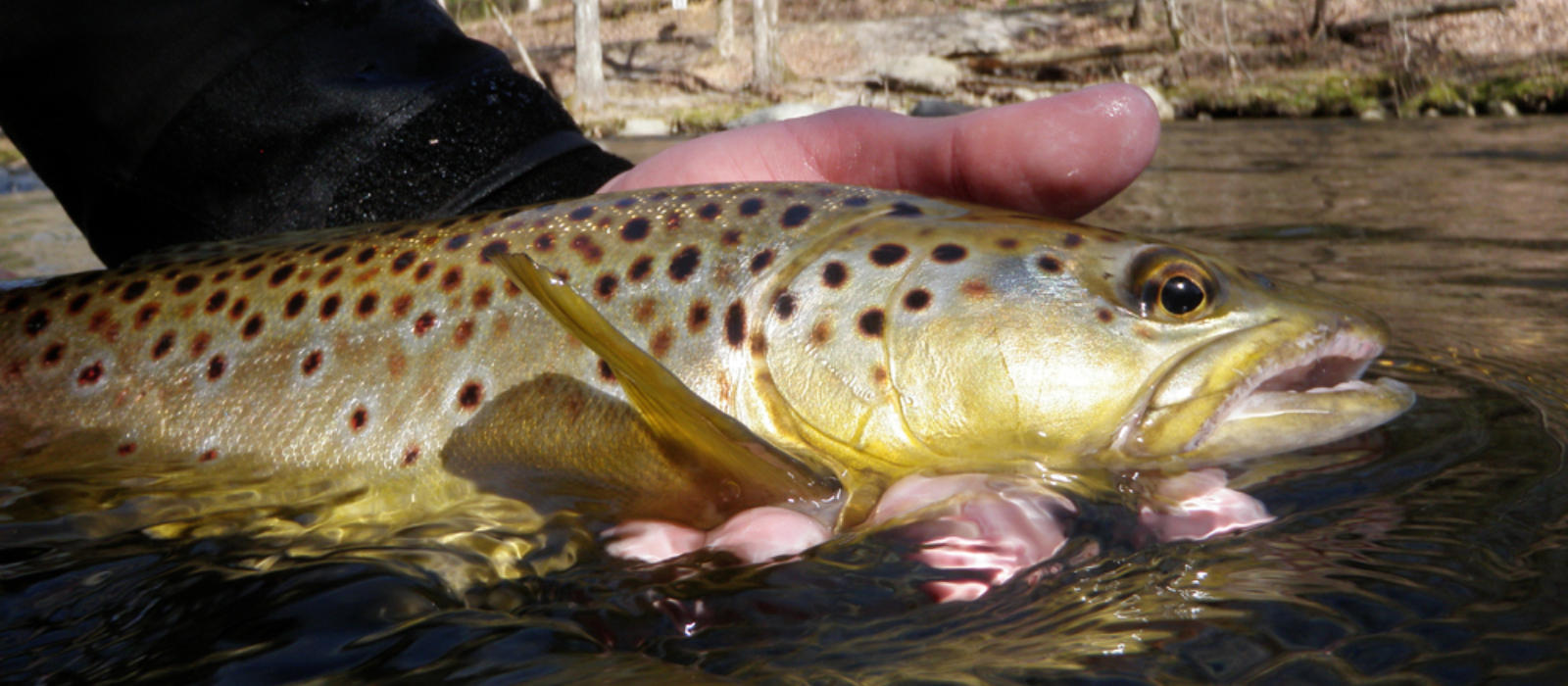
I sat on the side of a small pocket of water on the East Prong of the Little River the other day, as I have many times, stalking the 20-inch plus brown trout that lies at its bottom. I had hoped to see him stick his big golden head out of the water to grab one of these large mayflies hopping along the surface. I have missed this fish on several occasions, and it was a score I longed to settle. He did not appear that day, however. I sat there for quite a while, nonetheless, completely content to watch the multiple rainbow and brown trout that also inhabit that small pool jumping, full body, out of the water to grab emerging Quills as they bounced along the surface.
My soul was full after the experience, but I am a glutton by nature, so simply visually partaking of this was not enough. I snuck close as I dare to the fish and laid a fly gently alongside the current where it was quickly taken by a rather large brown trout by my Smoky Mountain standards. Once the fish was returned to the water, I looked up to see the fish continuing to rise. I dusted my fly and continued up the stream. I did not want to disturb that big male brown much more. Hopefully he will be taking those big dry flies on my next return!
Quill Gordon Mayflies (Epeorus pleuralis) are a much anticipated part of Spring. They are large grey bugs that, as mentioned earlier, always draw fish to the surface with feverish and splashy rises. I often catch larger numbers of fish during this time, as the trout have waited all Winter to see the first hatches of Spring. If you are on the water when the bugs start to come off, it can provide fantastic excitement. They are also a bug whose hatch, once it starts, seems to carry on regardless of weather. Once they start, you can just about count on them every day, at some point during the day, until they are all done.
The actual “hatch” typically provides the most exciting action as the fish grab the bouncing bugs on the surface. However, a mayfly’s life cycle ends much as it began: on the water’s surface. A few days after emergence, mayflies molt yet again and then return over the water to lay eggs. Once this ultimate goal is achieved, they fall to the water’s surface “spent.” We call this final stage of a mayfly’s life the “spinner” stage. An often overlooked opportunity to catch fish on dry flies is the spinner fall that often takes place in the evenings. Eddies and softer pockets along the stream often collect these spent flies, and trout will willingly take advantage of the late day snack.
I love few things in my outdoor pursuits as much as catching fish on the water’s surface. Spring has sprung in the Smokies, although early, and it is hard to for me to sit in this cabin and not go wade into some mountain stream.
Small fish and big memories…
– Alex Quick, Fly Fishing Manager