
Story
Non-Sleep Deep Rest
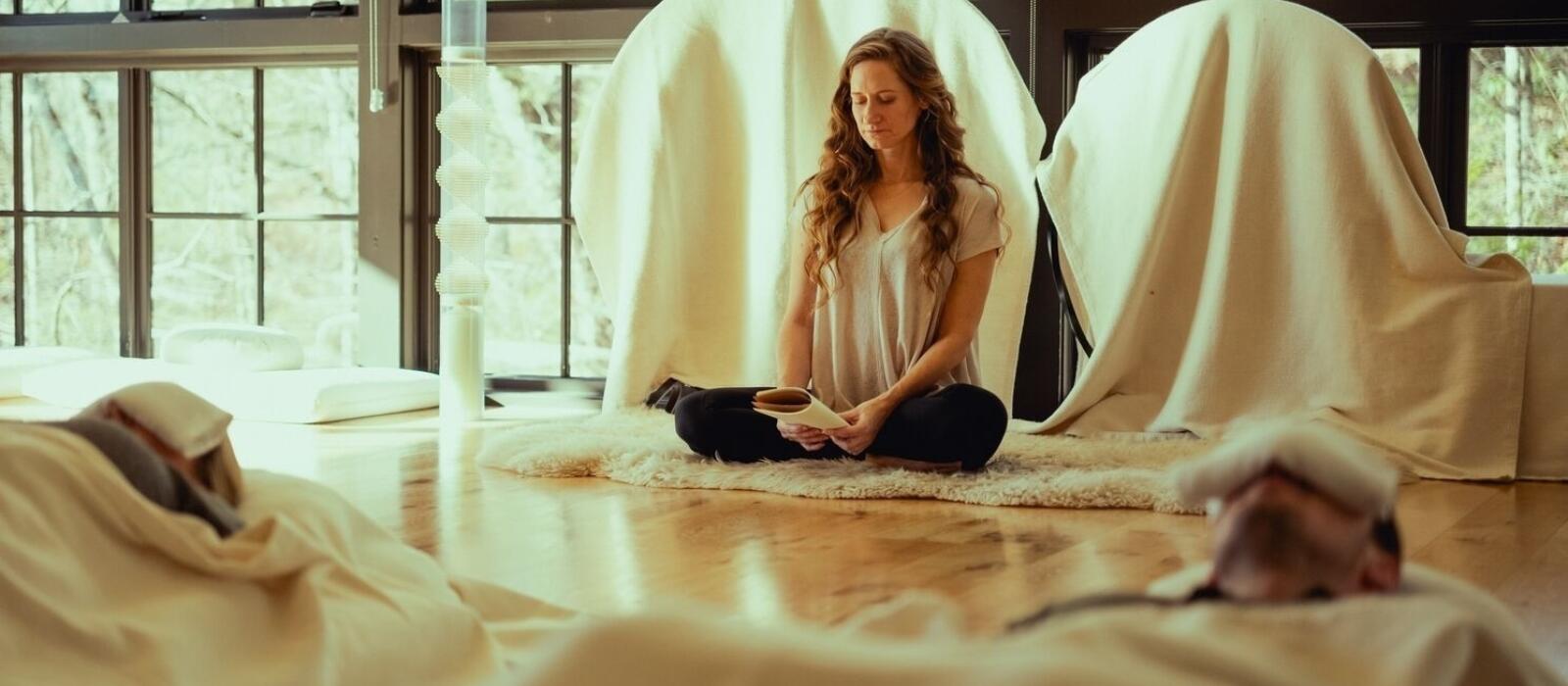
From the beginner looking for an approachable way to start their wellness journey to the guru seeking a fresh practice to incorporate in their routine, Non-Sleep Deep Rest offers something for every level of mindfulness practitioner. Learn all about the practice and what you can expect during a class at Blackberry Mountain with Wellness Manager Tina Cheema!
What is Non-Sleep Deep Rest and its purpose?
Non-Sleep Deep Rest (NSDR) is a modern-day practice inspired by yoga nidra, also known as yogic sleep. During an NSDR class at Blackberry Mountain, guests are led through a meditative practice that guides both the body and brain into a state of deep relaxation — ideally without falling asleep. For most of the class, guests will be reclined on their backs with their eyes covered to really hone in on the experience.
The instructor will guide guests through gentle breathwork, visualization exercises and cues to bring energetic awareness to certain parts of the body. While it involves relatively low physical effort from the guest, it contains multitudes of benefits — both physical and mental. Studies have shown that just 30 to 60 minutes of NSDR can lower blood pressure, accelerate learning and memory capabilities, and even increase one’s baseline dopamine levels by up to 65%. If someone is looking to reduce stress and anxiety in their life, this practice offers so much bang for their buck!
How does Non-Sleep Deep Rest differ from other meditative classes offered at Blackberry Mountain?
This is my personal favorite of our current mindfulness offerings, as I think it has something for everyone (especially those new to meditation). Since the instructor will give verbal cues for most of the practice, many people find it easier to achieve what we think of as a meditative state.
NSDR also has a unique feature that we refer to as a “rotation of consciousness,” in which we use bodily awareness to affect the mind. I love this portion of NSDR because not only is it incredibly easy to follow along with, but it almost reverses a typical meditative practice in which we use the mind to still the body.
If you are someone who finds it difficult to get out of your own head or finds your mind racing when trying to meditate (like me!), NSDR leverages our conscious bodily awareness to guide the mind deeper into a relaxed and reduced state of consciousness.
What does a typical class look like, and what can guests expect throughout the experience?
Upon arriving for class, the instructor will take a few minutes to explain what the practice entails, what to expect throughout the experience and answer any questions guests may have. The instructor also allows plenty of time for guests to find a comfortable position for the meditation. Before or after the practice, the instructor will also discuss some of the more “technical” aspects of the practice, often focusing on the different types of brain waves we experience: gamma, beta, alpha, theta and delta.
When I lead this class, I like to mention that we traditionally think of being awake vs. being asleep as a binary, but really, it’s more of a spectrum of consciousness. NSDR often lands somewhere in the middle, in the liminal state between sleep and wake.
During the practice, a variety of responses may happen, all of which are normal. As the instructor’s voice guides the meditation, guests may visualize things in their mind, feel a heightened sense of bodily awareness or even fall completely asleep. There is no wrong way to complete an NSDR practice as long as you strive to stay present and open to anything that may arise.
After the experience, it is common to feel very relaxed and maybe even a little dazed or groggy, especially if we enter theta or delta wave states. This only lasts a short while and is nothing to be apprehensive of. It is also likely that your sleep quality the evening of will be even better than usual.
How would you recommend a guest fit Non-Sleep Deep Rest into their day at the Mountain?
I recommend guests book into NSDR after any higher intensity activities like a fitness class or hike. I particularly love an NSDR practice on a cold Winter afternoon as the light fades. It’s an excellent way for both the mind and body to gently decompress and adjust our pace from day to night.
Can a Non-Sleep Deep Rest practice be recreated at home?
NSDR is absolutely something that can be recreated at home! There are plenty of guided practices available online, and guests can replicate their meditation setup from class at Blackberry Mountain. Our instructors are always happy to give our “pro-tips” for bringing these practices home with you. Mine is lighting some palo santo beforehand and having a nice warm blanket to stay cozy throughout!
Discover more wellness opportunities at Blackberry Mountain and book your dream getaway today.