
Story
Naming Beans and Field Peas
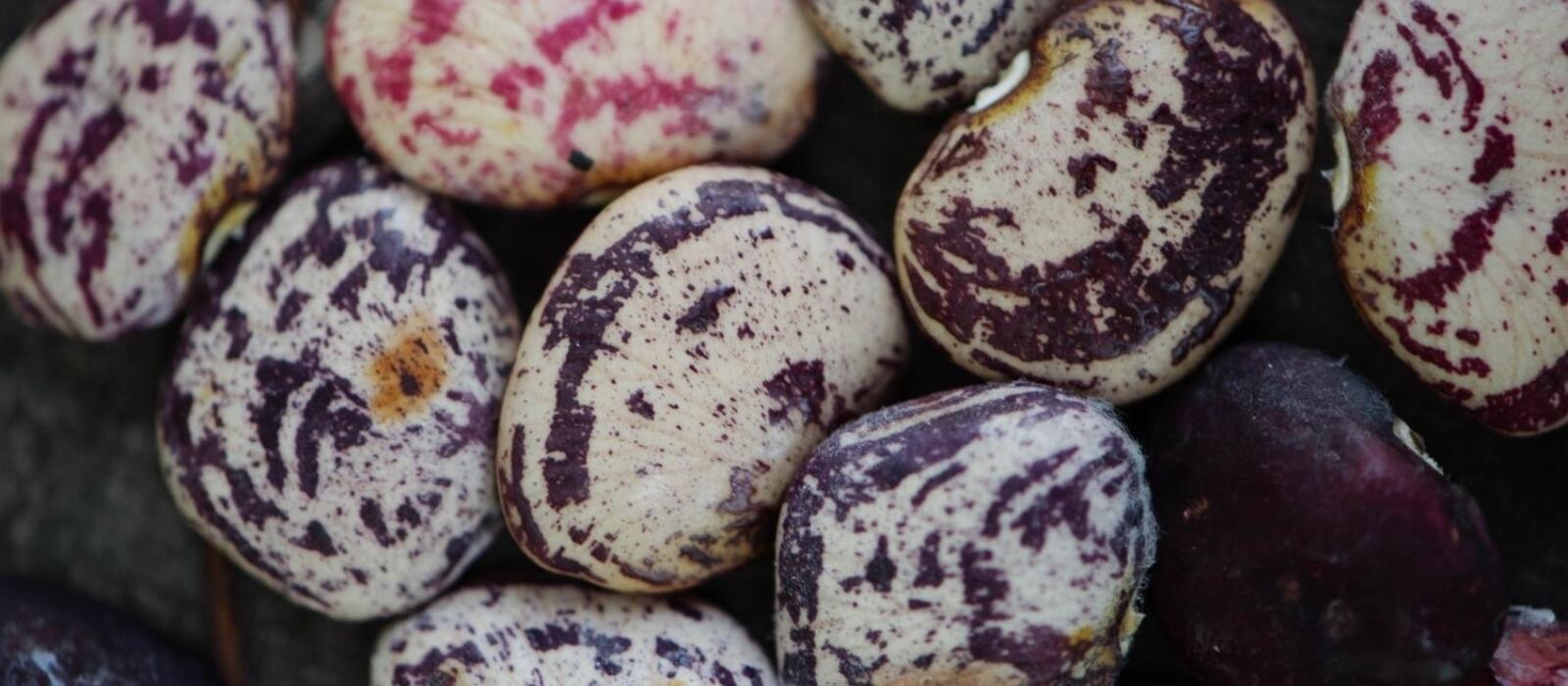
I have been a seed saver for many years now. As a beginner, one of the things that fascinated me most was how heirloom varieties got their names. Many of the old varieties had unusual names, such as Turkey Craw and Purple Goose beans.
In 1803, a hunter up in Kentucky shot a wild turkey. In the process of cleaning it, he found a few bean seeds in the turkey’s craw, which he saved and planted the following year. Over time, this old variety became a favorite in Kentucky, Virginia and Tennessee, especially in the areas where they share borders. Although this story may seem farfetched, it is important to know that the craw (in this case, that of a wild turkey) is the “first stop” of anything being digested. It is in the craw that the evidence will be found as to what the turkey, goose or other fowl were feeding on, which could be wheat, barley, oats or other wild grains. In the case of the wild turkey, beans had been the last thing it ingested. It was from this hunter’s chance discovery that the Turkey Craw bean has been handed down to us from a Kentucky family dating back to 1803.
Another bean in my collection is the Purple Goose bean. It came from renowned chef Sean Brock, who got the bean from his grandmother who lived in Wise County, Virginia. This bean has a deep purple frosting on a grayish-white background, which like the Turkey Craw bean has a striking appearance. The Turkey Craw bean has the same mottling, with the color being a reddish tan frosting. The Purple Goose bean has the same story as the Turkey Craw bean, which illustrates the fact that there are a number of seed varieties that have been handed down to us over the years with similar stories.
I also know of varieties of field peas that share the same story. When it comes to the names of heritage varieties, it would require a good-sized book to list all of them. The most common way of naming many of the old varieties was to use the family name for the bean, pea or any old variety that had been handed down from generation to generation. A few examples are the Jones family field pea (1840), the Piggot pea (1830), the Scarbora bean, the Rev Taylor butterbean and the Conover butterbean.
There are also a good number of heritage varieties that have descriptive names, such as the Whippoorwill pea. The seed coat of the Whippoorwill pea resembles that of the Whippoorwill bird. The Blue Goose field pea is an example of the coloration of a certain breed of wild goose. The Cream and Tan Calico pea describes itself, and the One to Hill pea tells us that only one pea to a hill in the row was required. Then, there is the Red Ripper pea. I never have figured that one out.
– John Coykendall, Blackberry Farm Master Gardener