Story
Leigh Mallis Shares Wellness Advice

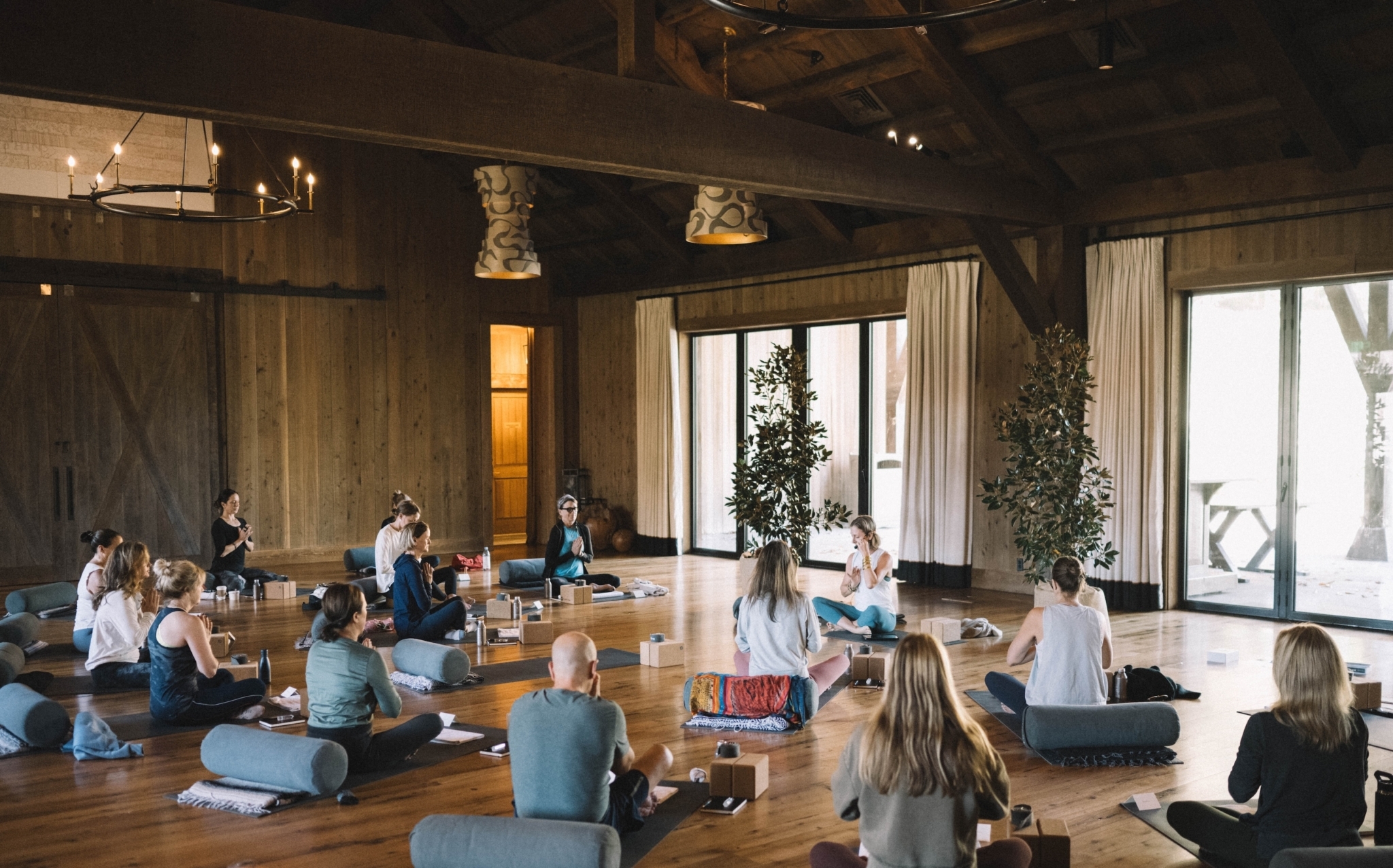
In honor of November’s Yoga with Leigh Mallis event at the Farm, we took a moment to connect with Leigh about her perspective on wellness as a yoga and movement instructor. From offering advice on how to create balance and stay motivated to sharing the benefits of personalizing your space and tuning into your individual needs, keep reading to discover an expert’s understanding of wellness.
How important is creating a wellness routine, and how do you stay motivated to stick to that routine?
Establishing a wellness routine, especially with daily breathwork and meditation, is transformative. These practices elevate your energy, reduce stress and cultivate a calm, centered state that allows you to approach life with greater ease and resilience. For me, the motivation lies in the feeling I want to carry throughout the day. Knowing that my mental clarity and emotional balance are directly related to my breath, movement and meditation practice keeps me committed.
This routine isn’t just about ticking off tasks – it’s about creating a foundation of inner peace and mental space that helps me thrive. It can be as simple as starting your day with warm lemon water, three journal prompts and an 11-minute meditation. It is the consistency to the practice that creates the biggest transformations over time.
How does setting influence wellness experiences? Why might you choose to practice yoga or meditate inside versus outside, in the morning versus in the evening, alone versus with a group, etc.?
The beauty of a home practice is the ability to create a personalized, sacred space. Our environment and everything in it vibrate with energy. Consciously choosing a space and being intentional about the items in the space does influence the experience. By setting up a small altar with items that bring you peace – like flowers, a favorite photo, crystals or palo santo – you can infuse your practice with intention and joy. During my online 40-Day Sadhanas*, I encourage students to establish a dedicated area for their practice, making it a true sanctuary.
While the best time to practice is truly any time you can make it happen, a morning ritual can be especially powerful for building discipline. Rising even just 15-30 minutes earlier than others in your home allows you to embrace the peace and quiet, setting intentional moments that energize and support you throughout the day. I live in the heart of the city with lots of noises around me, so while my typical go-to practice space is indoors, there is nothing like practicing surrounded by nature when you have the opportunity. This is why I love retreats!
Practicing with a group adds another layer of support and connection, creating a strong sense of community. It’s empowering to know that you can both draw strength from a collective practice and also tap into your own inner peace whenever you need it.
When life gets busy, self-care and wellness often fall low on the list of priorities. What advice do you have for finding opportunities to take care of yourself in especially hectic periods of life?
The most important thing is to tune into your own energy. Notice how you’re feeling and how you want to feel. Remember your tools and use them – even 3-11 minutes can shift you into a more centered space. It might be as simple as listening to a favorite mantra while driving, chanting along or taking deep breaths. Try moving mindfully between tasks on your to-do list, walking a little slower to stay present. When you’re in line or just thinking of it, practice slowing down your breath, pausing on the inhale and on the exhale. Integrate your wellness practices into the natural flow of life, even amidst the chaos – it all makes a difference.
Staring at a blank piece of paper can feel incredibly overwhelming. Sometimes it may feel like you have nothing to say, while other times it feels like you can’t write down enough. When journaling, how do you ensure you’re expressing your thoughts productively?
I start with a few grounding questions, and I don’t overthink it – I trust whatever comes to mind. Here are my go-to prompts to get started:
How do you want to feel today? Setting an intention for my emotional state guides my focus.
What do you want to give today? Reflecting on what I can offer reminds me of my purpose and connection with others.
What do you want to receive today? This helps me stay open to the support, kindness or inspiration around me.
I AM statement: Simply fill in the blank: I AM __________ . This affirmation reinforces a positive self-concept and encourages me to embody the qualities I value.
What IF statement: Consider a positive outcome, like What IF __________? Envisioning possibilities helps me break through limitations and spark hope or curiosity.
It’s important that your mind, body and soul are in healthy harmony with each other. How do you make sure you’re devoting enough time to each and how do you approach imbalances?
My morning sadhana* practice begins each day with 30 minutes of breathwork and movement through kriyas*, ending with an 11-minute meditation. This routine gives balanced attention to my mind, body and soul right from the start, fostering a relationship with my own awareness. By tuning into these aspects first thing, I have made the effort to carry that harmony with me throughout the day. When life strikes with challenges, I am more equipped to return to the ease and flow that was already set.
If I feel physically drained, I’ll rest with a short 11-15 minute nap. When my mind feels overactive with stress or anxiety, pranayama* becomes essential. Some days, that means a run or a vinyasa* class, while on others, a few minutes of “fists of anger” is just right. My soul connects with mantra and meditation most easily, which brings me back to a grounded, centered space anytime I need it.
With wellness often being a very personal journey, there isn’t always a one-size-fits-all approach. When teaching and leading group practices, how do you ensure each individual’s needs are being met?
I’m inspired by the quote, “Attention is the rarest and purest form of generosity,” by Simone Weil. In each class, I aim to give my full attention to the collective energy and individual presence of each participant. I observe how people enter the room – their body language, the energy they bring, how they settle on the mat, whether they’re lying down, in child’s pose, or connecting with someone nearby. This initial awareness of the group’s energy informs the practice.
As class begins, I encourage everyone to tune into their own needs, reminding them that whatever they seek can be found through breath and mindfulness. I invite them to modify or intensify their practice as needed, emphasizing that they are their own best teacher. Being able to guide others on this journey is a gift and helping them discover their inner teacher is a powerful part of that experience.
As the holiday season approaches and the year starts to wind down, how does this influence your approach to wellness during November and December?
Personally, I like to amplify my wellness routine with a focus on supplements and meditation while I keep my body moving. With the colder months and holiday hustle around the corner, I make it a point to stay consistent with my probiotics and vitamins, often adding echinacea or other immune-boosting herbs to keep my system strong.
Since we're indoors a bit more during Winter, I find comfort in lighting a fire, wrapping up in a blanket and enjoying longer pranayama* and meditation sessions. I also make time for naps and prioritize rest, embracing the season's slower, cozier pace. I am also sure to make it to a heated vinyasa class a couple of times a week to keep the body strong and energy moving.
*Key Yoga Terms:
Pranayama: A yoga practice that focuses on controlled breathwork.
Sadhana: A spiritual practice where one lets of ego and attachments to look inward.
Kriya: A meditation technique using one or multiple yoga practices to achieve a specific outcome.
Vinyasa: A yoga practice that links breath and movement.