
Story
Indian Ghost Pipe
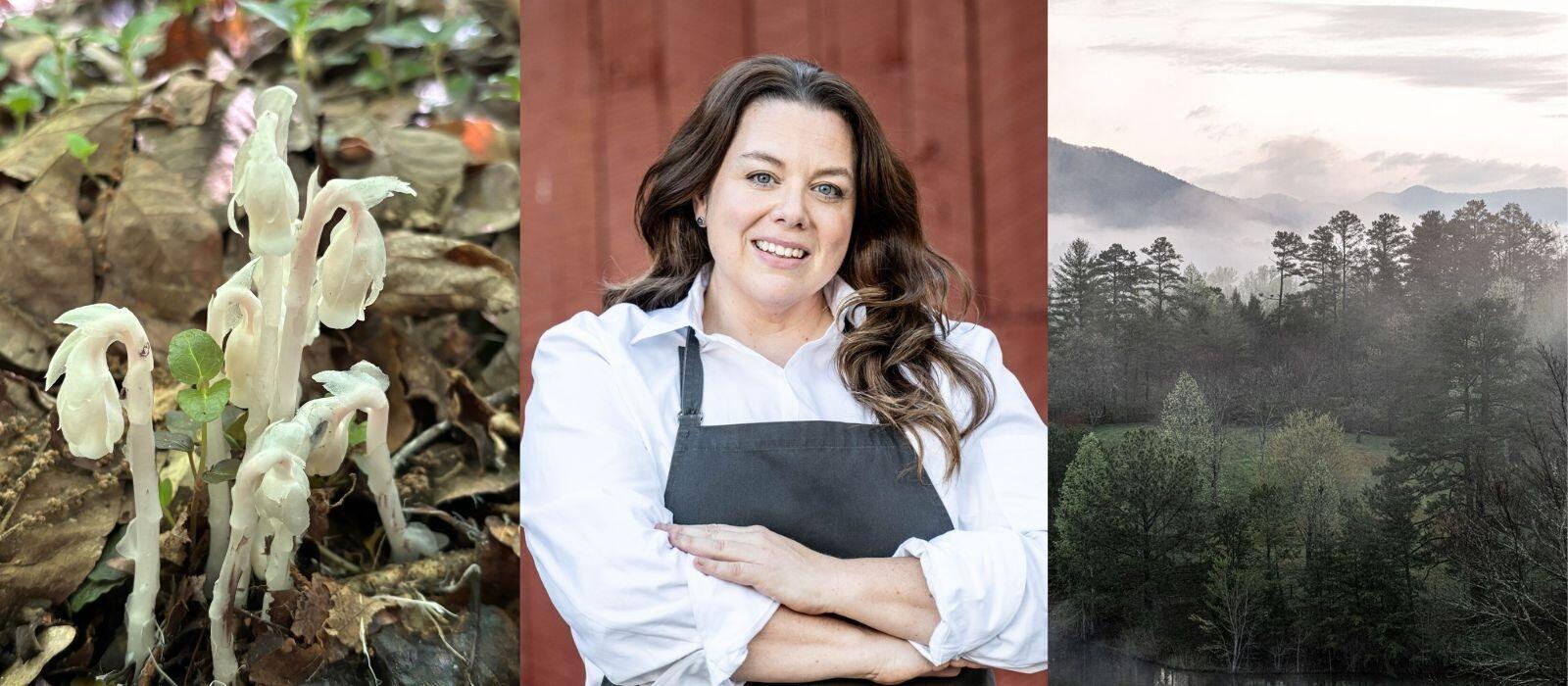
Our chefs at Blackberry Farm love foraging seasonal ingredients to incorporate in their dishes. They look to the land in every season for the natural signs of what’s growing or what’s coming – tuning into the windows of time when foraged items are at their peak. Around this time of year, Executive Chef of The Barn at Blackberry Farm® Cassidee Dabney says the perennial wildflower known as Indian Pipe (also called Ghost Pipe) is a welcomed sign in the forested areas surrounding the Farm.
When the mayapples die and the Indian Pipe turns from white to black, it’s a sign that chanterelle mushrooms will appear in about a week. Mushrooms are a staple on Chef Cassidee’s menu, and chanterelle season a favorite. Her favorite way to enjoy them is to sauté the mushrooms with corn for a quick and simple way to enjoy authentic flavor from our own backyard.
While Indian Pipe isn’t typically used in the culinary space, its interesting history shares its own special connection to the land. The following Cherokee legend was shared by Lloyd Arneach in the Winter 2010 edition of American Indian Magazine:
"Before selfishness came into the world, which was a long time ago, the Cherokee happily shared the same hunting and fishing lands with their neighbors. However, everything changed when selfishness arrived. The men began to quarrel with their neighbors.
The Cherokee began fighting with a tribe from the east and would not share the hunting area. The chiefs of the two tribes met in council to settle the quarrel. They smoked the tobacco pipe but continued to argue for seven days and seven nights.
The Great Spirit watched the people and was displeased by their behavior. They should have smoked the pipe AFTER they made peace. The pipe is sacred and must be treated with respect. He looked down upon the old chiefs, with their heads bowed, and decided to send reminders to the people.
The Great Spirit transformed the chiefs into white-gray flowers that we now call “Indian Pipe.” The plant grows only four to ten inches tall, and the small flowers droop towards the ground like bowed heads. Indian Pipe grows wherever friends and relatives have quarreled.
Next the Great Spirit placed a ring of smoke over the mountains. The smoke rests on the mountains to this day and will last until the people of the world learn to live together in peace. That is how the Great Smoky Mountains came to be."
Indian Pipe is a member of the blueberry family that has been used as an herbal remedy for pain and other ailments. It lacks chlorophyll, giving the plant a white, waxy appearance that darkens with age.
Because they don’t need sunlight to grow, Indian Pipe is most commonly found in shaded woodlands. There, they connect with fungi roots underground to receive nourishment indirectly through trees. Due to this more complex method it uses to receive nutrients, it’s best to leave Indian Pipe in its original habitat and appreciate it as it exists naturally. Indian Pipe may not be used by our chefs in the kitchen, but the unique plant is an exciting sign of new growth to come and offers an interesting glimpse into the rich folklore of our region!