
Story
From the Dairy Barn
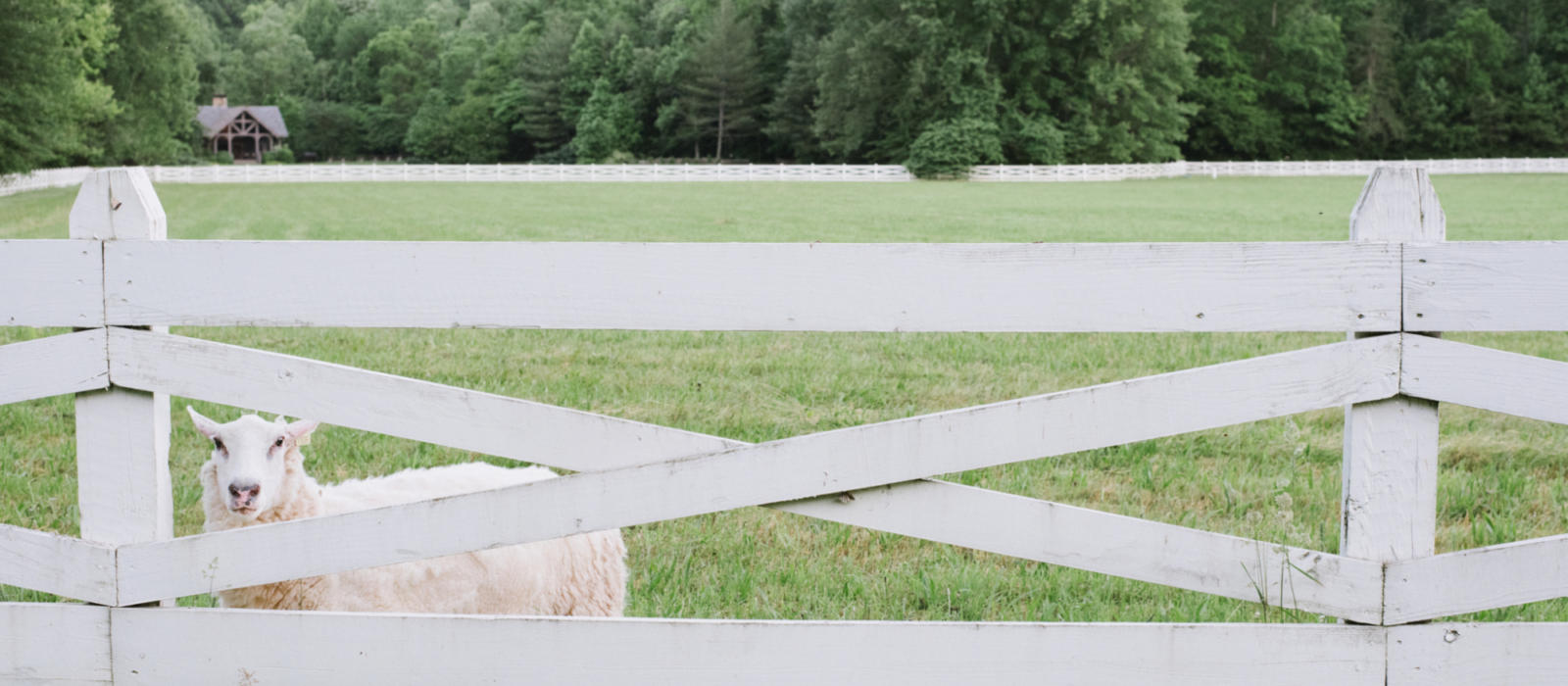
At Blackberry Farm, we always seek opportunities to continue our sustainability efforts, further our personal ties to our products and constantly create an environment where we can learn and educate. For our newest endeavor, our Livestock team is revamping our sheep’s milk program and milking on property!
While we’ve always used our herd to support the cheesemaking process, it’s been a longtime dream to collect the milk right on the Farm. So, for 2020, we upgraded our Dairy Barn and started milking.
Normally, milking season will begin in March or April and last until August or September. We went with a shorter timeframe for our first season while we start our program, and we finished milking for 2020 in early July. The traditional cycle for our herd will be lambing in the Fall, milking in the Spring and Summer. Next milking year, we’ll be able to produce more milk and extend the season longer.
The Dairy Barn has 24 head gates and 12 milking machines. The sheep file in and enter the head gates to get to the feed. Sheep are creatures of habit, so once they get used to the process, they’re pretty easy going. It’s the grain that really motivates them! Each has their own stall, and they eat their food there while we milk. Air pulsates to pull the milk out, and it’s pumped into a chamber. Then, we pump it over into the milk room. The milk room tank is essentially a refrigerator: It spins and keeps the milk chilled at a regulated temperature.
Almost all the milk from this season was used for our cheese production. We collected around eight to 10 thousand pounds of milk. Most went to the Larder, but we did use some to start producing our new sheep’s milk caramel!
Sheep dairy farms aren’t as common in the United States as cattle dairy farms. Farmstead Manager Dustin Busby and Livestock Manager Christen Waddell are constantly researching and charting data from our herd to create the best program possible. They pay attention to each sheep, no matter how large our herd grows. And we’ve grown our herd drastically! We welcomed more than 50 lambs this year. We have mostly East Fresian sheep with a few Lacaune as well.
Why sheep’s milk, you ask? Sheep’s milk is great for making cheese! It’s higher in protein and fats than cow’s milk, and it has a lot more milk solids per volume. A gallon of sheep’s milk weighs 8.74 pounds where a gallon of cow’s milk weighs 8.6 pounds. You get less milk per animal, but it’s one of the best milks to make cheese from. The sheep are great for our pastures as well.
In three to four years, the team hopes to be producing enough milk on the Farm to sustain our entire cheese production. Dustin said he really wanted to bring the milking program back to the Farm to control as much of the process as possible. It promotes sustainability, and it also means that we get to be at every step of the cheesemaking process from the grass the sheep eat to when we serve the final product in our restaurants. The team’s commitment to learn and do as much as they can will show in the continued quality of farm-to-table products!