
Story
previously on farm stories
Forty Inches and a Mule
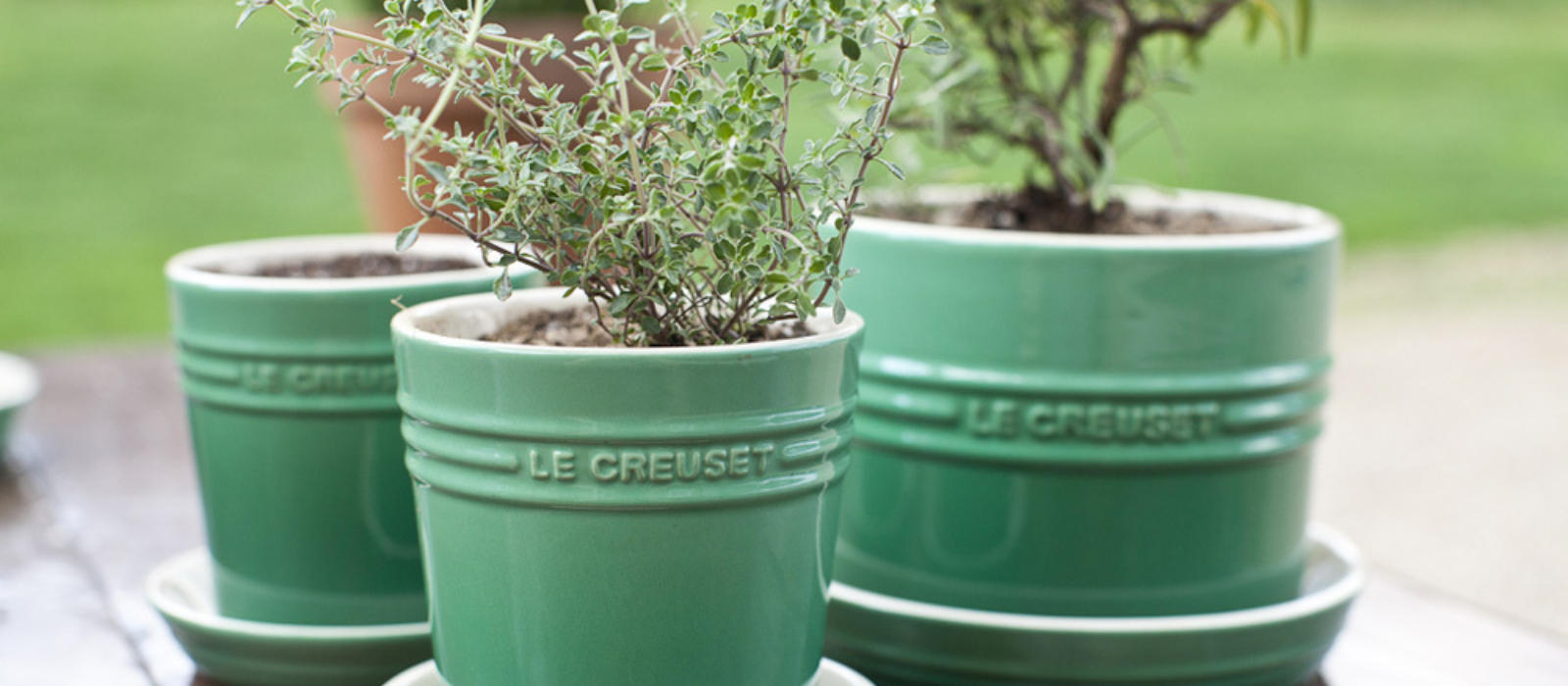
Watch the video of Jeff Ross and Herb Potting.
Tips for planting your own herb pots!
- Ensure that the pot or container has a drainage hole, then fill the bottom with gravel, packing peanuts or shards of broken pots to avoid waterlogged plants.
- Use miniature plant types: globe basil, elfin thyme, bush-type cucumbers and beans, and cherry or currant tomatoes. They will produce better than larger varieties, as they are suited for small spaces.
- Group pots together for a design effect, and it will also help create a tiny microclimate that will keep plants cooler. Grouping plants like tomatoes and basil will ward off damaging insects as well.
- When traveling, group the containers in a wading pool or water tub, with an inch or two of water in the bottom. You can leave your plants for a number of days without worry of them drying out.
- When watering, rather than sprinkling the soil surface, let the water run through the pot to completely soak the roots. Less frequent deep soaking is much better than more frequent shallow watering.
“The best fertilizer is the gardener’s shadow.” – Anonymous
Logging miles a day walking the fields and orchards of our farm, we gardeners are comforted by the simple solace of a tiny stamp of earth. While working the acres-large rows and beds during the workday, we realize great reward and occasional notoriety, but at day’s end we long for the pull of a hoe through the soil of our home gardens. When John or I are asked if we have gardens at our homes, we are often met with looks of incredulity when the answer is a resolute “yes.” It seems to some tantamount to an attorney litigating at the dinner table or a police officer directing traffic in the driveway – “Don’t you get enough of gardening at the Farm?”
The truth is we get plenty, but not nearly enough. There is a certain liberation in escaping the din and dust of the tractor and the planter, so we wind down at the gloaming of dusk by leisurely scraping, sowing and harvesting our front door garden patches. Patches that reflect our individual interests: John’s, a tribute to the rarest of seeds and their preservation, and mine, with a cast of characters in an ever-evolving culinary palette.
But a tiny garden spot need not be an anemic collection of three or four vegetables; it can be intensely planted to garner as much nourishment as the place can sustain. Tomatoes, basil and cilantro can inhabit the same space — the cilantro enjoying the tomato leaves’ life-extending shade, while the two herbs offer insect repellant qualities to benefit the tomato plants. Radishes (the best fast food) sown over planted beet and carrot seeds will “nurse” the slow-germinating sprouts, while providing a quickly maturing addition to your salads. Petite fingerling potatoes planted alongside compact bush beans will drive their respective harmful insects from the garden. The ancient Three Sisters planting method doesn’t necessarily require endless rows of corn to support beans and squash; a few sturdy sunflowers will gladly give a boost to the scrambling bean vines, while space-saving cucumbers can pinch hit for gargantuan pumpkin plants.
No matter if the garden is calculated in square feet, square inches, the size of a postage stamp or simply a scratched out corner of dirt, even a tiny plot can be visualized as an entire farm; the same rules apply. Working and eating from row crops in miniature can certainly be as rewarding as toiling in a vast field — the same satisfaction exists whether one’s time in the garden is measured in days or minutes … as long as time is spent.
– Jeff Ross, Blackberry Farm Garden Manager