
Story
Foraging 101
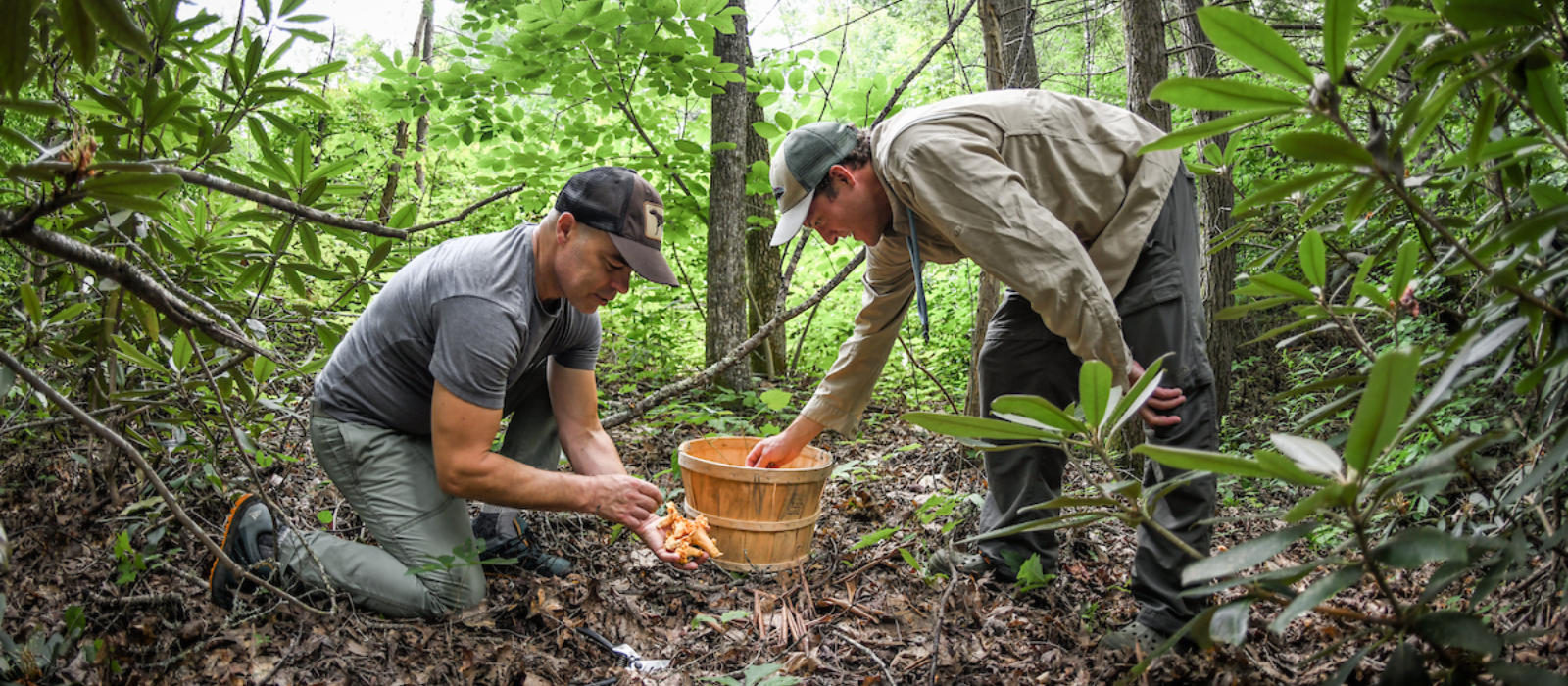
We love to forage at Blackberry! Exploring what grows wild on our land strengthens our connection to nature and incorporates beautiful, regional flavor into the dishes our guests enjoy in the restaurants. Plus, foraging is fun! You never know what you might find when you take the time to focus on the land and see what it has to show you.
We asked a few of our foraging-loving team members to share their top foraging tips. This helpful list is a great place to start if you’re thinking about exploring the wild ingredients that grow in your area. The biggest tip across the board from our foragers – do your research. Every region is different, so it’s important to know what you’re looking at to ensure you’re picking safe ingredients to enjoy.
Be sure to check out our Foraging BINGO board for an added element of fun as you explore!
From Executive Chef Joey Edwards, Three Sisters at Blackberry Mountain:
- Books are great, but the best way to learn how to forage is from other people. If you don’t know someone who is knowledgeable about foraging, join a foraging group on social media specific to your region. That’s the best way to keep up with what is growing in your area in real time. Groups can also be a great place to post pictures of what you find and ask questions.
- Phone forage first. If you aren’t sure what something is, take some pictures of it to study later.
- Have a post-picking plan. When you have identified something you want to pick, be sure to have a plan for what you want to do with it once you get home, and only take what you know will get used. There is no greater sin in foraging than picking baskets of wild food, only for it to go to waste when you get home and realize that it’s going to take hours to clean and process and there is no space in your fridge.
From Executive Chef Cassidee Dabney, The Barn at Blackberry Farm®:
- Don’t pick anything you aren’t 100% sure of. Snap and picture and get a positive identification before you harvest.
- Know your trees! Being able to identify trees and other companion plants will help you find the best spots to look for mushrooms.
- Always be aware of your surroundings. Snakes, spiders and other stinging insects are out and about. So is poison ivy, poison oak and stinging nettles. If you do get stung or bit, try to identify what got you so you can treat it accordingly.
From Foodways Educator Jeff Ross:
- There's not always a need to hike deep into the woods to find wild, edible plants. Foraging animals like deer do much of their browsing at the margins of the forest, where the sun encourages plants to thrive. Scout for edible greens and flowers where fields meet the woods, along the roadside or even in your backyard.
- When gathering, always leave enough for other species to feed and enough to allow the plants to continue to propagate.
- Only gather plants you are fully familiar with. Don't guess! Learn the names of all the plants in your own landscape, and discover which are edible. Many common weeds and ornamental flowers, like daylilies, are quite tasty, and allow you to "forage" in your own garden. The flowers of most herbs are delicious and powerfully flavored and can be used in salad or to garnish soups and even cocktails.
From Executive Chef Joel Werner, the Firetower at Blackberry Mountain:
- Make sure you’re foraging in a chemical free zone. For example, never take watercress from a dirty stream or pick where someone is spraying fertilizer in the area.
- Find dead trees and moist soil if you want to forage for mushrooms. Seek out spots with lots of dead leaves.
- Never eat anything without first being 100% sure what it is. Do your research.