
Story
Fit to be Tied
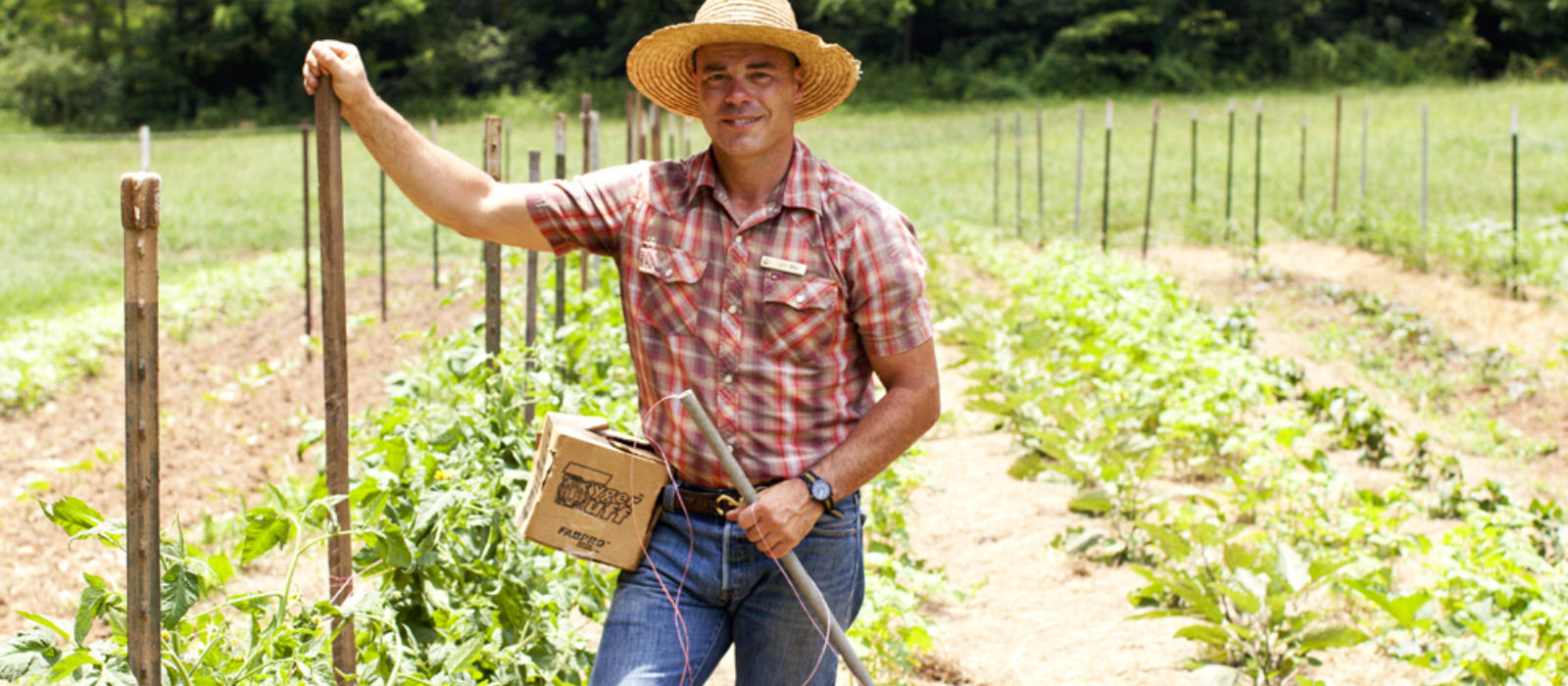
View the video as Jeff Ross explains the stake and weave method of tying Heirloom Tomatoes!
When the ordered garden rows of spring quickly give way to the wild and chaotic growth of summer, tomato plants are the epitome of out-of-control problem children. In our garden, the majority of the heirloom tomato varieties are indeterminate, which means the plants make long, rangy vines that produce through the whole of the season. So how do we tame the wicked growth of these naughty nightshades?
There are probably as many ways to restrain tomato plants as there are varieties in the plant kingdom, but we use a standard method as well as a more unorthodox one. First, we rely on the stake and weave, where a support post, or “’mater stick,” is driven into the ground next to every second or third plant. Special tomato tying twine is used to weave in between each plant, zig-zagging along the way, then pulled tight to draw the plants upright. This season we are also experimenting with metal fence panels that form an a-frame support, where two rows of plants are grown on a single structure, and the weight of the growing vines prevent the need for constant tying. Some old-timers even insist that the metal supports get charged during summer’s electrical storms, improving the health and growth of the plants. We are staying tuned to see if it works.
Old tomatoes often have less resistance to endemic disease, so keeping tomato plants off the ground helps prevent fungal transmission from rain splashing soil onto the leaves.
Maintaining orderly rows of plants will also improve air circulation, ensures that ample sunlight reaches the entire plant and allows for easier picking of perfectly ripened fruits…or vegetables…or… (Actually fruits, although in 1892 the Supreme Court weighed in during a fierce debate over import tariffs on produce, and declared tomatoes to be vegetables!)
All this, of course, is easily said in the prelude of the sweltering summer; soon, the building weight of the rapidly growing vines will rise like a green Godzilla, complete with bulging red eyes, threatening to crush the Tokyo turnips below. Until then, we can tie until our fingers are sore and stained olive, and look forward to the bounty of juicy, homegrown termaters.
Jeff Ross, Garden Manager
View the video as Jeff Ross explains the stake and weave method of tying Heirloom Tomatoes!
When the ordered garden rows of spring quickly give way to the wild and chaotic growth of summer, tomato plants are the epitome of out-of-control problem children. In our garden, the majority of the heirloom tomato varieties are indeterminate, which means the plants make long, rangy vines that produce through the whole of the season. So how do we tame the wicked growth of these naughty nightshades?
There are probably as many ways to restrain tomato plants as there are varieties in the plant kingdom, but we use a standard method as well as a more unorthodox one. First, we rely on the stake and weave, where a support post, or “’mater stick,” is driven into the ground next to every second or third plant. Special tomato tying twine is used to weave in between each plant, zig-zagging along the way, then pulled tight to draw the plants upright. This season we are also experimenting with metal fence panels that form an a-frame support, where two rows of plants are grown on a single structure, and the weight of the growing vines prevent the need for constant tying. Some old-timers even insist that the metal supports get charged during summer’s electrical storms, improving the health and growth of the plants. We are staying tuned to see if it works.
Old tomatoes often have less resistance to endemic disease, so keeping tomato plants off the ground helps prevent fungal transmission from rain splashing soil onto the leaves.
Maintaining orderly rows of plants will also improve air circulation, ensures that ample sunlight reaches the entire plant and allows for easier picking of perfectly ripened fruits…or vegetables…or… ( Actually fruits, although in 1892 the Supreme Court weighed in during a fierce debate over import tariffs on produce, and declared tomatoes to be vegetables!)
All this, of course, is easily said in the prelude of the sweltering summer; soon, the building weight of the rapidly growing vines will rise like a green Godzilla, complete with bulging red eyes, threatening to crush the Tokyo turnips below. Until then, we can tie until our fingers are sore and stained olive, and look forward to the bounty of juicy, homegrown termaters.
Jeff Ross, Garden Manager
View the video as Jeff Ross explains the stake and weave method of tying Heirloom Tomatoes!
When the ordered garden rows of spring quickly give way to the wild and chaotic growth of summer, tomato plants are the epitome of out-of-control problem children. In our garden, the majority of the heirloom tomato varieties are indeterminate, which means the plants make long, rangy vines that produce through the whole of the season. So how do we tame the wicked growth of these naughty nightshades?
There are probably as many ways to restrain tomato plants as there are varieties in the plant kingdom, but we use a standard method as well as a more unorthodox one. First, we rely on the stake and weave, where a support post, or “’mater stick,” is driven into the ground next to every second or third plant. Special tomato tying twine is used to weave in between each plant, zig-zagging along the way, then pulled tight to draw the plants upright. This season we are also experimenting with metal fence panels that form an a-frame support, where two rows of plants are grown on a single structure, and the weight of the growing vines prevent the need for constant tying. Some old-timers even insist that the metal supports get charged during summer’s electrical storms, improving the health and growth of the plants. We are staying tuned to see if it works.
Old tomatoes often have less resistance to endemic disease, so keeping tomato plants off the ground helps prevent fungal transmission from rain splashing soil onto the leaves.
Maintaining orderly rows of plants will also improve air circulation, ensures that ample sunlight reaches the entire plant and allows for easier picking of perfectly ripened fruits…or vegetables…or… (Actually fruits, although in 1892 the Supreme Court weighed in during a fierce debate over import tariffs on produce, and declared tomatoes to be vegetables!)
All this, of course, is easily said in the prelude of the sweltering summer; soon, the building weight of the rapidly growing vines will rise like a green Godzilla, complete with bulging red eyes, threatening to crush the Tokyo turnips below. Until then, we can tie until our fingers are sore and stained olive, and look forward to the bounty of juicy, homegrown termaters.
Jeff Ross, Garden Manager