
Story
Early Mornings on the Farm
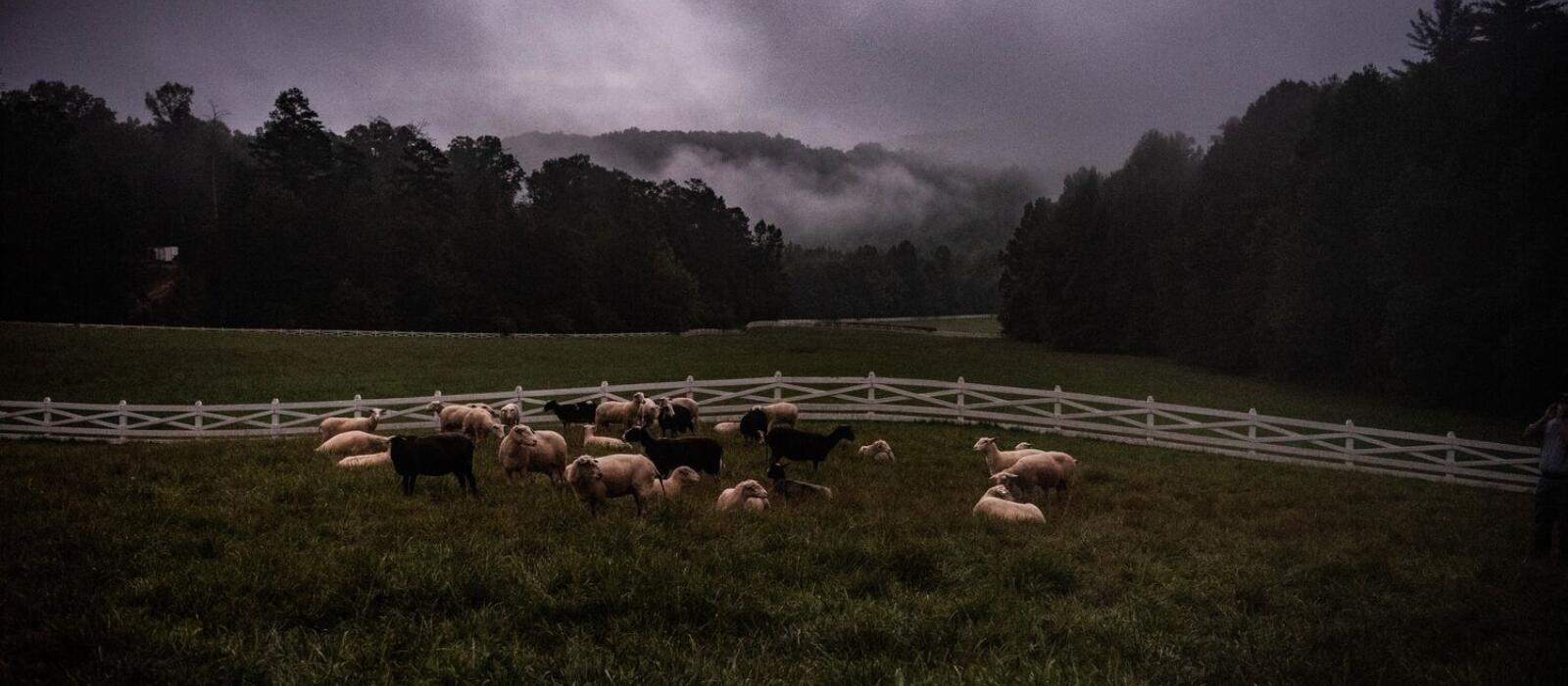
With the first lambs of the year due next week and the milking season on the horizon, Farmstead Manager Christen Waddell is sharing a glimpse of what early mornings will soon look and sound like for the Blackberry Farm Dairy team:
Milking starts at 5:30 a.m. and is the first thing the Dairy team does every day. For the first few months of milking, we arrive well before the sun comes up in the morning. As we walk through the dark to the pasture gate, our headlamps find fluffy white bodies waiting for us, and around 100 sheep start baaing at us, ready to start their day. It’s the first sound of the Farm breaking through the peaceful night noises of the mountains.
The donkey makes her way to the front of the flock and brays at us, but her tone is different than it will be later in the day. It’s a soft and quiet bray just to tell us good morning, that she recognizes us. This peaceful tone of the donkey’s soft bray amongst the sheep’s harmonious declarations that they’re ready to be milked sets the tone for the Farm’s day. It lets us know that everything is as it should be and that rain or shine, there’s work to be done and animals that depend on us.
When the morning milking is finished and we walk the sheep back to the pasture, we’re often just in time for the sunrise. The sky is glowing with beautiful, blushed orange tones and the fog is starting to lift from the lower fields. By this point, the donkey can see us coming and is braying her complaints to us that we’ve taken so long to bring her sheep back. This time her tone is much louder, the kind of bray that those outside of the Dairy team are more used to hearing from her. This sound lets us know that the rest of the Farm is waking up and the peaceful morning is becoming day. The younger sheep begin kicking up their heels and racing back to the green grass.
There are a lot of different reasons for why donkeys bray. They bray to communicate, and they change their tone based on what they are “saying.” They can bray to show affection, as they are very affectionate animals, both with the people they know and with the sheep that they’ve bonded to. They can also bray to alert the sheep to danger, which is their job on the Farm. In those instances, they’ll gather up the sheep and move them away from the threat, then place themselves in between for protection. Sometimes they just get excited, or they’re greatly anticipating something that they know we’re bringing them, and they like to declare these things to anyone who will listen. Their brays can be quite loud and heard several miles away.
So, next time you’re at the Farm, keep your ears perked. You never know who you might hear “talking.”
- Christen Waddell, Farmstead Manager