
Story
Dog Days and Trout Alternatives
Many people show up to our creek side fly shop thinking that trout are the only species of fish that are pursued with the fly rod. However, I am quick to point out that you can fly fish just about anything that swims. With the knowledge of how a fish behaves and what it eats, we can use feather, fur, rubber, foam, balsa wood and a host of other materials to tie a fly that should catch that fish. In East Tennessee, we first turn to small mouth bass, as they are notoriously hard fighting fish. Often times fighting considerably harder than one would expect for their size and notably harder than their large mouth cousins. Throughout much of the south there are always “bream.” This is a term often collectively used to describe various species of pan fish that inhabit lakes, ponds, and streams across the south; and more often than not, this is fish that we cut our teeth on as young anglers. I pause a minute before mentioning one of my growing summer time favorites, the carp. The pause comes as most look at this quite esthetically unappealing fish as a trash species. I however, know it as an incredibly hard fighting yet finicky feeding fish that will put a bend in a long flexible fly rod that would rival any of its freshwater kin. Alas, my new found addiction…salt water! As addictive to the fly angler as any of many illicit substance, the chance to chase these hard fighting and explosive salt water fish has haunted my dreams and fly tying time for the last few years. Although it does require a bit of travel from the foothills of East Tennessee, I scrimp and save for a chance or two a year to make my way to the salt, often as I retreat from the humidity of the dog days of an East Tennessee summer. Tarpon, bone fish, permit, redfish, speckled trout and many others are often sought after with fly tackle from the coast of the Carolinas, down around the Florida Keys, and all along the gulf coast, each region having its own shallow water offering for the fly angler.
Popping bugs are my favorite way to pursue most warm water species. Not only are they fun to tie but the surprise of the fish taking these floating flies is always a rush. Crafted out of foam or wood, these top water creations come in a variety of colors and sizes and are often adorned with colorful feathers, flash, and rubber legs. Some are simple and some have an artistic touch, but they all catch fish. A trout fisherman’s fly box is often much at home in warmer waters as well. Much like a trout, most sunfish and even carp have a diet much like a trout which consist mostly of aquatic insects. Small dry flies and nymphs have put many a blue gill or sunfish in a frying pan. I often tie various stone fly nymph patterns along with dragon fly nymphs when I am in pursuit of carp.
A few popping bug tips…
Once the fly lands, let it sit until the rings on the water’s surface fade.
With a low rod tip quickly strip the line to create the “pop” and then let the fly sit.
Try not to over work your fly as the fish is often drawn by the popping sound, but the fish most often strike while the bug is sitting dead still.
Small fish and Big memories….
Alex Quick
Fly Fishing Manager
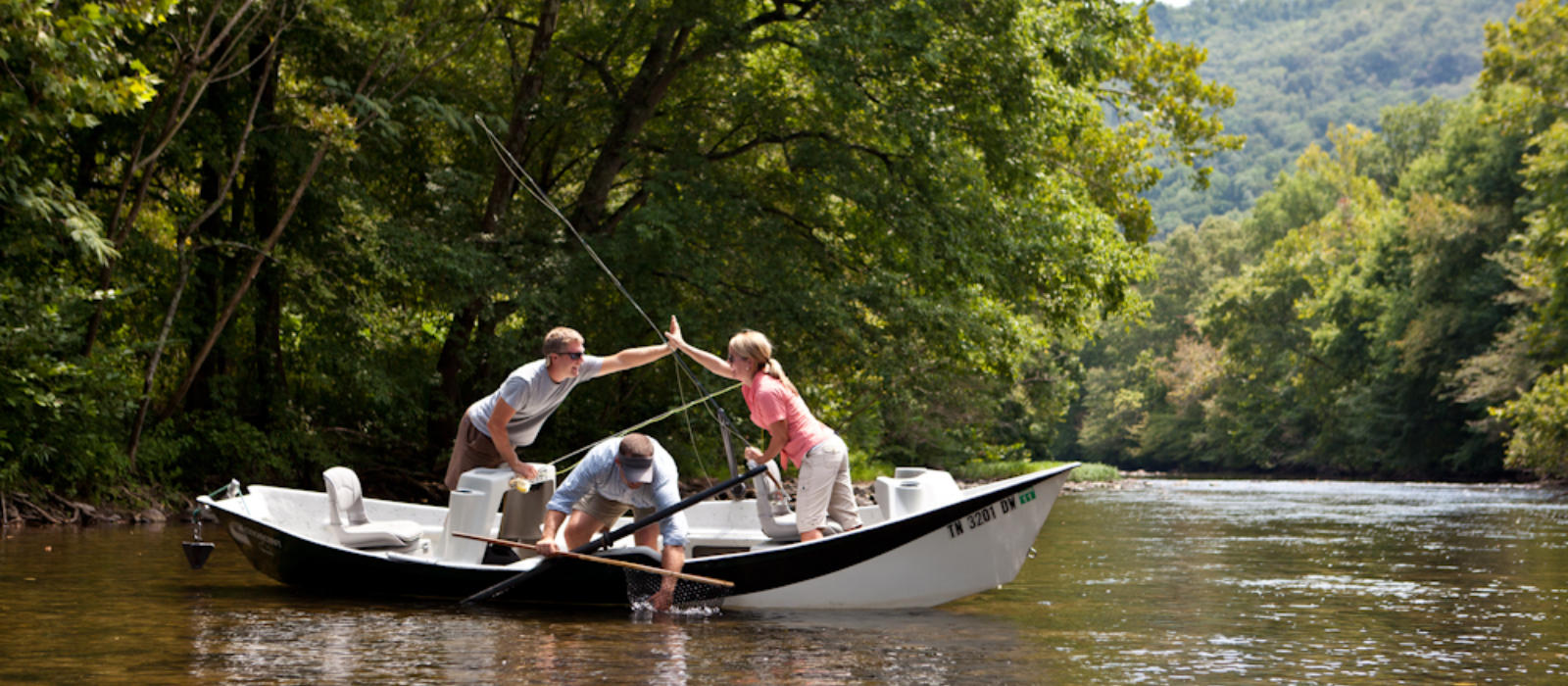
The river is moving at a much slower pace now than that of its spring flow when we are floating and looking for rising trout. Or at least it seems
that way to the
lad behind the oars of the drift boat, as each stroke of the oars draws more sweat to soak his hat brim. On the bank is a large sycamore that
casts an inviting dark shadow over the river’s edge. That is the target for the anglers next cast. As the fly lands, the instructions from the
guide seem a bit
counter intuitive. “Let it sit, wait until the rings dissipate,” and the angler patiently waits. As the fly slowly drifts down and into the
trees shadow the next command is “pop it.” A quick tug of the fly line brings a small splash of water and a faint gurgling
sound…"now let it sit again, don’t move it”. Although the shadow is dark, the water is still clear. Off of the bank and just behind
the fly, an even darker silhouette appears. The anglers first instinct is to pop the bug again to trigger the strike, but from just behind him
the next
counter intuitive command..."no, no, no let it sit.” It seems like an eternity, albeit only a few seconds, before the large dark silhouette
suddenly, and seemingly without cause, explodes to the surface. At that
point there are two common reactions, either a quick hook
set, or the utterance of a quick one syllable word of choice. The angler chooses to set the hook, and shortly thereafter the dark bronze colored
small mouth bass is
in the net.
Many people show up to our creek side fly shop thinking that trout are the only species of fish that are pursued with the fly rod. However, I am quick to point out that you can fly fish just about anything that swims. With the knowledge of how a fish behaves and what it eats, we can use feather, fur, rubber, foam, balsa wood and a host of other materials to tie a fly that should catch that fish. In East Tennessee, we first turn to small mouth bass, as they are notoriously hard fighting fish. Often times fighting considerably harder than one would expect for their size and notably harder than their large mouth cousins. Throughout much of the south there are always “ bream.” This is a term often collectively used to describe various species of pan fish that inhabit lakes, ponds, and streams across the south; and more often than not, this is fish that we cut our teeth on as young anglers. I pause a minute before mentioning one of my growing summer time favorites, the carp. The pause comes as most look at this quite esthetically unappealing fish as a trash species. I however, know it as an incredibly hard fighting yet finicky feeding fish that will put a bend in a long flexible fly rod that would rival any of its freshwater kin. Alas, my new found addiction…salt water! As addictive to the fly angler as any of many illicit substance, the chance to chase these hard fighting and explosive salt water fish has haunted my dreams and fly tying time for the last few years.
Although it does require a bit of travel from the foothills of East Tennessee, I scrimp and save for a chance or two a year to make my way to the salt, often as I retreat from the humidity of the dog days of an East Tennessee summer. Tarpon, bone fish, permit, redfish, speckled trout and many others are often sought after with fly tackle from the coast of the Carolinas, down around the Florida Keys, and all along the gulf coast, each region having its own shallow water offering for the fly angler.
Popping bugs are my favorite way to pursue most warm water species. Not only are they fun to tie but the surprise of the fish taking these floating flies is always a rush. Crafted out of foam or wood, these top water creations come in a variety of colors and sizes and are often adorned with colorful feathers, flash, and rubber legs. Some are simple and some have an artistic touch, but they all catch fish. A trout fisherman’s fly box is often much at home in warmer waters as well. Much like a trout, most sunfish and even carp have a diet much like a trout which consist mostly of aquatic insects. Small dry flies and nymphs have put many a blue gill or sunfish in a frying pan. I often tie various stone fly nymph patterns along with dragon fly nymphs when I am in pursuit of carp.
A few popping bug tips…
Once the fly lands, let it sit until the rings on the water’s surface fade. With a low rod tip quickly strip the line to create the “pop” and then
let the fly sit. Try not to
over work your fly as the fish is often drawn by the popping sound, but the fish most often strike while the bug is sitting dead still.
Small fish and Big memories….
Alex Quick
Fly Fishing Manager
Many people show up to our creek side fly shop thinking that trout are the only species of fish that are pursued with the fly rod. However, I am quick to point out that you can fly fish just about anything that swims. With the knowledge of how a fish behaves and what it eats, we can use feather, fur, rubber, foam, balsa wood and a host of other materials to tie a fly that should catch that fish. In East Tennessee, we first turn to small mouth bass, as they are notoriously hard fighting fish. Often times fighting considerably harder than one would expect for their size and notably harder than their large mouth cousins. Throughout much of the south there are always “bream.” This is a term often collectively used to describe various species of pan fish that inhabit lakes, ponds, and streams across the south; and more often than not, this is fish that we cut our teeth on as young anglers. I pause a minute before mentioning one of my growing summer time favorites, the carp. The pause comes as most look at this quite esthetically unappealing fish as a trash species. I however, know it as an incredibly hard fighting yet finicky feeding fish that will put a bend in a long flexible fly rod that would rival any of its freshwater kin. Alas, my new found addiction…salt water! As addictive to the fly angler as any of many illicit substance, the chance to chase these hard fighting and explosive salt water fish has haunted my dreams and fly tying time for the last few years. Although it does require a bit of travel from the foothills of East Tennessee, I scrimp and save for a chance or two a year to make my way to the salt, often as I retreat from the humidity of the dog days of an East Tennessee summer. Tarpon, bone fish, permit, redfish, speckled trout and many others are often sought after with fly tackle from the coast of the Carolinas, down around the Florida Keys, and all along the gulf coast, each region having its own shallow water offering for the fly angler.
Popping bugs are my favorite way to pursue most warm water species. Not only are they fun to tie but the surprise of the fish taking these floating flies is always a rush. Crafted out of foam or wood, these top water creations come in a variety of colors and sizes and are often adorned with colorful feathers, flash, and rubber legs. Some are simple and some have an artistic touch, but they all catch fish. A trout fisherman’s fly box is often much at home in warmer waters as well. Much like a trout, most sunfish and even carp have a diet much like a trout which consist mostly of aquatic insects. Small dry flies and nymphs have put many a blue gill or sunfish in a frying pan. I often tie various stone fly nymph patterns along with dragon fly nymphs when I am in pursuit of carp.
A few popping bug tips…
Once the fly lands, let it sit until the rings on the water’s surface fade.
With a low rod tip quickly strip the line to create the “pop” and then let the fly sit.
Try not to over work your fly as the fish is often drawn by the popping sound, but the fish most often strike while the bug is sitting dead still.
Small fish and Big memories….
Alex Quick
Fly Fishing Manager