
Story
previously on farm stories
Choosing the Right Bug – Demystifying Entomology
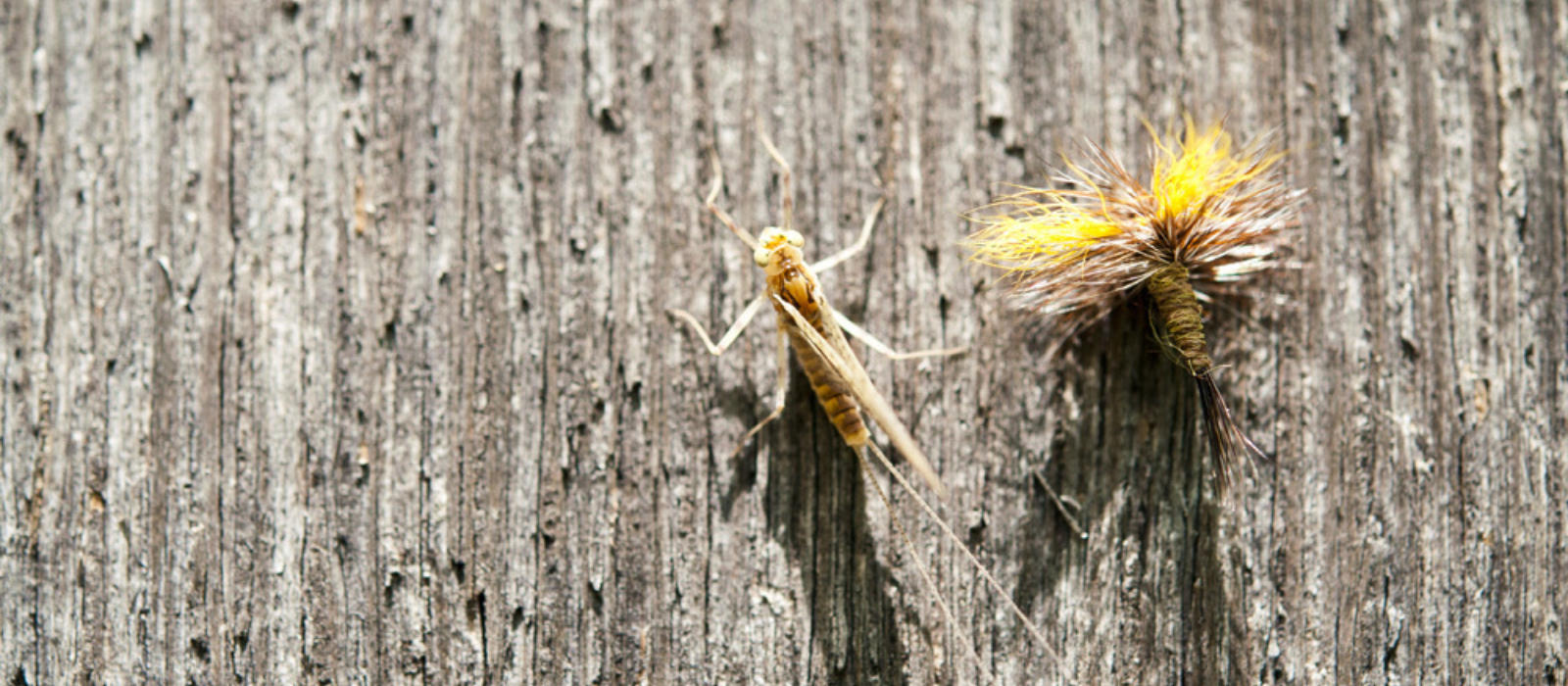
I opened my fly box the other day to pluck from it a small size 16 “Mr. Rapidan” dry fly, one of my favorite patterns for April. The guest with me quickly posed the question, “Why out of all of the flies in your box are you choosing that one?” I quickly responded that it is my favorite pattern to match the March Brown mayflies, a species of bug that generally starts to show up in abundance in April. The conversation continued throughout the day as to how and why an angler goes about choosing his fly and how an angler keeps up with what bugs are on the menu for a given day.
Fly fishing can be a complex venture. There are many spokes to the wheel with everything from casting and presentation to knots and fly selection. This perceived difficulty or complexity is one of the main barriers to entry into the sport of fly fishing. For the guides who spend their days here at the Grey Drake wandering Hesse Creek or one of the many free stone Smoky Mountain streams, many of these decisions have become second nature. With the myriad of decisions to be made from how to pick a fly to how to correctly present it, how do guides chose the right fly?
Trout fisherman in the Smokies focus on three main aquatic insects: mayflies, caddis flies and stoneflies. This begins to make life simple with the exception of the fact that the All Taxa Biodiversity Inventory ongoing the national park has identified around 491 different species within these three families of bugs. If we throw in all of the other bugs including the terrestrial insects, a trout’s selection gets quite large. Does an angler have to know every one of these bugs? Absolutely not. There are a few that we find to be fairly important due to either their timing, behavior or abundance, but one does not have to know each on by name. If we can see fish taking a fly or suspect they may be feeding on a given bug either on or below the surface, we can use three simple observations to chose a fly from the box.
Silhouette – Is it an up or down wing bug? Mayflies have upright wings, whereas caddis have wings that lay down but up into a tent shape, and stoneflies wings lay flat on their backs.
Color – Is it grey, tan, brown, black, olive or yellow? Flies within each species come in a multitude of colors and sizes, but color can be a make or break criteria for a day’s fishing. I have seen trout ignore a big yellow mayfly all day for a chance at a smaller olive one.
Size – Does it matter? Some days size is not all that big of an issue, whereas others it is a game breaker. Trout are notoriously selective, and on days when fishing is tough, getting the size the fish are looking for is important (and most of the time it’s not the biggest bug in the box).
Entomology is an integral part of our passion, however not one that not every angler chooses to invest knowledge in. With these simple observations, the correct selection can be made on most any Smoky Mountain stream. Yet a little knowledge does make these decisions easier.
Another quick Smoky Mountain tip: Of the 491 different species noted earlier, 238 are caddis flies. Therefore a caddis imitation is always a good option. Many of the different species also have a few specimens that are some shade of yellow, including sulphur mayflies and “yellow sally” stone flies that are available most of the warm months, making yellow a great color choice.
Enjoy your time on the water.
– Alex Quick, Fly Fishing Manager