
Story
previously on farm stories
Catch and Release
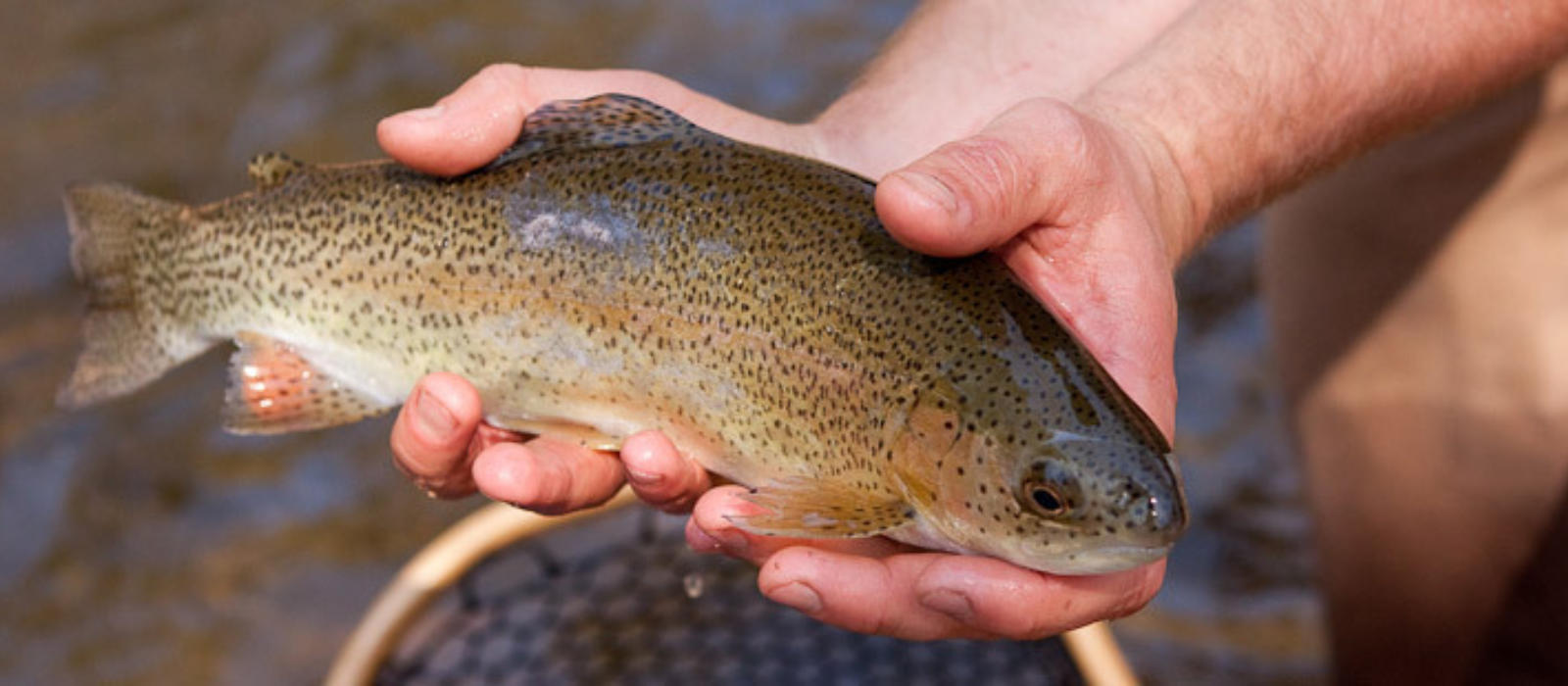
An angler sits patiently on a streamside boulder waiting for just one sign of a hungry fish. Constantly scanning the surface of the water, he searches the seams and eddies for the leftover rise rings of an ill-fated mayfly. He spots his target and pays out enough line to reach just above the fish, a few false casts and he lays the fly on the water. Too far left, the fish never paid it a glance. He lifts the line from the water and goes again, another few false casts and lays it down softly. This fish slowly comes to the fly but denies it. The angler sits on the rock and examines his fly. It looks perfect, just as it did when it left his tying vice. The fish rises again and so does the angler. He pays out a bit more line and starts his cast. Landing a little farther in front of the fish this time, the angler makes a small mend and lets the fly float to the fish completely drag free. With a subtle sip, the fish takes his fly and shortly thereafter the fish is to his hand. The angler wets his hand and gently lifts the fish from the water to remove the fly. After holding the fish for only a brief moment and examining it from a few angles, he gently places it just under the surface of the water until it swims freely from his hand. The angler got what he was after: a chance and a challenge. The fish was returned for someone else to have the same.
As time moves along, our natural resources are put under increasing pressure. In the angling world, it comes in the way of increased angling pressure and advances in technology making it easier to catch the fish we pursue. There are also other conservation and environmental issues that arise with the management of our natural resources that can limit the numbers of fish available in the streams we fish. These pressures are what help lead the way to a conservation tool now commonly used among angler especially those of the fly, "catch and release." Lee Wulf, commonly considered the father of catch and release, perhaps said it best in 1939: "A game fish is too valuable a resource to be caught only once." This catch and release ethic is one that has become seemingly pervasive in sport angling and noticeably so in the fly fishing world.
Catch and release is a conservation tool where this fish is released to grow and be caught again by another angler and hopefully ensure the long-term sustainability of a given fishery. There are a few concerns that anglers have to think about when using such a tool. Once the fish is hooked, an angler is already working for the release in thinking about how he fights and lands the fish. Here are a few things to think about when participating in "catch and release":
Use barbless hooks – To cause as little injury to the fish as possible. This means keeping pressure on the fish during the fight is vital to keep the hook in his mouth.
Retrieve the fish to hand as soon as possible – Fighting the fish too long can stress the fish and lead to an oxygen deficit in the fish’s tissues, causing a build up lactic acid in the fish’s system which can ultimately be fatal.
Use a wet hand to handle the fish – The fish's slime coat is their first line of immune defense. Wetting your hands and the use of rubber nets help to protect this slime coat.
Revive the fish before you let him go – Hold the fish facing into the current and just under the surface until it swims from your hand. This insures the fish is fully revived and ready to swim freely rather than just being thrown in.
The catch and release mentality is vital to the continuation of this great sport. However, harvesting a fish from time to time for the table can also be a great management tool. Personally, I have released a few to a hot campfire wrapped in foil and swimming in butter. However, overall fly fishing is about the experience and not the capture of the fish. Aldo Leopold, one of the fathers of conservation ethics said in his book A Sand County Almanac, "What was big was not the trout but the chance. What was full was not my creel, but my memory." Catch and release ensures another angler will have both a chance and a challenge.
Tight Lines
Alex Quick