
Story
Carrots Then and Now
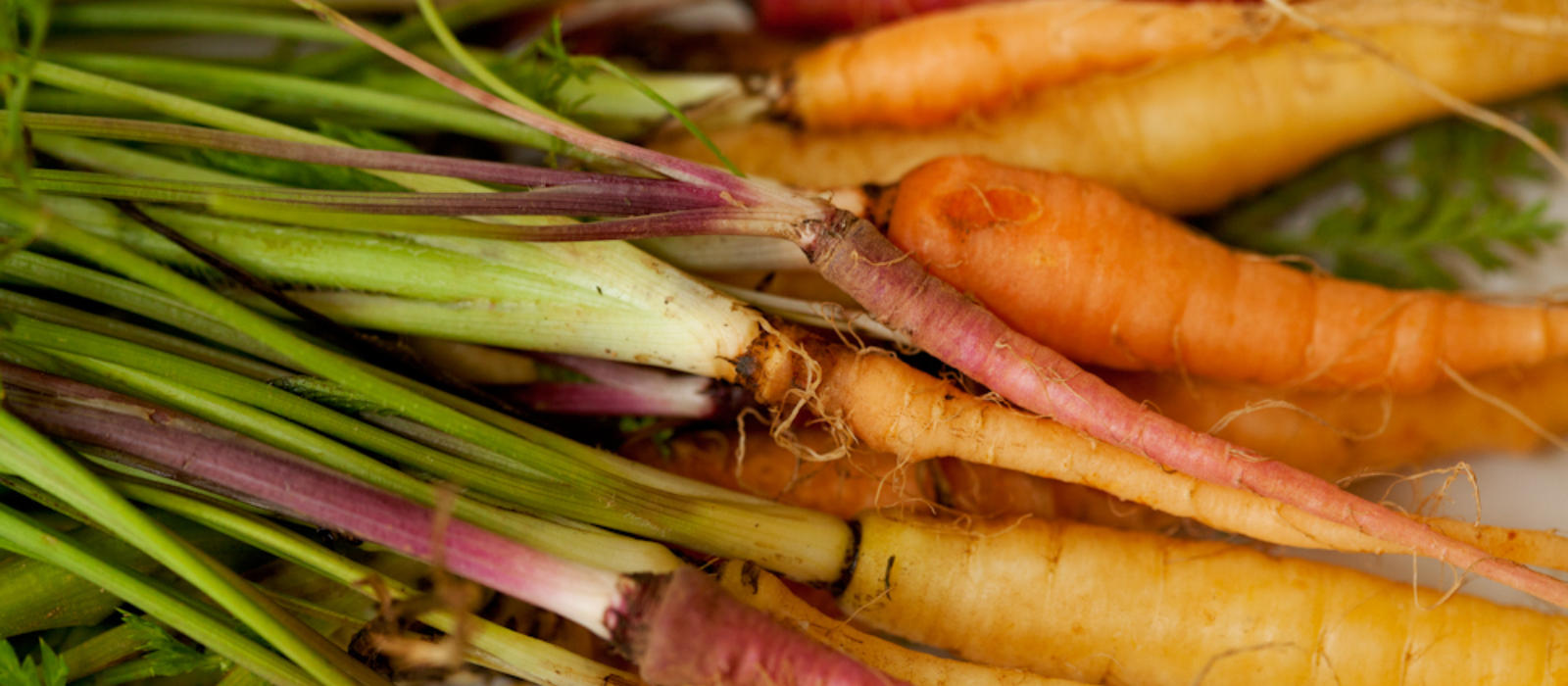
Today, for the most part, we think of carrots as a vegetable that is used in various recipes or the small varieties that are eaten fresh. Going back in time, carrots were an important fodder crop for cattle, pigs, horses and other livestock. Most of the older varieties were much larger in size and were seldom used for table use. The larger types were often referred to as stock feeder carrots and included such names as mastodon, a large white Belgian variety with green shoulders. The long lemon stump-rooted and large yellow Belgian are other examples of field carrots which were once commonly grown.
One of the old carrot varieties best suited for heavy clay soils was the oxheart carrot, which was introduced from France in 1883. This is one of the old varieties still available today from a number of small seed companies. The oxheart carrots are usually around five inches in length and can mature to a large size when well grown. This variety was used as a stock feeder and was also well suited for table use.
Some of the older varieties which were flavored for table use are long orange, early scarlet horn, golden rod, chantenay, danvers half long and Parisian forcing carrot which is a small round shaped variety. Most farmers raised two crops of carrots. The early varieties were used fresh in season or sold to markets.
The late varieties were harvested in late fall and would be overwintered in the field where they were mounded up and covered with straw and soil. Other methods of storage included various types of root cellars, and for culinary use carrots were often stored in large sand containers consisting of a boarded off section of the cellar with one to two feet of sand. The carrots were planted in the sand in an upright position and kept damp throughout the winter months and used as needed.
John Coykendall, Master Gardener
Today, for the most part, we think of carrots as a vegetable that is used in various recipes or the small varieties that are eaten fresh. Going back in time, carrots were an important fodder crop for cattle, pigs, horses and other livestock. Most of the older varieties were much larger in size and were seldom used for table use. The larger types were often referred to as stock feeder carrots and included such names as mastodon, a large white Belgian variety with green shoulders. The long lemon stump-rooted and large yellow Belgian are other examples of field carrots which were once commonly grown.
One of the old carrot varieties best suited for heavy clay soils was the oxheart carrot, which was introduced from France in 1883. This is one of the old varieties still available today from a number of small seed companies. The oxheart carrots are usually around five inches in length and can mature to a large size when well grown. This variety was used as a stock feeder and was also well suited for table use.
Some of the older varieties which were flavored for table use are long orange, early scarlet horn, golden rod, chantenay, danvers half long and Parisian forcing carrot which is a small round shaped variety. Most farmers raised two crops of carrots. The early varieties were used fresh in season or sold to markets.
The late varieties were harvested in late fall and would be overwintered in the field where they were mounded up and covered with straw and soil. Other methods of storage included various types of root cellars, and for culinary use carrots were often stored in large sand containers consisting of a boarded off section of the cellar with one to two feet of sand. The carrots were planted in the sand in an upright position and kept damp throughout the winter months and used as needed.
John Coykendall, Master Gardener
Today, for the most part, we think of carrots as a vegetable that is used in various recipes or the small varieties that are eaten fresh. Going back in time, carrots were an important fodder crop for cattle, pigs, horses and other livestock. Most of the older varieties were much larger in size and were seldom used for table use. The larger types were often referred to as stock feeder carrots and included such names as mastodon, a large white Belgian variety with green shoulders. The long lemon stump-rooted and large yellow Belgian are other examples of field carrots which were once commonly grown.
One of the old carrot varieties best suited for heavy clay soils was the oxheart carrot, which was introduced from France in 1883. This is one of the old varieties still available today from a number of small seed companies. The oxheart carrots are usually around five inches in length and can mature to a large size when well grown. This variety was used as a stock feeder and was also well suited for table use.
Some of the older varieties which were flavored for table use are long orange, early scarlet horn, golden rod, chantenay, danvers half long and Parisian forcing carrot which is a small round shaped variety. Most farmers raised two crops of carrots. The early varieties were used fresh in season or sold to markets.
The late varieties were harvested in late fall and would be overwintered in the field where they were mounded up and covered with straw and soil. Other methods of storage included various types of root cellars, and for culinary use carrots were often stored in large sand containers consisting of a boarded off section of the cellar with one to two feet of sand. The carrots were planted in the sand in an upright position and kept damp throughout the winter months and used as needed.
John Coykendall, Master Gardener