
Story
Busmans Holiday
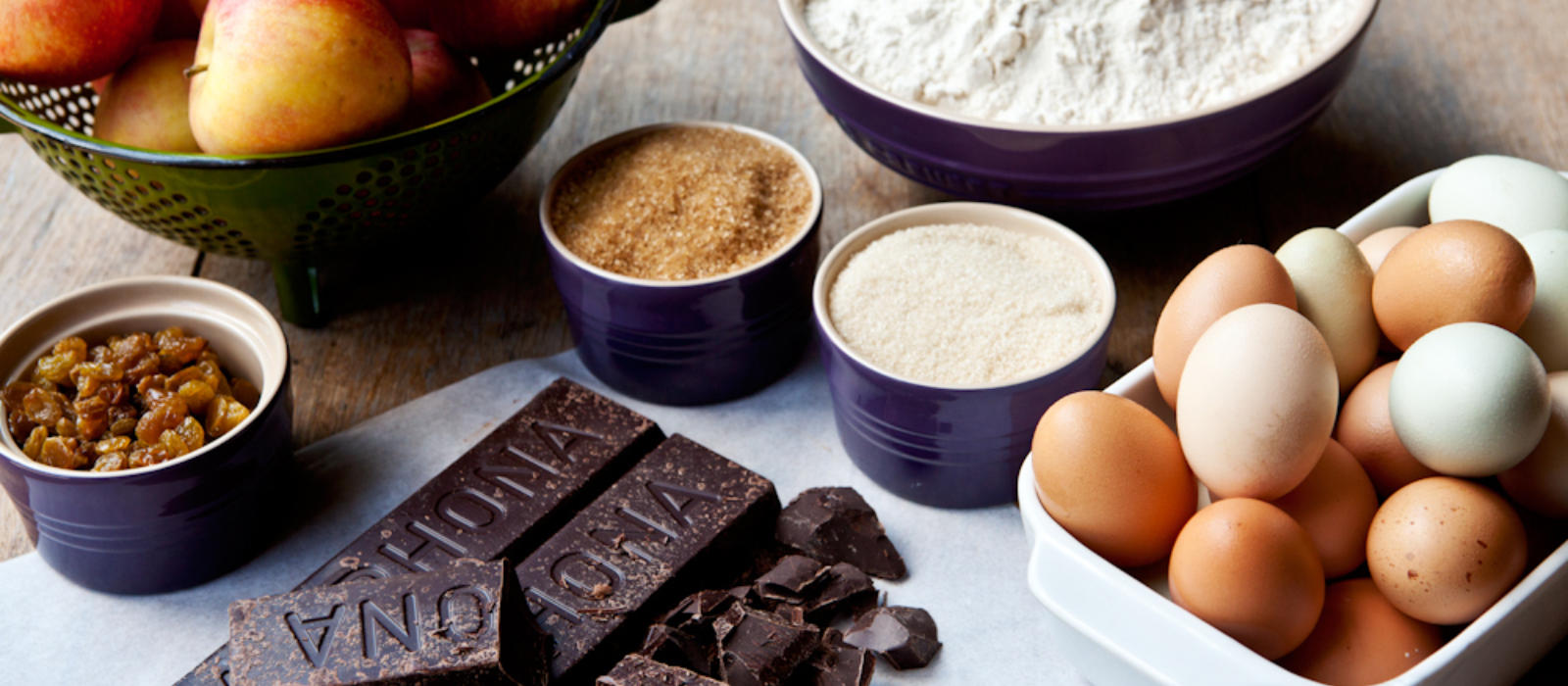
When I meet someone new, they invariably ask me for samples, or offer to be my “taste tester.” But I rarely bake at home. When I do, it’s because I’ve been invited to bring dessert to a dinner party, or I simply want fresh bread. I can’t eat factory-made bread! It’s a crime against flour.
My 1922 bungalow’s kitchen was clearly an afterthought to the architect, so space is at a premium. I begin by clearing space on the counter top. I make bread using the recipe for the Tassajara Yeast Bread, from The Tassajara Bread Book by Edward Espe Brown. I don’t even look at the recipe anymore, just start throwing water, yeast, some kind of sweetener and flour, usually a combination of whole wheat and unbleached, into the mixer with a dough hook. I mix until the starter comes together, cover the bowl in plastic and walk away for an hour. Then I stir it all down, add salt, some kind of fat and more flour and let the mixer knead the dough for me.
The dough gets tossed into a buttered bowl, preferably my Italian glazed terra cotta bowl, with straight, smooth sides and a wide lip perfect for suspending a flour sack towel over the rising mass. The first rising gets above the top of the bowl, only to get punched back down, turned over and given a second chance. The next time it appears over the edge of the bowl, more counter space gets cleared for the loaf forming. The oven starts to heat as the loaves rise one last time on the stove top. When they’ve doubled in size, they’re slashed and put in the oven. I’m free to go about my business until the aroma of fresh bread fills the house, just as the loaves are done.
One of the heels of one of the loaves is always cutoff as the bread starts to cool. It’s slathered in butter and is my tasty reward for not very much work. The recipe makes two loaves, so I always keep one and give the other to a surprised “taste tester.”
Maggie Davidson, Pastry Chef
My 1922 bungalow’s kitchen was clearly an afterthought to the architect, so space is at a premium. I begin by clearing space on the counter top. I make bread using the recipe for the Tassajara Yeast Bread, from The Tassajara Bread Book by Edward Espe Brown. I don’t even look at the recipe anymore, just start throwing water, yeast, some kind of sweetener and flour, usually a combination of whole wheat and unbleached, into the mixer with a dough hook. I mix until the starter comes together, cover the bowl in plastic and walk away for an hour. Then I stir it all down, add salt, some kind of fat and more flour and let the mixer knead the dough for me.
The dough gets tossed into a buttered bowl, preferably my Italian glazed terra cotta bowl, with straight, smooth sides and a wide lip perfect for suspending a flour sack towel over the rising mass. The first rising gets above the top of the bowl, only to get punched back down, turned over and given a second chance. The next time it appears over the edge of the bowl, more counter space gets cleared for the loaf forming. The oven starts to heat as the loaves rise one last time on the stove top. When they’ve doubled in size, they’re slashed and put in the oven. I’m free to go about my business until the aroma of fresh bread fills the house, just as the loaves are done.
One of the heels of one of the loaves is always cutoff as the bread starts to cool. It’s slathered in butter and is my tasty reward for not very much work. The recipe makes two loaves, so I always keep one and give the other to a surprised “taste tester.”
Maggie Davidson, Pastry Chef