
Story
previously on farm stories
Adjusting Your Angling Perspective
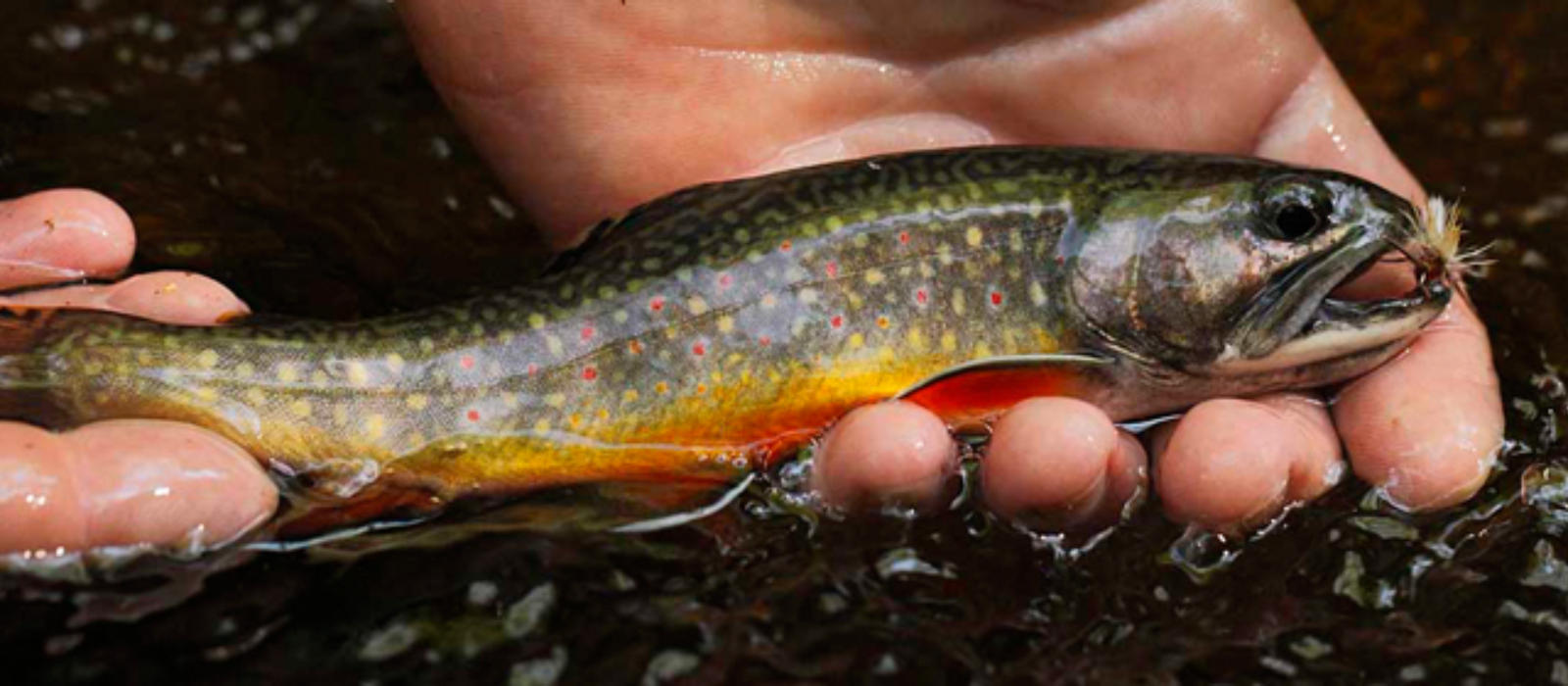
We had walked in only about a half of a mile, all of which was uphill, to enter a small mountain stream fairly high in the Smoky Mountain National Park. Once we wet our toes to test the chilly water, we clambered over boulders and downed trees, and through small plunge pool after pool keeping a high floating dry fly in every seam and pocket we could find.
The fish came readily that day as did the handshakes, high fives and an eventual victory cigar. As we wound our way down the mountain on our way home, the conversation lead to a recap of the day and a mention from my guest that it would go in his journal as one of his personal favorites. It could not have been because of the size of the fish caught, as the largest brook trout to hand that day was stretching only to around 9 inches. The numbers were good, as the fish were plentiful that day, but can numbers alone make a “personal favorite” day? I believe not, at least not in this case. On the drive in, I heard stories of big browns out west and bonefish, “till you can’t fight any more”, in the Caribbean. So what about 9-inch brook trout and mountain streams ranked that high?
I try to manage expectations before we enter the water on the way to a park stream. The average fish in the park is somewhere around 8 inches in length and at that point is fully adult and not long for this world. Park biologists tell us that around 55% of our adult fish die annually. The waters of the Smokies streams stay slightly acidic due to stream bed parent materials and the contributions of rains and tree cover that surround the watersheds. This acidity limits the insect life in our streams and therefore the overall size of the fish that swim in them. Throw into that mix that most of the streams are at or above carrying capacity, and you and piece together a mountain trout’s story. They just don’t have the “groceries” to get big. In fact, our native brook trout rarely grow larger than about 8 inches in length.
However, there are fish bigger than average – in some cases much bigger. But those are a rare exception to the rule and are gifts of a lifetime to only a small percentage of anglers who wet a fly in these mountain waters. The many rainbow, brown and brook trout that abide in these streams are also incredibly fast. Their splashy rises or subtle nymph takes are hard to catch onto. They can also be incredibly picky as to the drift of a fly, making line management and the ability to read water a ticket to success. So, in the midst of all of these facts, what is so enjoyable about fishing the Smokies?
The answer would have to be “perspective.” If going into the experience you look at the picture for what it is, and tilt your head just so, the beauty unfolds throughout the experience of standing in a cold stream seeking the rise of a splashy wild rainbow, brown or brook trout. In fact, the true answer would be found somewhere in the tale of the small, hard to catch trout that lives in a picturesque mountain pocket water stream. That is fickle, fast and picky and also swims with true giants that are rarely caught and only mentioned in story by a fortunate few. Small fish are what we have, but the chance, in fact, is not small at all. It is a test of skill and wit in one of the most enjoyable theaters an angler can ask for.
The Smoky Mountain state of mind is built around perspective. The thrill is not in the catch but the chance, and not in the size of the fish, but in the size of the experience. A willingness to adjust your perspective to where you are fishing will amplify your enjoyment of the time spent on the water. Our 9-inch brook trout is their 18-inch brown out west.
Come adjust your perspective.
Small fish and big memories…
– Alex Quick, Fly Fishing Manager