
Story
A Beginner's Guide to Identifying
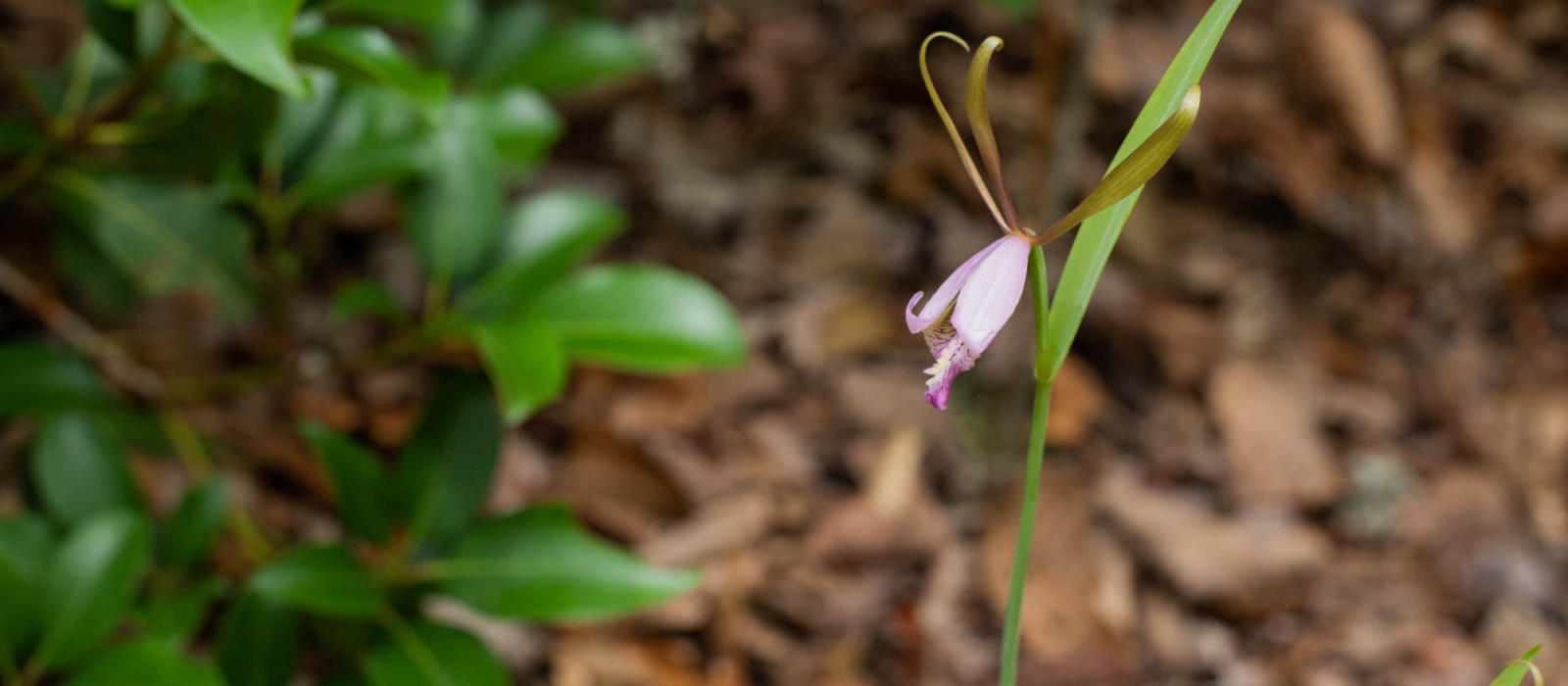
From wildflowers to native trees, Head Naturalist Boyd Hopkins has a wealth of knowledge about the array of plant species that live on Blackberry Mountain. Whether he's pointing out plants to guests on a hike or exploring the woods in search of species he's never spotted, Boyd always has an eye on what's growing.
But you don’t have to have a guide with you to start learning how to recognize the plants you encounter on an adventure. Know these little tips from Boyd before you hit the trail, and enjoy the opportunity to connect with what’s growing around you.
Environment. An important part of identifying plants on the Mountain is understanding what part of the Mountain you’re on. The north side is cool and damp, while the south side is dryer and hotter. Different types of plants will thrive on a specific side of the Mountain based on the growing environment they’re best suited for.
Leaf Patterns. Numbers of leaves can certainly come in handy once you start to recognize a lot of plants. What’s more important for a beginning identifier, though, is becoming familiar with the arrangement of leaves. Most plants either have alternate leaves, where the leaves originate from different points on the stem, or opposite leaves, where leaves originate from the same point on the stem and grow across from each other.
Tree Types. Leaf patterns are a great way to identify trees too. A pneumonic device we like to use on the Mountain for identifying trees is “MAD Horses Buck.” It stands for maple, ash, dogwood, horse chestnut and buckeye. All of those native trees have opposite leaf scars. So, you can obverse the leaf pattern and immediately narrow down the tree you’re looking at to one of those five.
Leaf Story. When you’re in dense forest, most of the understory plants are going to have big leaves because they’re trying to garner as much sunlight as they can from the little bit of sun that’s available to them under the canopy. When you get out into bright, hot, sunny areas, you’ll see smaller leaves. These smaller leaves will probably have a waxy coating – some may even be hairy. Those textures are water saving defenses the plant has developed to help conserve water and protect its leaves from sunburn.
Blooms. A flower can also tell you a lot about a plant. When you’re exploring flowers, use all your senses. We often think to smell a flower, but you can also give the flower a small flick with your finger and see if it disperses pollen or if the pollen stays stuck to the plant. Most of the showier flowers – like on pea plants and bean plants that you’d see in your garden – are designed to attract insects to support pollination. They’re fragrant and their pollen is sticky. But plants like grasses, oak trees and pine trees are wind pollenated, so their pollen will easily blow in the breeze to spread.
It is extremely important to remember to be careful interacting with any plant you can’t confidentially identify. You can learn a lot and work on your identification skills just by observing. Next time you’re on the trail, notice the leaves, the sunlight, the flowers and admire what the details of a plant can tell you about it.