
Story
5 Edible Flowers with Unique Uses
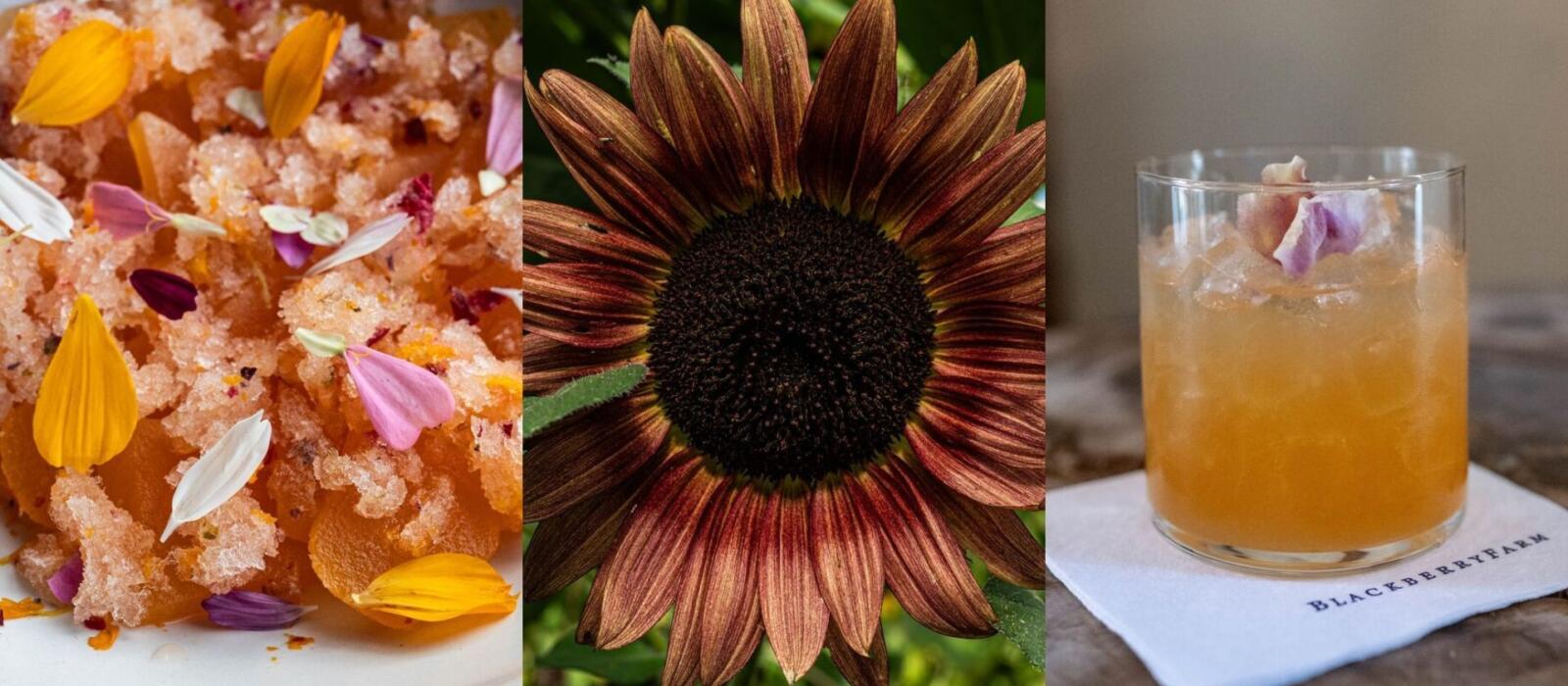
Edible flowers are a great way to introduce pops of color and bursts of flavor straight from the garden to your plate. At Blackberry Farm, our Garden team grows a variety of edible flowers throughout our rows. Not only do these blooms add a special touch to our chefs’ dishes, but they’re also key players in maintaining a healthy garden ecosystem.
“The edible flowers in our garden attract beneficial pollinators, draw in beneficial native insects that predate on potential pests and elevate the overall aesthetics of the Garden,” explains Blackberry Farmstead Director Christen Waddell.
We asked Christen to list five of her favorite edible flowers and expand on their role in the Garden. In addition, Executive Chef of The Barn at Blackberry Farm® Cassidee Dabney shares some of her favorite ways to use them in the kitchen, and Blackberry Farm Floral Manager Haifaa Tirey offers a few design tips. Check out their responses below, and come away with a fresh perspective on some of your favorite floral!
VIOLAS
In the Garden:
These flowers grow in cool conditions and are extremely productive with new blooms daily. Because of their ability to grow in cool conditions, between our hoop houses and shade house we can keep them growing basically year-round with succession planting. They have a mild flavor, making them easy to use for culinary purposes.
– Christen Waddell, Farmstead Director
In the Kitchen:
Violas are great for cocktails! I also like candying them for cookies or dessert garnishes.
– Cassidee Dabney, Executive Chef of The Barn
In the Vase:
Violas are tiny and delicate, and they lean romantic. Keep them in little pots and they already look sweet. Float a few with candles if you want soft detail, or press them into paper to save. A scattering of bud vases down a brunch table with pale linens makes it feel gentle and light.
– Haifaa Tirey, Floral Manager
MARIGOLDS
In the Garden:
Marigolds are a superstar in our Garden. They repel above-ground pests and help deter nematodes below the ground. They grow in a bushy habit that we use on some of the Garden border to help prevent Bermuda grass and other aggressive weeds from getting in. We use dried marigolds in some of our Larder products as well, like certain cheeses and garden salt.
– Christen Waddell
In the Kitchen:
We garnish everything with marigolds. They add a bit of bitterness to things, and we also use the leaves as an herb. I like to pickle the flowers and use the liquid in vinaigrettes and sauces.
– Cassidee Dabney
In the Vase:
Marigolds offer a lot of color. If you bunch them up it can feel like too much, but by mixing them into arrangements, the orange and gold tones play nicely with everything else. These flowers pop best when the table is simple – think white or cream linens, nothing fussy – so they can truly shine.
– Haifaa Tirey
NASTURTIUM
In the Garden:
Nasturtium flowers have large, vibrant flowers and a nice peppery flavor that make them a favorite in the kitchens. In the Larder, we use them in garden salt. They have cute lily pad leaves (which are also edible), and their leaves can help keep the soil from compacting. Nasturtium also helps to repel pests in the Garden.
– Christen Waddell
In the Kitchen:
These make for yummy flowers in savory applications. Simply use them fresh as a garnish!
– Cassidee Dabney
In the Vase:
Nasturtiums have a lot of movement, so they don’t like being crowded. They create a relaxed and playful vibe. Let them trail out of a tin or spill across a wooden table, and they’ll fill the space on their own. They work on picnic spreads, too.
– Haifaa Tirey
SUNFLOWERS
In the Garden:
Sunflowers add height and color to the Garden. They do well in a Summer cover crop mix and are easy to grow and maintain. The Larder uses their petals in garden salt.
– Christen Waddell
In the Kitchen:
Sunflowers are sweet, slightly acidic and add great color to dishes.
– Cassidee Dabney
In the Vase:
Sunflowers are big and happy. They greet you before anything else. These flowers are best for long tables or entryways where they can stretch out. Yellow with orange feels warm, and yellow with blue feels bold. Either way, they draw the eye. Sunflowers pair well with textures like burlap, woven placemats and even crisp white linen if you want contrast.
– Haifaa Tirey
ROSELLE
In the Garden:
This flower is a large, showy plant in the hibiscus genus. The calyx of the flower has a distinct sour candy flavor. The seed pod is pretty high in pectin, and we've used roselle in some of our Larder products, particularly the Chickasaw Roselle Jam.
– Christen Waddell
In the Kitchen:
Roselle makes a great cocktail shrub. We also like to pull off the outer layer of the pods and sauté them into vegetable dishes or sauces.
– Cassidee Dabney
In the Vase:
Roselle is bold and dramatic. It’s really a statement flower, so you don’t need much. Drop a few in a jar with a floating candle and you’ve got an easy mood. Brass bud vases are a good option if you’re going for that vintage touch. Dried roselle can slide right into a wreath or get tucked into a garland over the mantle, which feels cozy and rich without trying too hard.
– Haifaa Tirey
Christen’s Honorable Mentions:
- Bachelor Buttons have a sweet and mild flavor. They produce flowers earlier in the season and are used in Larder products like garden salt and cheese.
- Snapdragons are fun for kids because they can make them "snap".
- Basil buds have the basil flavor and are used in the Larder's basil blossom lomo.
- Zinnias are a colorful Summer cover crop that grow easily and can be directly sowed in the hot/dry conditions that a lot of other cover crop can't be. We use them as a placeholder in garden beds that are resting to prevent soil erosion/degradation and reduce the weeding we need to do in areas that aren't currently producing crops. Zinnias planted closely together are a fairly good method of weed suppression.