
Article
Under Cover
photos by Sarah Rau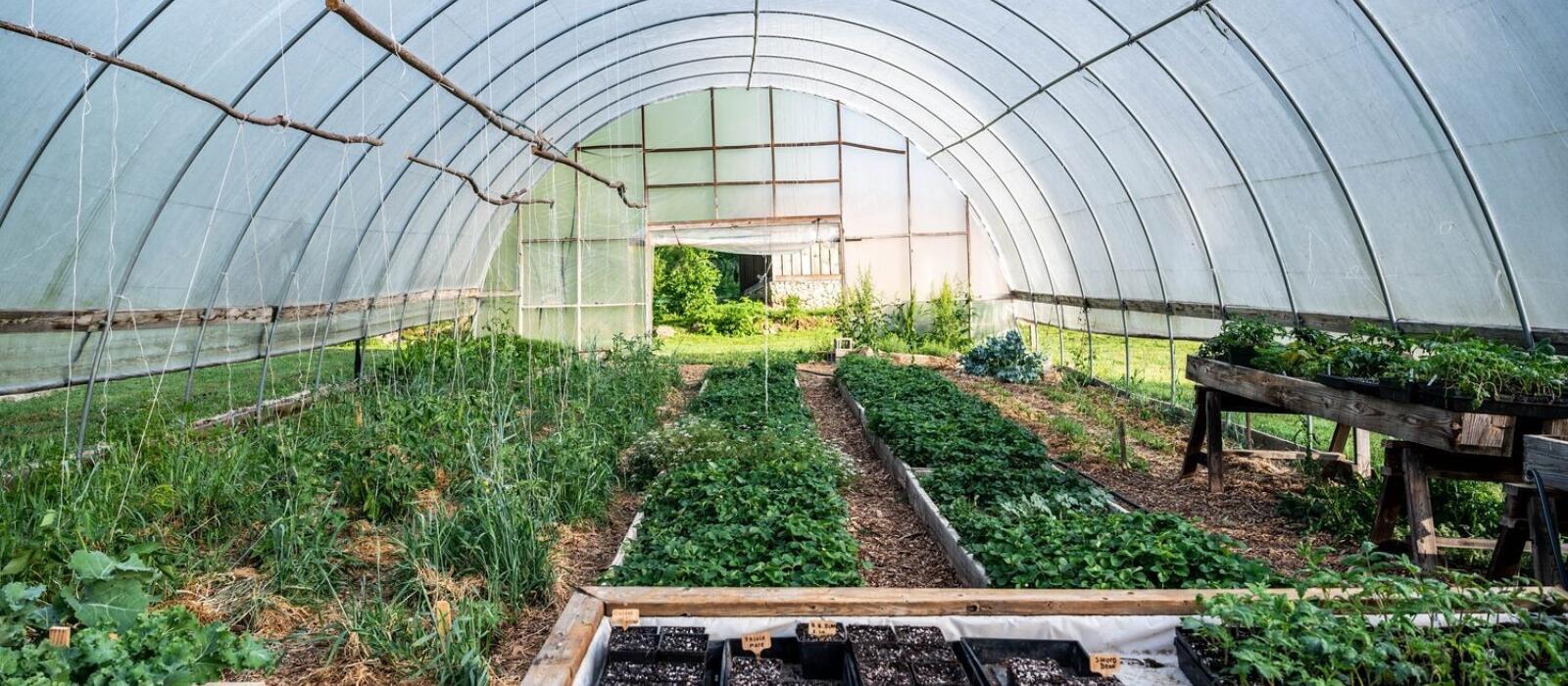
As long as we’ve been gardening, we’ve been inventing ways to win against the weather – to help spring, summer and fall prevail over winter. Because keeping the sun and warmth in, and the frost, cold and wind out, helps us secure the ultimate prize of making the growing season – and its fresh harvests – last longer. In the days before refrigeration and grocery stores, our simple solutions helped families secure fresh food for more of the year. And in the present and future, they can help us adjust our gardening techniques to changes in climate, like hotter temperatures and stronger winds. With them, we can plant earlier in spring, harvest later in fall and sometimes even grow all winter long.
To make the most of the time in a particular season, some plant varieties have been bred to mature faster (think Early Girl tomato) or bolt slower (like Flash broccoli), but the majority of our inventions involve covering plants in creative ways. Covering creates a microclimate, slightly altered from the ambient climate, by either trapping or deflecting solar energy. Gardeners most often use covers to battle cold by harnessing the energy of the sun, but some shelters can also be used to create shade for plants that don’t love heat or simply to drop the temps by a few degrees on the hottest days – days that, in most places, are increasing in number annually. Here’s a rundown of common garden covers, from the small, simple and mobile, to the large, complex and potentially permanent – and beautiful.
Cloches act like small portable greenhouses, protecting tender young plants and seedlings from cold air, snow, heavy rain or high wind. New or antique glass versions add a Victorian vibe but aren’t very practical, unless being used inside a greenhouse. (Just imagine picking up broken glass in the garden.) Instead, look for modern plastic cloches that make up in function what they lack in style. You can also make your own cloche from a milk jug.
Row Cover Cloth made from lightweight spun polypropylene allows light, air and water to pass through to plants while protecting them from frost and cold, as well as pests. (My best summer squash harvest ever was when I covered young plants daily to fend off dreaded squash vine borers.) Row cover comes in different weights – the thicker the cloth, the more frost protection but the less light coming through. Start by using row cover in fall to extend the harvest time of crops, like broccoli, cauliflower, cabbage and lettuce, by a month or more.
Shade Cloth can also be used in the late spring to prevent plants, like lettuce and cilantro, from bolting; in summer to shade crops, like peppers, eggplant and tomatoes, from sunscald or blossom drop (which can happen in temps above 90); and to start fall crops, like cabbage and broccoli, outdoors in late summer. Of similar construction to row cover, shade cloth is black or dark green and comes in different weights to block varying percentages of light.
With either row cover, shade cloth or thicker polyethylene ( for more of a greenhouse effect), create a mini-hoop tunnel using a series of wire hoops. Metal garden hoops can be purchased or made by bending metal wire or conduit. Secure the cover to the hoops with clips, floating it above plants, but don’t secure it so tightly all around that you prevent ventilation.
Cold Frames are open-bottom boxes with a clear top that can be opened and closed for harvesting and venting on warm days. Use a cold frame to continue the growing season into winter, keeping cold-hardy crops, like carrots, cabbage and lettuce, on-hand year-round. Choose a south-facing site for your cold frame to maximize limited winter sun, and if the top is angled, it should angle toward the south. Nestle a cold frame against a house or shed for additional warmth. Cold frames can be made with wood, brick or block sides and a reclaimed window or framed polycarbonate for a top, or buy a cold frame kit.
Polytunnels, also called hoop houses or high tunnels, are for the really committed growers. They have a steel frame covered with polyethylene. More function than fashion, they’re a much larger version of the mini- hoop tunnel, requiring more space (a level site with full sun) and budget. For gardeners and farmers in northern climates with a short growing season, a polytunnel opens up opportunities for growing long-season, heat-loving crops, like tomatoes, peppers and eggplants. For anyone, it makes winter growing possible, even in areas that get snow. Crops can grow right in the ground, in raised beds, or in containers under the tunnel.
Greenhouses are high end and the ultimate dream for gardeners who want to grow on some scale all year, and unlike polytunnels, which look very utilitarian, a greenhouse can be a design centerpiece. (My dream one would be made of reclaimed windows and doors. Swoon!) Greenhouses let in as much light as possible with the sides and roof made of either clear poly or glass. Available in a range of sizes, styles and price points, wood-frame versions have a more rustic, casual look while metal-frame greenhouses suit a formal or traditional style. While some small kits can be assembled by anyone who’s handy with a screwdriver, others are best left to the professionals. Since a greenhouse is a permanent structure, you’ll need to factor in a permanent water source. Greenhouses are a go-to for starting seeds and raising transplants, and they’re also good as winter shelter for container-grown fruit, including tender citrus trees.
While these garden solutions are elemental for extending the season, they’re not foolproof and do require some extra attention. Be sure to remove covers during the day when flowers are open to allow for proper pollination of crops. (For example, if covering your young squash against cool night temps, be sure to uncover them daily once squash blossoms appear so bees can transfer pollen from flower to flower.) Covers reduce moisture evaporation, but plants still need appropriate watering. So, depending on the type of covers you choose, you’ll need to consider how you’ll water. And no matter the shelter, ensuring ventilation is key to preventing disease and pest issues that can arise with too much moisture or too little airflow – in other words, open those vents, whether in a tiny cloche or a big greenhouse, and let the air in.