
Article
The Heart of the Home
photos by Sarah Rau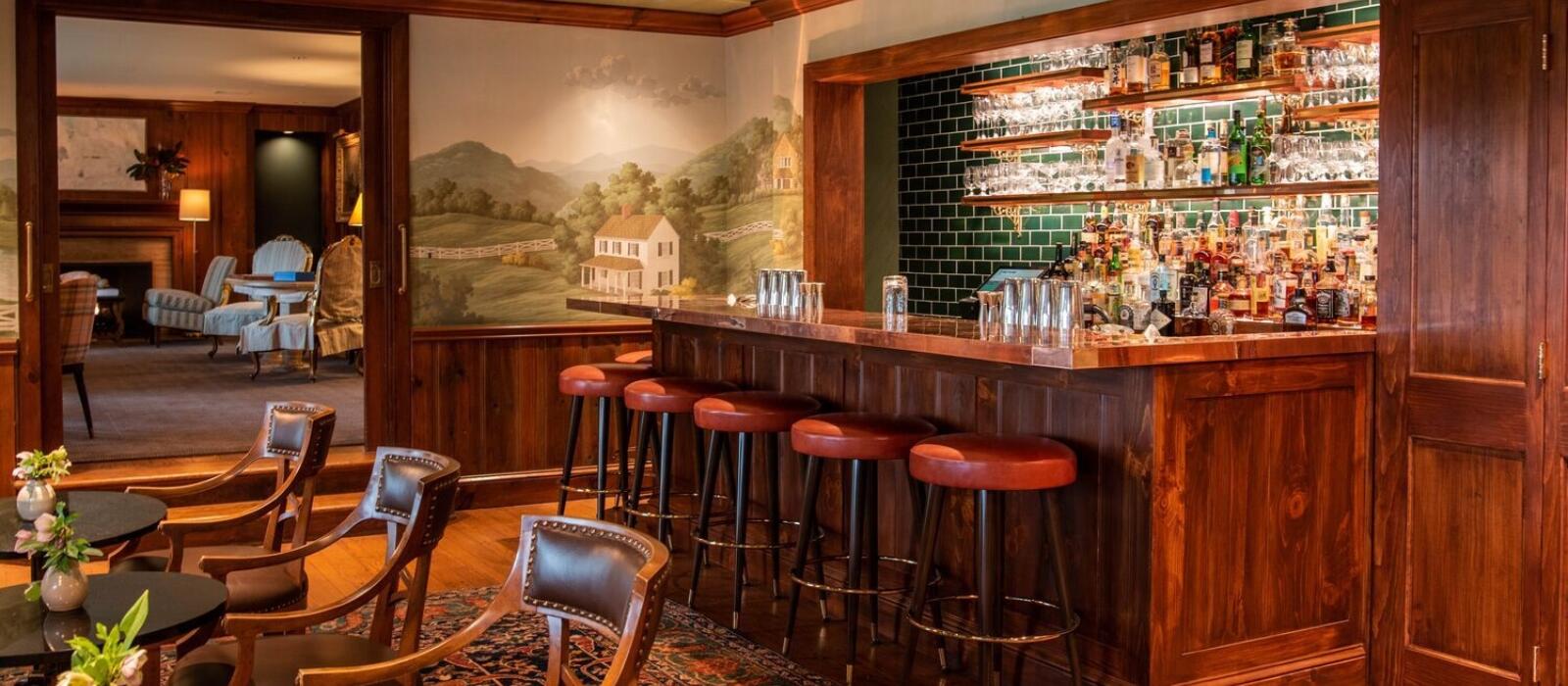
When cofounders Kreis and Sandy Beall decided to purchase Blackberry Farm in 1976, it wasn’t because they were dazzled by the property’s main building. Originally built in 1941 on a 140-acre plot bordering the Great Smoky Mountains National Park, the dilapidated white clapboard
and stone building was hardly a showstopper. Lined with cracked wallpaper and crowded with old furniture, from the lower level you couldn’t even see the magnificent mountains which were blocked by the tall trees. “It was not in good shape,” says Kreis Beall. But the couple had visions of opening their own inn, where they could host and cook, and Blackberry Farm seemed like the perfect place to do it. They were young (23 and 26) and just starting out with a four-month-old son (Sam), but they knew it had potential. “We were risky dreamers,” says Kreis, who had looked over to Sandy and said, “Yeah, we can do this.”
They took out two bank loans and hatched a plan to redo the house in the scrappiest way possible. To help redecorate on a shoestring budget, they enlisted the expertise of Kreis’s mother – a former New York runway model with impeccable taste. Kreis had always said, “I want Blackberry Farm to look like my mother’s house, but feel like Mami’s,” – a combination of her mother’s style and her grandmother’s warmth. In the dining room, they used their own wedding china and silverware and filled the rooms with vintage furniture. One of the splashiest pieces was a gooseneck sofa Kreis had picked up for $350 at a Friday night auction. “We thought it was so expensive!” says Kreis. The six-room inn (two rooms belonged to the Bealls) was a family affair, where everyone chipped in helping to cook and host. Kreis even remembers when her late son Sam, aged two-and-a-half at the time, helped carry plates to the dinner table in his red robe.
Standing in the Main House today – in its sophisticated Dogwood dining room with polished wood-paneled walls and dusty pink and tartan chairs that sit under glitzy chandeliers, or in the snug but smart living room – it’s hard to believe the building’s humble beginnings. Blackberry Farm has grown and evolved, but the modest house has been the guiding light and inspiration for the architecture of all the new buildings. “If you look at the roof lines and the white clapboard, all of that is repeated in other architecture that we do,” says Brian Lee, director of guest relations who has been with Blackberry Farm for 28 years.
While the Main House has undergone many iterations itself, with fresh spaces such as the Gallery shop, it also hasn’t changed at all. The original rooms upstairs, which remain largely unchanged, are still beloved by guests. Downstairs, guests still read books by the fireplace or curl up in the bay window overlooking the mountains. In the dining room and on the wide veranda, which has expanded in size, a breakfast of hoe cakes and omelets filled with the Farm’s award-winning Brebis cheese is served every day. Today, dinner service is elevated, but is still made in the same kitchen where Blackberry’s culinary journey was born. “The heart of any home is a great kitchen,” says Brian. “And that is where the entire concept of Blackberry gained its footing.”
Like a time capsule, the Main House has also held onto decades of history and memories, for both guests and the Beall family.
“[It] has always been the heart of Blackberry,” says Mary Celeste Beall, Blackberry Farm’s proprietor, who remembers her first encounter with the building fondly. She was a high school junior in Alabama when her late husband Sam (her boyfriend at the time) whisked her away on a surprise trip to an unknown destination: his family home in Tennessee. They drove from the airport, past cars on cinder blocks and farmhouses, until they arrived at the Main House, where she stepped out of the car with nothing but a mystery suitcase packed by her mom. It was a few days before Christmas, and the house was alive with music, a roaring fi replace and strings of decorations. “It felt like a hug,” she says, remembering how her enjoyment quickly turned to embarrassment when she opened the suitcase to discover her mom had packed a hideous long dress with a Victorian neckline that belonged to her sister. “It was the ugliest dress!” Exclaims Mary Celeste, who had arrived downstairs to find the Beall family looking like “they’d walked out of the dogwood tree outside the front, which was planted in 1939, there are some pieces that will never be removed.
Throughout the years, the Bealls considered making larger structural changes to the house, to accommodate a growing number of guests, but they were also careful not to tinker with it too much. Whenever grand renovation plans were drawn, they never followed through. “Knowing what you don’t want to change is as important as knowing what you do want to change,” says Mary Celeste, who added a fresh new energy in the latest redecoration, but also ensured that guests who’ve been visiting for 40 years still felt connected to the space. “We want our guests to always feel that tradition and history,” she says.
One of the iconic pieces that still remains is the gooseneck sofa (a constant that is non-negotiable), the one Kreis bought for $350 at a Friday night auction. “It’s been there Blackberry’s whole life,” says Mary Celeste. Photos from two decades or so ago show Sam pouring champagne for a group of chefs huddled in the living area, one of them seated on the ruby red gooseneck sofa. Now upholstered in fresh green and white pinstripe fabric, it is almost unrecognizable. Save for the smooth, dark wood frame and the fact that it still sits in that same window. “It’s gone through lots of re-covering, but to me, it’s a classic. It fits in there. It’s welcoming.” It anchors the room. “Whether our guests know it or not, there’s something familiar about sitting there,” says Brian. “You feel welcomed and comfortable.” Exactly the ethos behind everything at Blackberry Farm.