
Article
Push & Pull
photo by Elizabeth Kreutz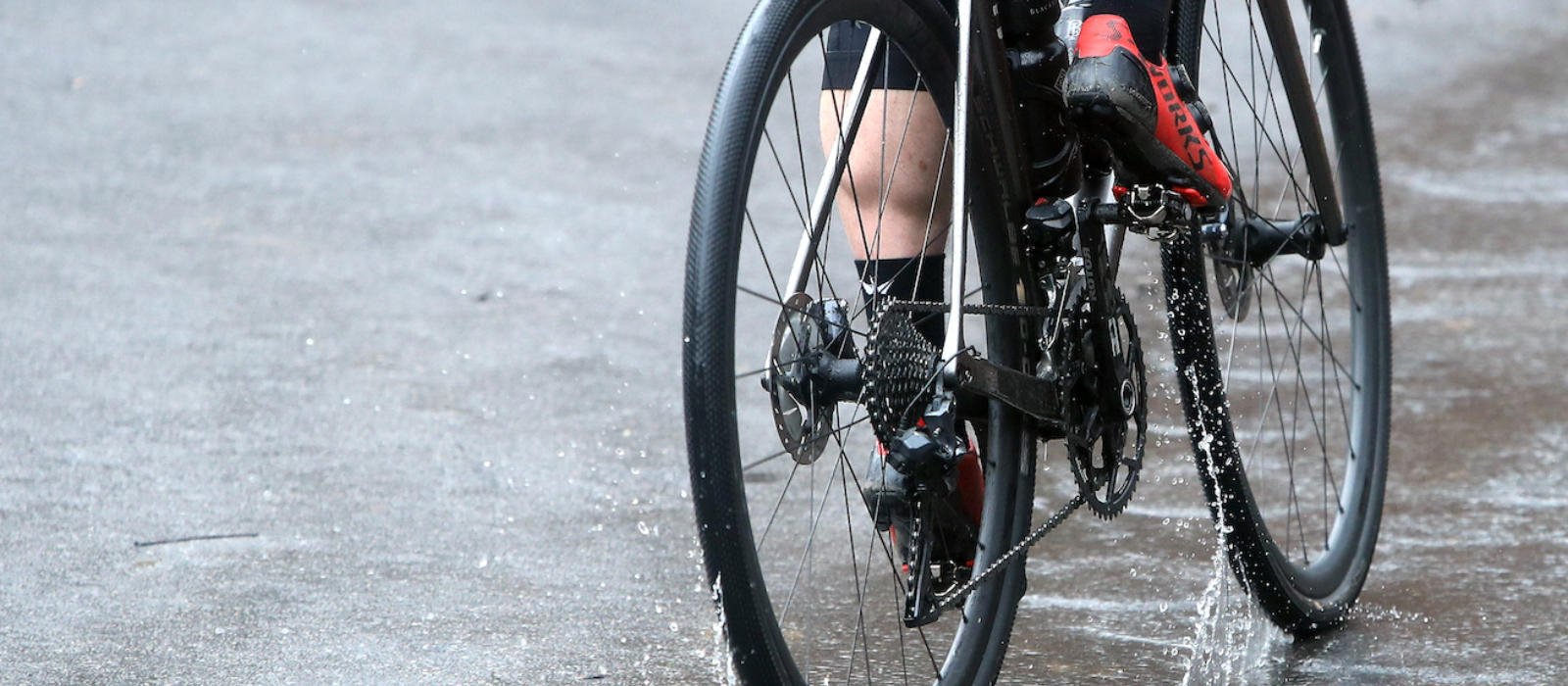
Art and power, suffering and glory, that is the push and pull of cycling. Those opposing forces define not just how a bike is built but also how it’s ridden and how it’s approached. The bike is science, engineering and mysticism rolled into one. “To say tension is important is an understatement,” explains Sam Pickman, of Bentonville, Arkansas–based Allied Cycle Works. “It’s a material property, and we design the entire bike around it.” And as director of product and engineering, Sam would know. He dreams up and oversees the intimate construction of their cult-worthy carbon fiber bikes. (In 2019, both the male and female winners of Dirty Kanza, a grueling 200-mile gravel race in Kansas, rode Allied’s Able models to victory.)
As Sam explains it, whether cruising casually along a forested lane or redlining your heart rate on a punishing climb, pushing on your pedals creates a force on and in the bike that transcends that single motion. Pedaling puts tension on your chain, which transmits force into the tubes and ultimately the road. “There’s always a sort of tension and compression battle going on because [the bike] resists your forces,” says Sam.
The beauty of the bike is that even without understanding the engineering behind it, you can feel the reaction. Call it responsiveness or torque, or just plain magic. “Tension is power that translates to the wheels, to the bike and to the road,” says Boulder, Colorado, resident Craig Lewis, who raced professionally from 2007 to 2013, including in the Tour de France and Giro d’Italia. “When you put pressure on the bike, and it goes forward and not side to side, that’s the main thing I look for. There are a lot of bikes that are more flexible and lateral so you lose momentum and that power output.” That is not the case on an Allied bike.
The same principle makes the wheels go round. “The spoked wheel is what it is because of tension,” says Sam. The even pull of the spokes – think of the mechanics of a suspension bridge – keeps a wheel in balance and true while also keeping it light and stiff. One loose or off-kilter spoke and perfection and power are diminished.
And then there’s another type of tension that has nothing to do with materials but is just as important to the sport: Fear. Brendan Quirk, Allied’s CEO, describes cycling’s knife edge as “a balance of extraordinary exhilaration and extraordinary suffering.”
Brendan recalls a recent visit to Blackberry when he was gearing up to ride Butterfly Gap, one of the steepest and most difficult climbs in North America. “In the pit of my stomach, the tension I felt reminded me of my youngest days racing. It’s as good as it gets and as frightening as it gets,” he says.
The bike represents multifaceted tension: in its engineering, in the physical effort required to move it forward, and in the emotional conundrum it presents. The power comes with managing all three forces at once.