
Article
Life in Rhythm
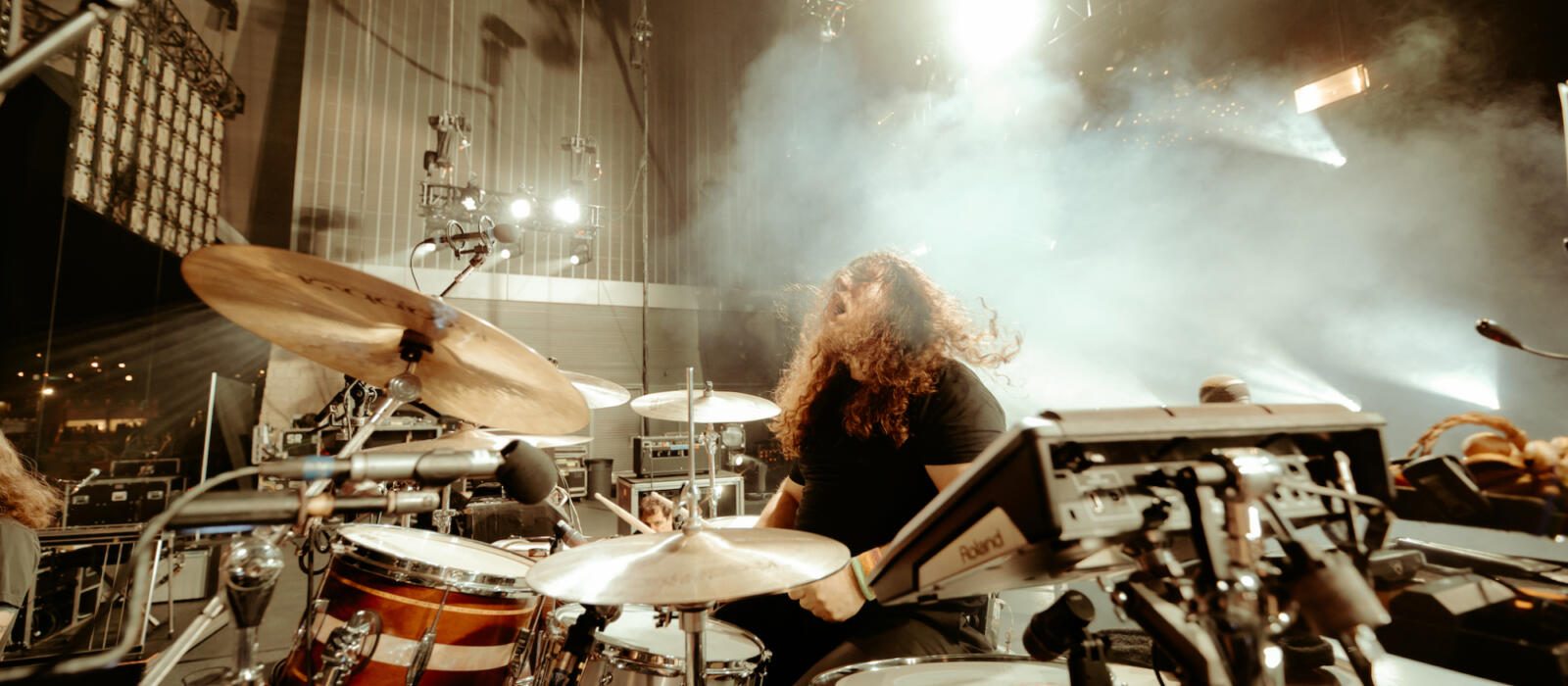
My first drum kit was the side of my bed.
My grandmother Joni was a singer. From a very young age, I loved to sit and listen to her practice with her band, Gentle Blend. They were a working lounge act in Louisville, Kentucky, and my earliest memories are of spending hours on end at her house, watching them, listening attentively. I just gravitated to the music, to the beat, to the scene of them conjuring this great and varied stream of popular music from jazz standards to Donna Summer and Simply Red, and plenty more in between. For me, it was magic. I was hooked on this thing I didn’t know was called rhythm.
Bruce Morrow, my grandmother’s drummer, gave me my first set of sticks. I was three years old. There are pictures of me on a tiny training potty, and what am I holding? Those drum sticks, banging on anything I could reach. I’d sit on the corner of my bed in my bedroom and spend hours playing along to the radio. Just listening and playing it as I heard it, mimicking first the high-hat and snare beats because those are easiest to begin with, then working up to the beats of the bass drum. The radio was always on at our house. And in my grandmother’s basement, she had toy instruments my younger brothers and I would play while listening to her collection of hundreds of 45s on her little turntable. This was my education, and I can’t really explain it except to say that I knew how to play drums before I really learned. I didn’t sit in front of a proper drum kit for another eight years, when I was 11 or 12. But by the time I sat down, I already knew how to play.
My daughter interviewed her great-grandmother for a school project not long before she passed. What she said when asked where her feeling for the music came from was a lot like what I’d say about drumming: You’re not sure where it comes from, but you know it’s why you’re here. And you need to do it. It makes you feel whole.
I still feel that. Rhythm creates order; you can depend on it. It’s also a way of experiencing the world. I hear it, that beat, that keeping of time, in everything. When I’m in New York City, it’s just a cacophony of rhythm. Trains and subways have a jazz feeling to me – they swing. When I’m home, maybe it’s something smaller: the tik-tik-tik of the printer, my cat’s water fountain that sounds like a tap dancer. I try to stay receptive to these things. Some people see color when they hear melodies or certain words. I have a couple bandmates who hear a certain chord as purple, another one as green. They’re different ways of perceiving the world. For whatever reason, mine is through rhythm.
Next to music, my other great passion is food and cooking, and I see so many similarities between the two. The performative elements. The pleasure of all senses. The patterns of sound when you’re chopping vegetables – that’s drumming! A restaurant is rhythm personified. Guests are ordering; cooks are calling out which dishes to fire; it’s the dance of getting it all to the table in time. If it’s not all in tempo, everything falls apart.
Fundamentally, writing a song and writing a recipe are the same. Frequencies and flavor profiles are very similar. You need a balance of high, low and mid frequencies to make a rich experience sonically. Same goes for flavor. High frequency – a whistle, a cymbal or electric guitar – that’s your acid. That’s what you’re doing to awaken your ears. That’s adding acid to your dish. Bass frequencies are your umami; they tie everything together. Acid makes umami a thousand times better. Contrast creates balance. Through my journey trying to be a better cook, I’ve learned to balance sound better.
One of the things I’ve come to appreciate about rhythm over the years is that, while first and foremost I’m a time keeper, it’s also my job to manipulate time – for emotional reasons, for structural reasons and communicative reasons. Music, like a meal and life in general, isn’t about perfection. It’s about knowing what a moment needs.
When the world was locked down due to Covid, I spent that time really stripping away everything to the essentials of what I do with my instrument. I bought an electric drum kit – so my wife wouldn’t divorce me – and spent days at home playing to a metronome for hours at a stretch. It was like the old days of playing on the side of my bed or like a basketball player working on their shooting stroke – muscle memory, the same moves over and over. Keeping time is what you practice so you don’t have to think about it when you’re playing.
And once you get to that level, then you can manipulate rhythm on an emotional level. Part of my role within the band is to take these moments when they need to be pushed and raise these crescendos up to a fever pitch, then bring it all down so quiet you can hear your partner whisper next to you.
The best shows are the ones I don’t remember. When you practice, you don’t have to worry about the math or what comes next. There are times I don’t stop playing for 45 minutes, and it’s wonderful. It’s so much fun. That doesn’t just happen. This is my 20th year in the band. Those moments of freedom come from decades of being in sync with the same people for so long, of experiencing life with them beyond music, to the point where you know what they’re thinking even when you’re not next to them. Those are some of the gifts rhythm has given me.