
Article
Healing What’s Hidden
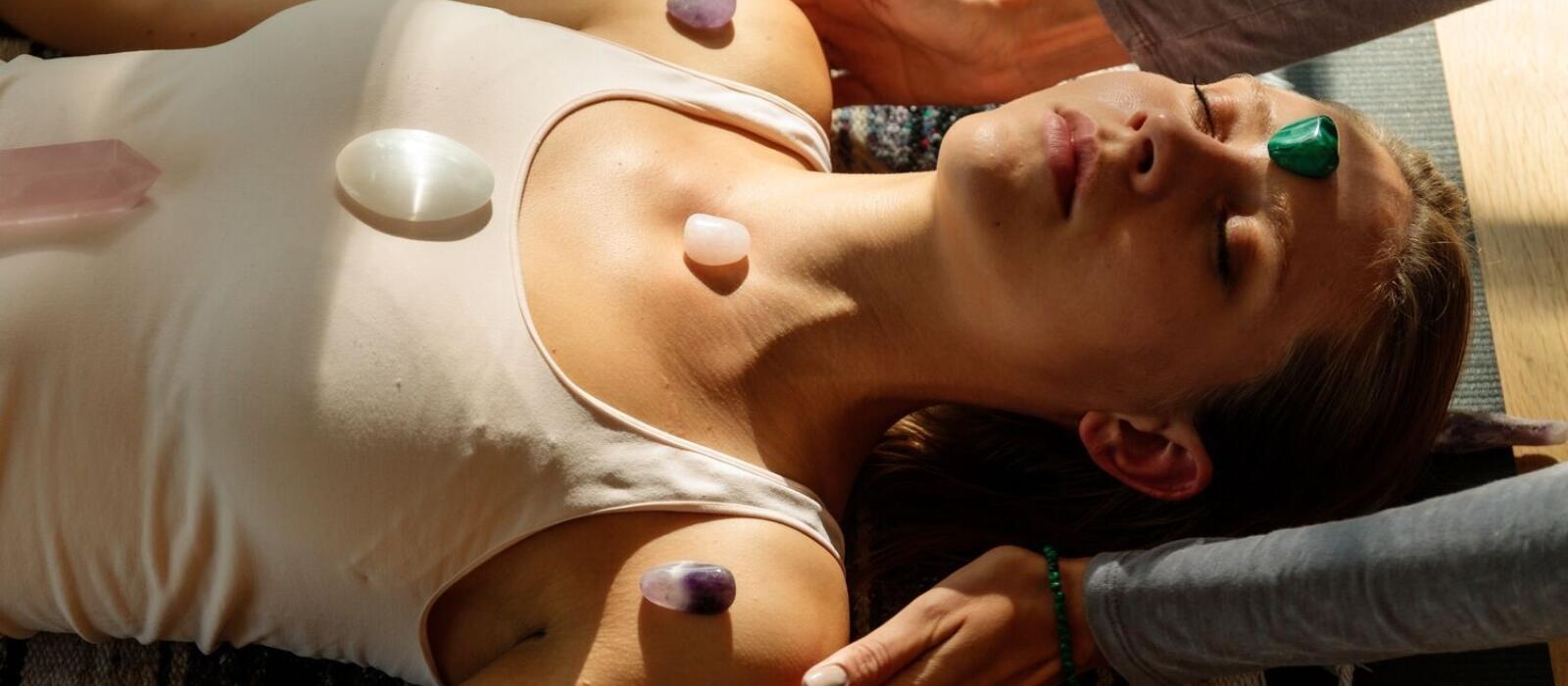
As physical beings in a physical world, our understanding of the environment is heavily influenced by our sense of touch. When we can reach out and feel something, we accept the interaction as proof of its existence. At the same time, we acknowledge that not everything needs a physical form to have a noticeable impact on our lives.
Take energy, for example. Energy isn’t tangible, yet it makes up the very foundation of our reality. It exists everywhere and in everything. Its ongoing state of transformation breathes life and change into our world. We haven’t always had the tools and language to describe energy, but it has always existed. And humans were interacting with it long before we ever knew what it was.
Reiki is a healing practice that applies this understanding of energy to the world of wellness. It combines the Japanese words “rei” (life force) and “ki” (energy) to describe the energy that exists in all living things – what Reiki practitioners call “universal life force energy.”
“Reiki is a form of energy work used to restore the body to its natural state when we know something is off, but we can’t necessarily name what it is,” explained Marissa Neville, a yoga and sound meditation instructor and Reiki master at Blackberry Mountain. “It’s part of a more holistic approach to wellness that sees all the parts of the body – the physical, mental, emotional and spiritual – as interconnected.”
Instead of using touch as a primary tool of healing, Reiki practitioners will often hover their hands above the body, applying minimal to no pressure as they move from head to toe through the seven main energy centers – or chakras – where universal life force flows. Each chakra represents the energy contained in different parts of the body, such as the abdomen, chest and top of the head, but rather than healing the physical body, Reiki is aimed at healing the energy itself.
“If someone were to walk into a room with a bleeding arm, we would immediately know what’s wrong because we can see it,” said Marissa. “What we can’t detect as easily are the emotional wounds we carry. When we experience something traumatic – like losing a job or going through a rough breakup – those things create little injuries to the spiritual body. Because energy is more intuitive and less apparent, we may not realize that a broken heart is affecting us just as much as a bloody arm.”
Because energy is unique and everchanging, Reiki sessions aren’t one-size-fits-all. Each individual is likely to experience Reiki differently, and even the same person might not have the same experience from one session to the next. With this in mind, Reiki practitioners often take the time to ask what brought their clients to a session, what they’re feeling presently and what their hopes are, all before placing their hands on or above them.
“A lot of times it’s different things that call people to a session,” Marissa said, “but the nice thing about Reiki is that the energy goes where it needs to go. Energy wants us to be what we are naturally. Reiki is about tapping in and guiding us back to our natural state.”
Since Reiki focuses on the spiritual body we can’t see or touch, identifying imbalances in energy can be difficult for those who aren’t as attuned to it. We’re not taught to speak energy, but our natural instincts know when something is off, even when we can’t put it into words. The times we feel blocked, stuck in our heads or full of resistance are often what indicates an energy imbalance, Marissa said.
Reiki master and lead sound and energy healer at Blackberry Mountain Jaia McClure said wounds in the physical body can also be tied to deeper wounds in the spiritual body. If you feel like you’ve seen every doctor and appear “normal” on paper, but you still can’t shake the feeling that something isn’t quite right, Reiki offers another avenue to explore potential healing.
“If someone comes into a session with physical pain, that’s where I begin,” Jaia said. “I start with that outermost layer that contains the densest energy, then move deeper into the emotional, mental and spiritual layers of the body, where the energy gets lighter. Sometimes, when the energy in your spiritual body goes ignored for too long, it becomes dense enough to show up in the physical body.”
Jaia compares inner wounds to fingerprints on a glass window, suggesting that you may not see them unless you refocus your eyes and look a little closer. By combining her knowledge of what the different chakras represent in the spiritual body and the physical wounds on the outer body, Jaia detects the fingerprints that may otherwise go unnoticed.
A persistent knee injury, she says, might suggest an underlying support issue. If you can’t heal your hips, you could be experiencing a control issue. If your upper shoulder hurts all the time, someone might have stabbed you in the back, and you haven’t healed the underlying emotional wound.
“I think a common misconception about energy work is because we can’t see it, touch it, quantify it or put it under a microscope, it must not be real,” Jaia said. “But the truth is there is so much in our world that we can’t quantify. I think the greatest, most believed-in concept in our lives as human beings is love. That’s something you can’t quantify, put under a microscope or prove that it exists. I think if you believe in love, you have to believe in energy.” Rather than viewing the body as individual parts, Reiki understands every element of our body as interconnected. It asks that we open our minds and adopt a more holistic perspective on healing.
Perhaps your headache really is just a headache. It could be that all it takes to relieve a sore throat is an over-the-counter antibiotic. Or maybe it’s something deeper that you haven’t thought to consider before. In these times of uncertainty, the path to peace might just begin with looking inward.
Click here to learn more about the energy work experiences available at Blackberry Mountain.