
Article
Glass to Gravel
photos by Bonjwing Lee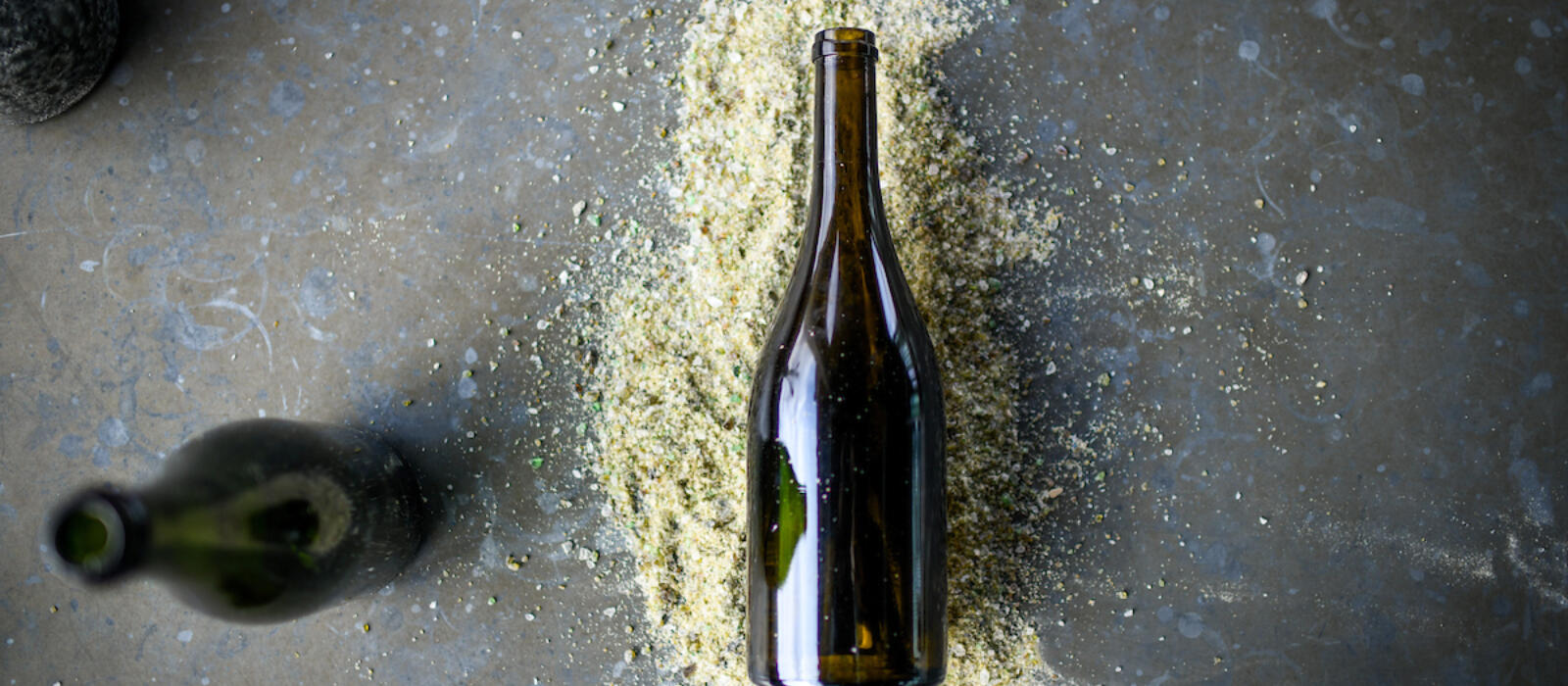
The quick crash of glass against glass echoes through the kitchen as one empty wine bottle is dropped on top of another. It’s a regular note in the daily symphony of food service at Blackberry Farm. While the Blackberry experience is founded on ensuring that the guests are expertly taken care of, the team is also constantly thinking about what efforts can be made to take care of the land as well.
With a legendary wine collection that invites guests to enjoy thoughtful pairings with any meal, the Blackberry team was seeking a solution for how to recycle glass from the resort and keep it out of the landfill. In 2022, Blount County answered with a program that takes the Farm’s wine bottles from the table to the roads.
In 2022, the Blount County Recycling Department acquired a glass pulverizer, creating one of the only glass recycling programs in the state available outside of the larger cities. Since September 2022, the facility has recycled more than 247,000 pounds of glass. More than 35,000 pounds of that glass collected in the first year of the project was recycled from Blackberry Farm.
The pulverizer breaks down the glass into two sizes of material: a ground glass gravel and a fine sand. Over the last year, the Blount County Highway Department has experimented with how to utilize the materials in a variety of projects, both repurposing the recycled glass and benefitting the community.
They found, for example, that the fine glass sand can be mixed into the paint used for making
stripes on the road for increased reflectivity. The sand was also mixed with the salt used to treat roads during winter weather to provide additional traction. The glass gravel can be utilized as a replacement for aggregate, which can be used as pipe bedding, shoulder stone, underlay for walking trails and asphalt, just to name a few examples shared by Don Walker of the Blount County Highway Department.
Each time the sommeliers at Blackberry Farm uncork a bottle of wine, they share the story behind what’s in the bottle – the land the grapes were grown on, the winemaker that worked with them, the flavor notes experienced in a sip. Now, an additional layer to that story is being written as the bottle evolves from a vessel to part of the infrastructure of a community.