
Article
Food Play: The brain-building powers of meal-time
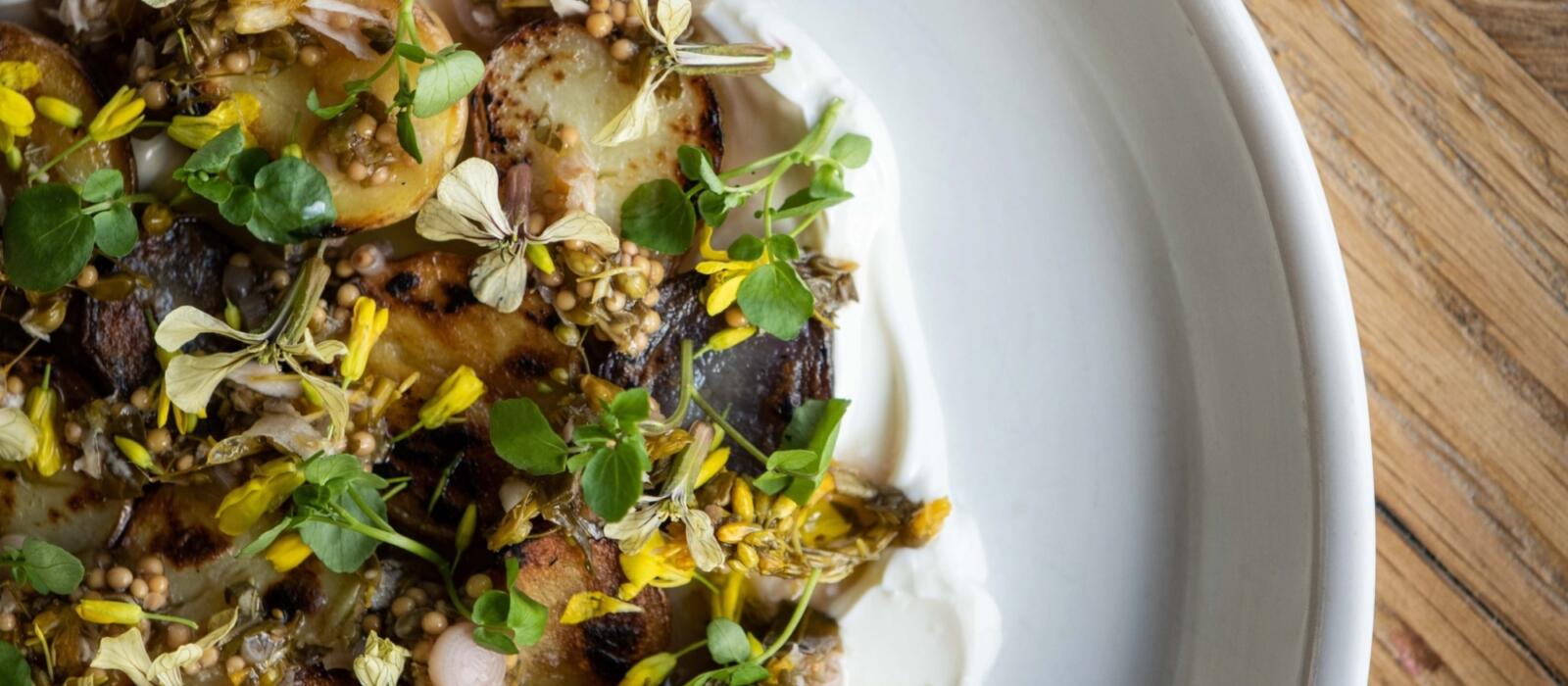
Food – and eating – are at the very core of healthy brain development. In some ways that is obvious; no part of our body can grow and be sustained without the calories of food. But the very texture, color and smell of our food is just as important to healthy development and functioning of the brain as the nutrients. A brief neuroscience lesson can help you better understand this.
We monitor what is happening in our world through our primary senses – what we see, hear, taste, touch and smell. And each of these inputs come into our brain separately. One of the major jobs of the brain is to weave these separate threads of input together to create a more cohesive, complete picture of the world. This weaving together process – connecting the textures, tastes, images and smells of food – becomes one of the most important classrooms for the developing child to learn about the world. The messy food play of the 10-month-old is actually an important learning experience. Squeezing macaroni and cheese through your fingers – then smearing that over your face and hair and pulling some in then out of your mouth – is learning about the world. These stimulating experiences help shape the brain of the playful infant. Food, food play and the relational interactions around feeding become the core experiences that build a healthy person.
Mealtime has always been for exploring, learning and growing. In infancy, the powerful bonding experiences of feeding creates our foundational capacities to connect to others – to love and be loved. Wobblers and toddlers use meals to continue building the brain’s capacity to connect, process and understand the world. The child experiments with gravity, causality and dozens of other important concepts. Mealtime is the laboratory to conduct mini experiments; “How many times will he pick up the spoon I drop from the high-chair? Does juice splash like water? Pudding is harder to throw than mashed potatoes. Ice is cold. Soup is hot. What happens when you mix milk, peas and carrots? What makes mom mad? What makes her laugh?” So many of the things that drive parents crazy at mealtime are actually good for the child. They should play with their food. It’s good for them.
As we become youth, meals and all of the sensory complexities of our food and the social complexities of mealtime become the play-time, debate-time, laughter-time, fight-time and make up time that continue to help us mature. These moments help us grow up and grow together, and this continues into our adult lives. What is more stimulating, pleasurable and bonding than a good meal with friends? We listen, taste, share a story, sip, opine, taste, laugh, eat, learn, teach, taste again. And the nature of the foods that allow us to explore new textures, unique combinations of tastes, colors and smells will contribute to that brain-building experience. The powerful connecting qualities of a sensory complex meal cannot be underestimated. These experiences create bonds and biology that allow us to sustain the stressful and distressing moments in our lives when we are without sustenance – emotional and physical. And the more resilience-building meals we have, the healthier we will be.
So, here’s to health and to the brain-building messiness of mealtime. We should always play with our food.