
Article
Fine Dining Fandom
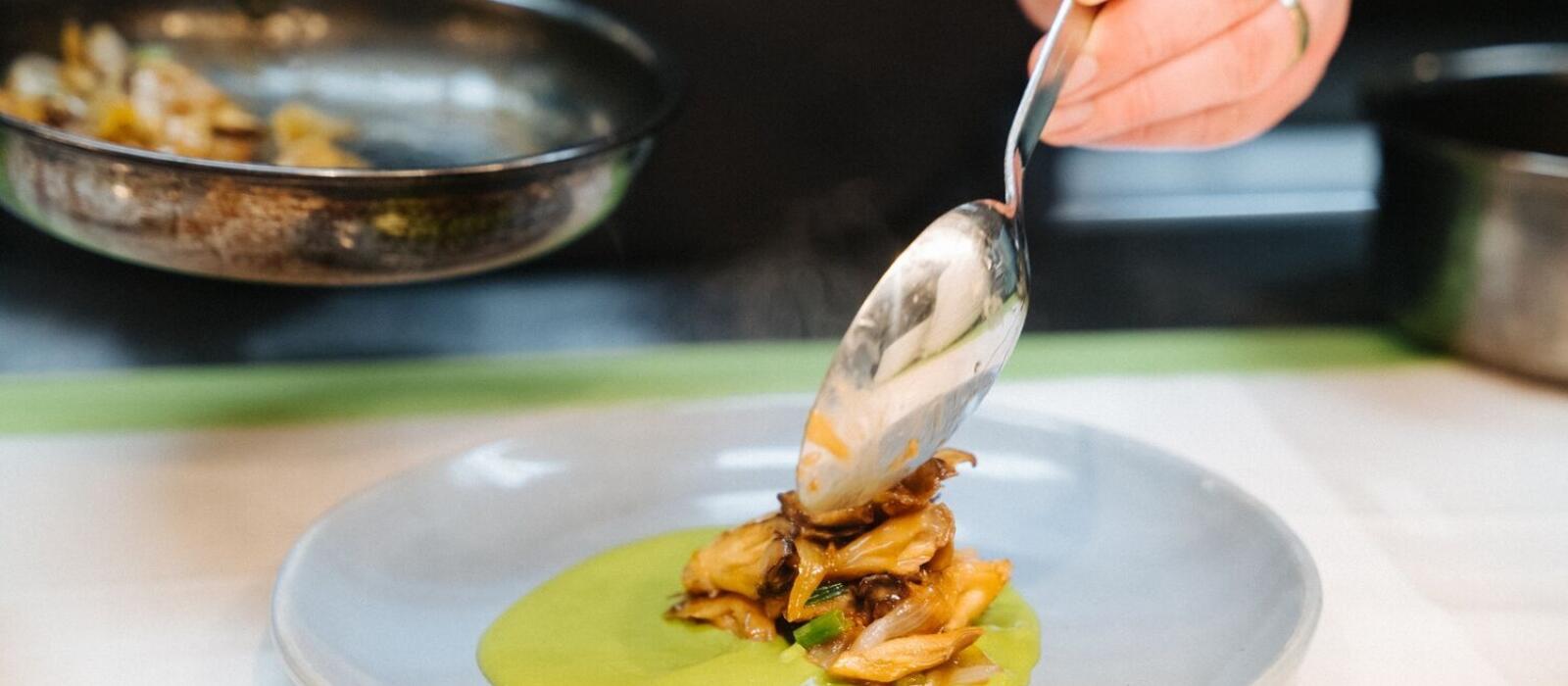
In 1786, a French immigrant named Jean Baptiste Gilbert Payplat arrived in Boston, Massachusetts, to work for a French ambassador assigned to the young United States. Since his full name is a mouthful, he went by the nickname “Julien.” As a steward, Julien was accustomed to shopping for the best ingredients, planning menus, pairing wines and serving exquisite meals with excellent service to discriminating palates. It was perfect training for someone who would kickstart an important American institution – the fine dining restaurant. On July 10, 1793, Julien opened the Restorator Hotel to serve upscale European food to hungry Bostonians. Julien died in 1805, and Hannah, his widow, ran the restaurant with excellence for another decade before selling it. Remarkably, more than two centuries later, contemporary fine dining restaurants share much in common with Julien’s creation.
In early 15th century French, the word “restaurant” meant a “food, cordial or medicine, which has the effect of restoring health or strength.” Julien certainly had that linguistic root in mind when he named his eatery. He wanted to signal to customers that this was a place where one could recover from whatever they had gone through that day. Restaurants catered to a broader clientele and emphasized the food they served as much as or more than beverages. Prior to the Restorator, fine dining was primarily limited to wealthy people gathering in private settings, especially someone’s residence, or for travelers staying at inns or hotels.
Despite Julien’s front-runner status in the industry, Delmonico’s – a New York City restaurant opened and operated by Swiss immigrants John, Lorenzo and Peter Delmonico – epitomized fine dining for most Americans. In vogue with many fine dining restaurants, French cuisine was the starring attraction, and menus were printed in French and English. Lynn LaBate, who curated a 1997 exhibit on American restaurants for the Fullerton Museum Center, noted “Delmonico’s set the standards for fine dining in America for almost 100 years, from 1828 when it opened until it closed in 1927. It was the first fine dining establishment to allow a woman to dine alone, the first to feature a separate wine list, the first to separate busboy duties from waiter duties, the first to encourage people to go out for lunch.”
Delmonico’s influence stretched well into the 20th century until a government policy change drastically cut the main revenue generator for restaurants. The Volstead Act of 1919 ushered in Prohibition the following year. Many restaurants either closed because of the lost revenue from liquor sales, or they went underground and kept selling alcoholic beverages. Ten years later, more fine dining establishments closed during the Great Depression because diners could no longer afford that expense. In New York City’s Manhattan borough alone, one third of all restaurants closed, and fine dining establishments did not escape the carnage. The era of fine dining faced an uncertain future, but it came roaring back after World War II.
The 1960s, in several ways, were a pivotal decade for fine dining. On the proprietor side, the Immigration and Nationality Act of 1965 greatly expanded the number of people from around the world who could become U.S. citizens. Many immigrants opened restaurants to pursue the American Dream and provide for their families. American diners could taste more of the world than they ever did before. Their appetite for international flavors created a sizable uptick in fine dining restaurants featuring food from Asia, the Middle East and South America. Cuisines from other parts of the world soon followed, and French cuisine gradually lost its velvet-gloved grip on fine dining. Another significant change was the passage and enactment of the Civil Rights Act of 1964, which banned any public restaurant from discriminating against potential customers based on color, national orientation, race, religion or sex. Now, restaurants had to cater to a much broader clientele than before with the main barriers being affordability and creating an inclusive dining environment.
More dramatic changes came in the 1980s and were pronounced in the 1990s and beyond. The first was the rise of the celebrity chef whose name alone brought fame, fortune and an immense following. For centuries, chefs were typically associated with a particular restaurant in a community. Chef Wolfgang Puck and others showed that opening restaurants with multiple locations nationwide was not only doable but lucrative. Sometimes the restaurants were the same concept or a chef could operate a portfolio of concepts highlighting different cuisines. The key point is that chefs were now brands which conveyed excellence in a variety of contexts, even if they weren’t personally in the kitchen of the restaurant where one dined. Wealthy investors, including athletes and entertainers, were more than happy to bankroll such expansion or even get in on the act themselves by starting their own restaurants. Public television stations aired food-related cooking shows that featured fine dining chefs whose profiles The Food Network further elevated. Lastly, this decade saw the advent of “foodies” – a group of people who viewed the restaurant experience as a form of entertainment and regularly sought memorable dining experiences. Of late, and notably, the American palate has become more curious and adventurous in another interesting way. Whether from regions within the United States or foreign countries, diners want to taste unfamiliar, more localized food traditions that tell the culinary story of a particular region or city anywhere in the world. A fried chicken lover in the United States can now taste different versions of fried chicken from Guatemala, Kentucky, Mexico, Nashville, South Korea, China’s Sichuan province and Virginia. These trends continued to feed off each other and carry fine dining to further heights as chefs endeavored to stay on the cutting edge and consistently give diners a “Wow!” experience.
Through the years, such exuberance is tempered by certain realities. Diners are going to indulge in fine dining only to the extent with which they feel economically secure. Those feelings ebb and flow. Unexpected things happen, like the COVID-19 pandemic which forced all restaurants to focus on deliveries and takeout in order to survive. Restaurateurs also juggle economic uncertainty, food costs, labor costs, attracting and keeping talented staffers and keeping up with federal, state and local regulations, all while trying to stay afloat and be an important part of their community. Repeatedly, restaurateurs say it’s a hard business, but there’s so much joy that comes from creating a place where people can gather and enjoy a fantastic meal.
As fine dining continues to evolve, the thread connecting Julien’s 18th-century Restorator to today’s innovative restaurants is the same: food as a source of care, story and experience. Whether inspired by European-trained food professionals or a Florida-based fisherman of Italian heritage, the best dining experiences still nourish more than just the appetite. They fulfill our need to gather at the table, celebrate special occasions, try something new and strengthen the ties that bind us. Ultimately, fine dining restaurants restore our humanity.