
Article
Cultivation in Full Color
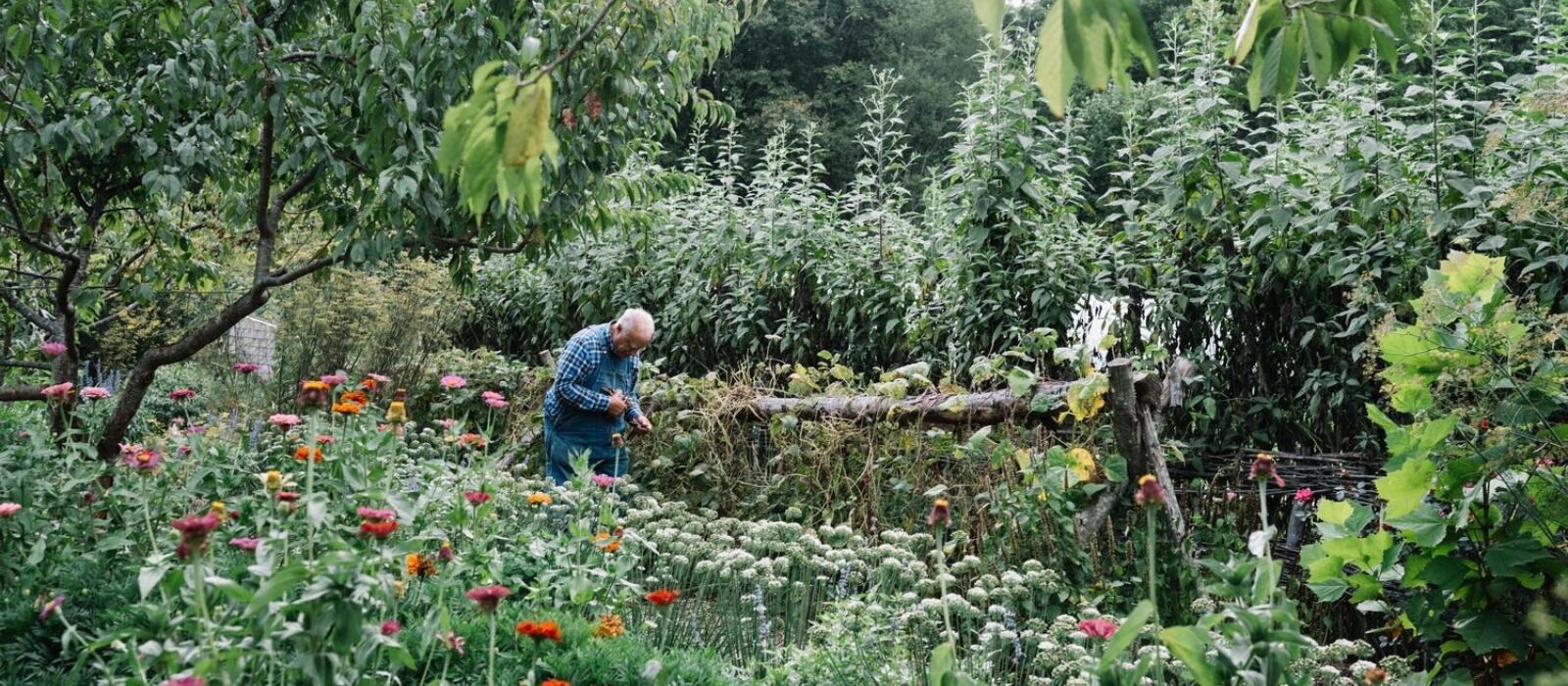
More than anything, the concept of color makes Farmstead Manager Christen Waddell think about harmony – between all the different departments of Blackberry Farm’s farmstead, and between the soil, plants and animals. “The colors and flavors of the ingredients our farmstead produces are directly tied to the connections between the garden, the livestock and the natural environment,” she explains.
That harmony can be seen in the hues of some of the farmstead’s favorite foods, from vegetables to eggs to cheese and honey. But how do these foods get their unique tones?
The same natural chemicals responsible for the leaves changing color in fall also affect the color of our food.
Phytonutrients (“phyto” meaning plant) are only found in plants, and they’re known to be beneficial, even disease- preventing, for humans. They’re also pigments responsible for creating vibrant colors. Carotenoids, for example, give vegetables like carrots and butternut squash their yellow- orange hues just as they turn oak leaves yellow, while anthocyanins impart red, blue and black hues in berries just like they make maple leaves red.
But like fall leaves, food color isn’t determined by nutrients alone. Climate and genetics also play a role. The exact hues appearing in autumn are determined by the tree species. As days shorten and temperatures cool, chlorophyll breaks down, allowing these other nutrients to appear. It’s a similar recipe for food: genes plus nutrients plus the whims of weather. The difference between a yellow or red tomato comes down largely to the variety, but tomatoes ripen to their fullest color when they get plenty of sunlight and have all the nutrients the plants need. Healthy soil – enriched with compost and full of organic matter – provides these plants with the necessary compounds to reach all the potential available in their genes.
It’s true not only with plants, but also with animals that eat plants. Take eggs, for example. “The shell is the first part of the egg that you see,” explains Christen, “and our eggs come in a variety of colors, from cream to pink to brown to green, because we raise of variety of different breeds of chickens.” Those colors are determined by the breed, not by what the chickens eat. Though heritage breeds, like those raised at Blackberry Farm, tend to eat a more diverse range of foods than modern or commercial breeds, foraging for bugs and plants outdoors, including in and around the garden.
That willingness to forage leads to all kinds of color stories inside the egg. Foraging chickens produce more nutritious, more flavorful eggs that have rich, dark yolks. When lucky chickens are invited into the garden to help clean up after the tomato harvest, they feast on marigolds that were planted alongside the tomatoes to help deter pests like nematodes. These marigold-munching chickens, no matter the species, end up producing eggs with nearly red yolks. “Eating the marigolds has a huge impact on their eggs,” Christen says. “Marigolds give egg yolks a deep orange, almost red color, and studies have shown that eating marigolds also lowers the cholesterol in their eggs.”
Milk, too, takes on the colors of plant pigments, changing through the seasons, and those phytonutrients make their way into cheeses, mingling with fat content to affect flavor. That’s why some farmstead cheeses are only made in a certain season, such as spring when the sheep have a diet of clover. “The sheep love eating fresh clover,” Christen says, and clover gives the milk a light green tone. But it’s the early winter milk – when sheep have been dining on alfalfa hay – that’s actually the richest and deeper yellow in color.
That yellow color has as much to do with fat content and nutrients as with the plants themselves. “During early lactation in February, sheep milk is naturally higher in fat than it is in the warmer months,” Christen explains. “Most of the milk carotenoids, which give the milk color, are found in the milk fat. Changes in the milk color are often due to changes in the fat content of the sheep’s diet.” Carotenoids are also antioxidants, providing vital nutrition and defense for newborn lambs. So fattier milk means more colorful and nutritious milk – and richer, more colorful cheese. In summer, when the pasture grows green with a mix of grasses – and lambs are weaned – milk is less fatty, colorful and nutrient-dense.
The colors of honey – from pale golden yellow to deep caramel brown – reflect what plants bees are visiting, exchanging pollination for protein- and nutrient-rich food. The farmstead’s honey has a dark color and high antioxidant content because the honeybees feed largely on plants grown to protect soil, like buckwheat, a cover crop that prevents erosion and enriches garden soils while attracting pollinators. Bees love buckwheat’s tiny white blooms, and vegetables following the buckwheat in rotation appreciate an extra dose of nutrients in the soil.
The honey’s dark color also reflects the Farm’s black locusts, native hardwood trees traditionally grown around pastures to provide shade for animals. The locusts are nitrogen-fixing legumes, capturing nitrogen from the air and transferring it to the soil. Bees also buzz on vibrant yellow goldenrod that blooms in the meadow areas around the garden in late summer and early fall.
From meadow to pasture, coop to compost, kitchen to garden – the cycle continues throughout the seasons. “The garden itself is full of colors,” Christen says. “We have deep, vibrant-colored produce that speaks to the high organic matter content of our soils, which has developed there over years of adding in our farm-made compost, bringing us back to the cycles and connections between all the different aspects of farming.”